Showing posts sorted by relevance for query Western Visayas. Sort by date Show all posts
Image of Visayas map Visayas map Feedback tourist spots in visayas central visayas tour package what are the 16 province in visayas western visayas tour central visayas tourist spots western visayas tourist spots 10 tourist spot in visayas
The Visayas is an island group in central Philippines that’s rich in heritage and natural wonders. It consists of seven main islands, namely Cebu, Bohol, Leyte, Samar, Negros, Masbate, and Panay. While you’ll probably need months or even years to explore these Visayan islands in their entirety, you can certainly experience many of their highlights by going on an island hopping tour.

Sampling a bit of what each island has to offer through an island hopping tour is also a great choice for different types of travelers, whether you prefer a trip filled with exciting activities or a more laid-back one. From swimming with underwater wildlife to dining and lounging by the beach, there are plenty of ways you can have an amazing island hopping tour in the Visayas.


A Couple of Pro-Tips for Travelers


Pick Cebu as Your Jumping-off Point

Whether you’re coming from Metro Manila or from any other region of the country, it’s a good idea to start your Visayas island hopping tour in Cebu. It’s the main gateway to the island group, so from here, it’s quite easy to board buses, ferries, and flights to other locations that are considered the region’s highlight tourist attractions. The province is also home to a wide variety of accommodation options, whether you’re staying in the Cebu Metropolitan Area or in other places outside the metro.

Choose Accommodations Near Aviation or Transportation Hubs

If possible, try to book one of the hotels in Cebu that’s near the pier or airport. Doing so will make your trip more convenient since you won’t have to spend a lot of time traveling when it’s time to board your next flight or trip out of the city.

Loading...

Suggested Activities for Your Island Hopping Tour in the Visayas

Given the abundance of beautiful locations you can go to—and the exciting activities you can engage in—when you visit the Visayas, you might find it challenging to pick the best places to see and the best things to do. To help you out, here are some ideas for your next Visayas island hopping adventure:

See the Marine Life around Pescador Island

While in Cebu, make sure to visit Pescador Island and take the opportunity to see its beautiful marine life. The island’s name itself is derived from pescador, which is Spanish for “fisherman.” This is because historically, fishermen have made a living off the abundant sea life that dwells in the coral reefs surrounding the island. This rich marine life is also one of the reasons why the island is popular among divers.

As a diving spot, Pescador Island is famous for its sardine runs. This seasonal migration event is when you’ll get the chance to swim with huge schools of sardines. Additionally, when you head to the southwest side of the island, you can find a beautiful soft coral garden where you might spot some sea turtles.

In addition to the island’s rich marine life, you can also explore the magnificent underwater cave called The Cathedral. It’s aptly named given its unique cavernous structure. It has a vertical swim-through where the sunlight shines, which lets you explore the surroundings with clarity. The Cathedral also provides divers with a heavenly view of the surface, thus, making it a favorite subject of many underwater photographers.

Visit the Tarsiers in Bohol

When you go to Bohol, another one of the island group’s most popular tourist destinations, make it a point to see one of the smallest primates in the world, the tarsier. These adorable creatures are endemic to the area and are listed as an endangered species with only an estimated 1,000 individuals existing in the wild.

To observe the nocturnal creatures up close, visit the Philippine Tarsier Sanctuary. There, you’ll see the tarsiers clinging to low branches or the trunks of slim trees. Despite their tiny size, you can’t miss the tarsier due to their beautiful big round eyes.


Experience Panglao Island

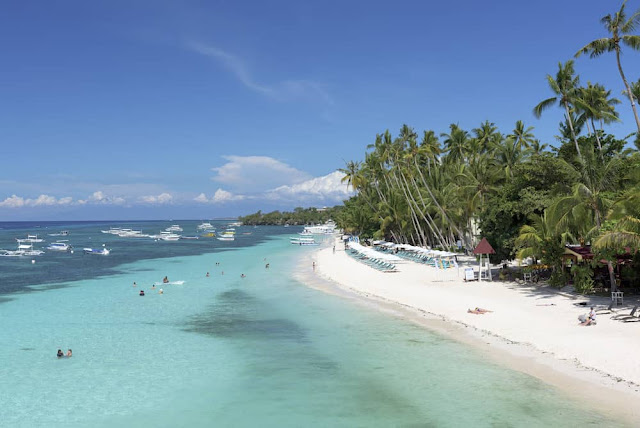
If you’re looking for sandy white beaches in Bohol, Panglao Island is the best place to go to. It’s also home to great dive spots, amazing restaurants, awesome nightlife, and comfortable accommodations at various price points, making the area perfect for all types of travelers. That being said, the most popular establishments can be found near Alona Beach because you’ll also get the chance to enjoy the long stretch of white-sand beach and the surrounding crystal-clear waters.

Aside from working on your tan by the beach, you can try out different exciting water activities like parasailing or riding the banana boat. Whatever you prefer, you’ll definitely have an enjoyable time on Panglao Island.

Delight Your Appetite with Fresh Seafood and Other Delicacies

Once you get tired from all the excitement of your trip, remember to take a break and enjoy the best dishes the islands can offer. In most cases, these popular culinary fare features the region’s freshest seafood. Whether you’re in Bohol, Cebu, or another island, you’ll find plenty of places to sample some of the best eats in the Visayas. And this isn’t just limited to restaurants in resorts or local cafes; there are also many nondescript dining spots by the beach that serve scrumptious dishes, from local favorites to delicious international fare.

One pro tip: if you’re on a tour, ask your travel agent beforehand if there will be meals included. Many local tours include a multi-dish feast as part of the tour, which means you can eat while you enjoy the different sights your destination offers.


Next time you visit the Visayas, consider these amazing ideas for your island hopping tour. They’re perfect for all types of travelers, especially those who enjoy immaculate white-sand beaches, close encounters with wildlife, and delicious food. Whether you prefer to be a solo explorer or travel with your friends or loved ones, you’ll have a great time there for sure.

 Image of Visayas map Visayas map Feedback tourist spots in visayas central visayas tour package what are the 16 province in visayas western visayas tour central visayas tourist spots western visayas tourist spots 10 tourist spot in visayas

Ideas for the Ultimate Visayas Island Hopping Tour


Typhoon Tino (international name: Kalmaegi) has prompted widespread class suspensions across multiple regions of the Visayas and Caraga, as local government units take preemptive action to ensure public safety. Face-to-face classes, spanning all levels in both public and private schools, are cancelled for Tuesday, November 4, 2025, in numerous provinces, with many schools directed to shift to alternative learning modalities.


Affected Regions and Learning Shifts

The class cancellations are most concentrated in Western Visayas (Region VI), Central Visayas (Region VII), Eastern Visayas (Region VIII), and parts of the Caraga Region (Region XIII), which are directly in the projected path of Typhoon Tino. The storm, which is expected to make landfall over the vicinity of Eastern Visayas or Caraga late Monday or early Tuesday, is forecast to bring destructive winds, torrential rain, and the threat of life-threatening storm surges.


Key Areas with Class Suspensions on November 4:


Region VI (Western Visayas):

  • Aklan: All levels in Malay (until Nov. 5), New Washington, Balete, Ibajay, Libertad (no face-to-face), and Kalibo (shift to alternative learning).

  • Antique: Almost all municipalities have suspended face-to-face classes, including Anini-y, Bugasong, Patnongon, and San Jose de Buenavista.

  • Capiz: Roxas City, Dumarao, Ivisan, and Jamindan, with a shift to alternative learning modes.

  • Iloilo: Balasan, Batad, Concepcion, Estancia, and Iloilo City (until Nov. 5 for face-to-face).

  • Negros Occidental: Bacolod City, Bago City, Sagay City, La Carlota City, and Victorias City are among the numerous areas suspending face-to-face classes.


Region VII (Central Visayas):

  • Bohol (all levels).

  • Cebu: Cebu City (until Nov. 5), Lapu-Lapu City (until Nov. 5 for face-to-face), and multiple towns like Carcar City, Daanbantayan, Liloan, and Naga City.

Region VIII (Eastern Visayas):

  • Biliran: All levels in Culaba, Cabucgayan, and Naval.

  • Eastern Samar (all levels, until Nov. 4).

  • Leyte: Tacloban City and other towns like Abuyog and Burauen (until Nov. 4).

  • Northern Samar and Samar (all levels, until Nov. 4).

Region XIII (Caraga):

  • Dinagat Islands (all levels).


Shift to Alternative Learning Modalities

In a major development from previous storm responses, many local orders and university directives explicitly mandate a swift transition to Alternative Delivery Modes (ADM) to prevent an absolute halt in education.

Aklan State University and West Visayas State University (WVSU) have cancelled face-to-face classes, with WVSU shifting to mediated modalities (synchronous or asynchronous), including online learning for its College of Medicine and other health programs.

Schools in Kalibo, Patnongon, and San Jose de Buenavista are among those directed to implement modular distance learning, online learning, or blended learning methods.


The widespread shift reflects the Department of Education's push for learning continuity during severe weather events, ensuring students can remain safe at home without completely missing scheduled lessons.

As Typhoon Tino continues its approach and potential intensification, authorities are reminding the public to monitor official weather advisories from PAGASA. Residents in low-lying and coastal areas, particularly those under higher storm signal warnings, are urged to heed preemptive evacuation orders and remain in safe shelters.

Class Suspensions for Tuesday, November 4, 2025


The Department of Transportation (DOTr) officially launched the expansion of the Siargao Airport passenger terminal building with a ceremonial groundbreaking led by DOTr Secretary Vince B. Dizon on Friday in Sayak, Del Carmen.


The P95.2-million infrastructure project marks a major upgrade for Siargao’s main gateway, aiming to significantly boost capacity, improve traveler comfort, and support the island’s growing tourism industry.


Once completed, the expanded terminal will double in size—from 716 to 1,531 square meters—and increase the number of check-in counters from 3 to 9. Passenger capacity will also rise dramatically, from 200 to 750 people at a time, easing congestion and long wait times that have plagued the current facility.

“Our local and foreign tourists deserve better,” said Sec. Dizon during the ceremony. “That’s why President Ferdinand R. Marcos Jr. ordered us to improve the travel experience here in Siargao—because this island is one of our most important tourism destinations.”


Also present was Tourism Secretary Christina Garcia Frasco, who hailed the expansion as a “gateway to greater prosperity.” She emphasized that the project is not just about upgrading an airport but about delivering on a national vision of tourism-led growth and development.

“As Siargao’s popularity rises, it’s crucial that we build the infrastructure to match demand,” Frasco said. “This expansion is a collaborative effort between the public and private sectors to make travel more efficient and enjoyable, while also generating jobs and economic activity for the community.”


Siargao Airport, also known as Sayak Airport, currently handles 18 flights daily. However, increasing tourist arrivals have placed pressure on its facilities. The expansion project directly responds to this demand, aligning with broader goals to modernize the country’s air transport network.

The upgraded terminal is expected to provide not just more space, but a more seamless and comfortable travel experience—strengthening Siargao’s status as a world-class destination.


Officials from both the DOTr and DOT affirmed that the project would be completed efficiently, with construction beginning immediately following the groundbreaking ceremony.

For travelers and locals alike, the upgraded Siargao Airport promises to be a symbol of progress—where tourism, infrastructure, and community development go hand in hand.


OTHER INTERNATIONAL AIRPORTS IN THE PHILIPPINES


Siargao Airport Expansion Breaks Ground, Set to Triple Passenger Capacity


Here's your ultimate airport guide in the Philippines!


Regulation over airports and aviation in the Philippines lies with the Civil Aviation Authority of the Philippines (CAAP).

The CAAP's classification system, introduced in 2008, rationalizes the previous Air Transportation Office (ATO) system of airport classification, pursuant to the Philippine Transport Strategic Study and the 1992 Civil Aviation Master Plan. The list is updated every three years, or as the need arises.

In the current classification system, 85 airports owned by the national government are placed into one of three main categories:

Loading...

International Airport

These airports are capable of handling international flights and have border control facilities. Airports in this category include airports that currently serve, or previously served, international destinations.

NAIA Terminal 3

There are currently 12 airports in this category. Ten of these airports were in the initial CAAP list in 2008: Clark, Davao, General Santos, Laoag, Mactan–Cebu, Manila, Kalibo, Puerto Princesa, Subic Bay and Zamboanga.

The only airport elevated to international status since 2008 has been the Iloilo Airport, where scheduled international service began in 2012. Panglao Airport in Bohol, while billed as an international airport, is yet to be formally placed into this category as of January 2019.


Principal Airports

These are airports which serve domestic destinations. They're 32 in the total. This category is further subdivided into two types:

  • Class 1 principal airports are airports capable of serving jet aircraft with a capacity of at least 100 seats (but could be 70). As of January 2019 there are 13 airports under this sub-category, all of which have regularly-scheduled air service. Tagbilaran Airport belonged to this category prior to its closure in lieu of Bohol–Panglao International Airport.

  • Class 2 principal airports are airports capable of serving propeller aircraft with a capacity of at least 19 seats. As of January 2019 there are 19 airports under this sub-category, most of which have regularly-scheduled air service.


Community Airports

These are airports that are used primarily as Regional and Local Airports or for General aviation. There are currently 41 airports in this category. Only a few community airports, such as Cauayan Airport and Ozamiz Airport, have regularly-scheduled air service.

San Vicente Airport in Palawan, which is owned by the national government, remains unclassified as of January 2019. All privately owned aerodromes (airports, airstrips, airfields) are outside of the CAAP's classification system.


Compare Air Fares

A quick and easy way to do this is to use flight search engines A.K.A airfare comparison sites. Get started by following the steps below:

Step 1: Visit the best flight search engines listed below (click the links to open a new tab).

Step 2: Enter your destinations and travel dates to compare airfares.

Step 3: Go back to this page and select another flight search engine.

Step 4: Repeat steps #2 & #3 until you visit all sites listed.

Step 5: Review the airfare results to find out which airline/site offers the cheapest prices. Take note of all the airlines listed. Use the “Filter” feature to see a list of airlines that fly to your destination.


Airline Promo Fares

If you are looking for cheap flights in the Philippines, see airlines listed below or view all promo fares:

Cheapest Flights and Airline Tickets Online Booking

List of International Airports in the Philippines

These are the following airports that cater regular commercial (some are used for military) international flights in the country as of writing:


Principal Domestic Airports

These are the following airports that cater regular commercial (some are used for military) flights in the country as of writing:

  • Bancasi Airport [BXU]
    Location: Butuan, Agusan del Norte

  • Cotabato Airport (Awang Airport) [CBO]
    Location:
     Datu Odin SinsuatMaguindanao

  • Daniel Z. Romualdez Airport (Tacloban City Airport) [TAC]
    Location:
     Tacloban, Leyte

  • Dipolog Airport [DPL]
    Location: DipologZamboanga del Norte

  • Dumaguete–Sibulan Airport [DGT]
    Location: SibulanNegros Oriental

  • Naga Airport [WNP]
    Location: PiliCamarines Sur

  • Pagadian Airport [PAG]
    Location:
     Pagadian, Zamboanga del Sur

  • Roxas Airport [RXS]
    Location:
     RoxasCapiz

  • San Jose Airport [SJI]
    Location: San Jose Occidental, Mindoro

  • Tuguegarao Airport [TUG]
    Location: TuguegaraoCagayan

  • Virac Airport [VRC]
    Location: Virac, Catanduanes

  • Evelio Javier Airport (Antique/San Jose Airport) [EUQ]
    Location: San Jose de BuenavistaAntique

  • Basco Airport [BSO]
    Location: Basco (Batan Island), Batanes

  • Calbayog Airport [CYP]
    Location: Calbayog, Samar

  • Camiguin Airport [CGM]
    Location: Mambajao, Camiguin

  • Catarman National Airport [CRM]
    Location: Catarman, Northern Samar

  • Cuyo Airport [CYU]
    Location: Magsaysay (Cuyo Island), Palawan

  • Francisco B. Reyes Airport (Busuanga Airport) [USU]
    Location:
     Coron (Busuanga Island), Palawan

  • Godofredo P. Ramos Airport (Caticlan/Boracay Airport) [MPH]
    Location: Malay / Nabas, Aklan

  • Jolo Airport [JOL]
    Location: Jolo, Sulu

  • Loakan Airport [BAG]
    Location: Baguio, Benguet

  • Marinduque Airport [MRQ]
    Location: Gasan, Marinduque

  • Moises R. Espinosa Airport [MBT]
    Location: Masbate CityMasbate

  • Ormoc Airport [OMC]
    Location:
     Ormoc, Leyte

  • Sanga-Sanga Airport (Tawi-Tawi Airport) [TWT]
    Location: BongaoTawi-Tawi

  • Sayak Airport (Siargao Airport) [IAO]
    Location: Del Carmen (Siargao Island)Surigao del Norte

  • CAAP Surigao Airport [SUG]
    Location:
     Surigao CitySurigao del Norte

  • Tandag Airport [TDG]
    Location: Tandag, Surigao del Sur

  • Tugdan Airport [TBH]
    Location: Alcantara (Tablas Island), Romblon


List of Proposed Philippine Airports (Planned / Under Construction)

The list below only includes new air transportation facilities being proposed or are under construction as of writing:

  • New Manila International Airport
    Location: Bulakan, Bulacan
    Status: Private sector proposals under review / JICA study completion pending


  • Sangley Point Airport
    Location: Sangley Point, Cavite City, Cavite
    Status: (Under construction)

  • Agutaya Airport
    Location: Agutaya, Palawan
    Status: (Under construction)


  • Bukidnon Airport (Maraymaray Airstrip)
    Location: Don Carlos, Bukidnon
    Status: (Under construction)


  • Calayan Airport
    Location: Calayan, Cagayan
    Status: (Under construction)


  • Kabankalan Airport
    Location:  Kabankalan, Negros Occidental
    Status: (Under construction)


OTHER ATTRACTIONS TO SEE IN MANILA 

Klook.com

How To Book a Trip / Reserve a Ticket

Here's a step-by-step guide on how you can get a ticket or check available trips online:
  • Go to this link and INPUT the origin and destination in the search box (eg. Manila - Boracay)
  • Input the dates of your desired arrival.
  • Choose if it is One-way or Return trip.
  • Choose the number of seats you wish to book or reserve
  • Then click Find Tickets to search for the available trips


OTHER TRANSPORTATION INFO IN PH


OTHER ACTIVITIES AND TOUR IN MANILA

 international airports in the philippines airports in the philippines map domestic airports in the philippines how many airports in the philippines how many international airports in the philippines luzon airports in the philippines biggest airport in the philippines how many airports in the philippines 2022

List of Domestic & International Airports in the Philippines (Including Principal & Community Airport Terminals)

philippine map drawing philippine map with names philippine map with regions hd philippine map pdf

The Philippines, officially the Republic of the Philippines (Filipino: Republika ng Pilipinas), is a sovereign island country in Southeast Asia situated in the western Pacific Ocean.

PHILIPPINE MAP AND PROVINCES (#project81)

bacolod-silay airport flight schedules bacolod-silay airport arrival bacolod-silay airport international flights bacolod-silay airport update today bacolod city domestic airport silay airport address silay airport to bacolod city bacolod-silay airport contact number

In this guide, you will learn about Bacolod–Silay International Airport in Negros Occidental.


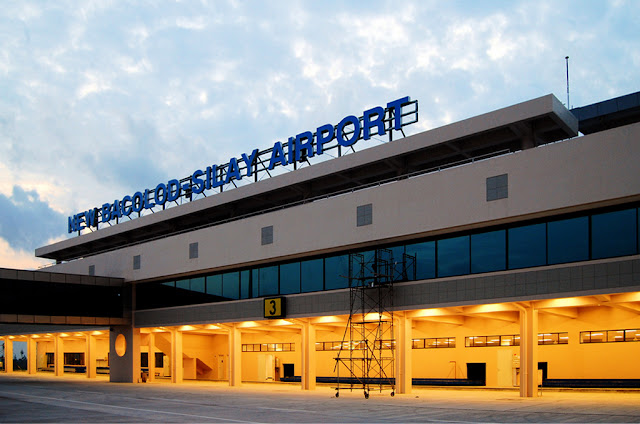
Bacolod–Silay Airport, also referred to as Bacolod–Silay International Airport, is the main airport serving the general area of Metro Bacolod, in the Western Visayas region of the Philippines.

The airport is located 15 kilometers (9.3 mi) northeast of Bacolod on a 181-hectare (450-acre) site in Barangay Bagtic, Silay, Negros Occidental. The facility inherited its IATA and ICAO airport codes from Bacolod City Domestic Airport, which it replaced in 2008. Capable of handling international air traffic, the airport is the busier of the two major airports serving Negros Island, the other being Dumaguete Airport in Sibulan, Negros Oriental.

Loading...

Despite being billed as an international airport, Bacolod–Silay is designated as a class 1 principal domestic airport by the Civil Aviation Authority of the Philippines, a body of the Department of Transportation that is responsible for the operations of not only this airport but also of all other public airports in the Philippines except the major international airports.

Terminal entrance

BACOLOD INTERNATIONAL AIRPORT INFO

  • Hiligaynon: Hulugpaan sang Bacolod–Silay
  • Filipino: Paliparan ng Bacolod–Silay
  • IATA: BCD
  • ICAO: RPVB
  • Owner/Operator Civil Aviation Authority of the Philippines
  • Serves: Metro Bacolod
  • Location: Bagtic, Silay, Negros Occidental
  • Opened: January 18, 2008
  • Elevation AMSL: 26 m / 86 ft
  • Coordinates: 10°46′35″N 123°00′55″ECoordinates: 10°46′35″N 123°00′55″E
  • Website: www.bacolodsilay.com


TRAVEL ESSENTIALS

Here are some things you might consider bringing with you for your day tour / adventure:

Shopee is my go-to app for things I needed like the ones above. If you'd like discounts and vouchers, you may get the best offers here:

Bacolod–Silay International Airport History

The site of Bacolod–Silay Airport was one of the main airfields for the Imperial Japanese Army Air Service (IJAAS) bombers and fighters in Negros. It was captured by American forces in 1944 and 1945. After the war, parts of the airfield became a sugarcane plantation.

Planning for a new airport for Bacolod commenced in 1997, when the Japan International Cooperation Agency initiated a study indicating the need for expansion at four Philippine airports: namely Bacolod City Domestic Airport, Mandurriao Airport in Iloilo City, Legazpi Airport in Legazpi and Daniel Z. Romualdez Airport in Tacloban.

On July 13, 2007, President Gloria Macapagal Arroyo attended the facility's inauguration. The airport was considered complete by July 16, but there was "considerable debate" over whether the airport should be opened for regular commercial traffic due to the 500-meter (1,600 ft) runway extension, necessary for accommodating larger aircraft, not having been built by that time.

The first aircraft ever to land at the airport was a small fourteen-seater turboprop owned by Vincent Aviation. The Reims-Cessna F406 with aircraft registration number ZK-VAF, piloted by Steve Gray of New Zealand landed at the airport on September 26, 2007, at 9:55 a.m.


Runway

The Bacolod–Silay Airport has one primary runway, which is 45 meters (148 ft) wide and 2,002 meters (6,568 ft) long. The runway runs in a direction of 03°/21°, and can currently handle aircraft as large as the Airbus A330.

Bacolod–Silay Airport Runway

Provisions for a 500-meter (1,600 ft) expansion of the present runway in order to accommodate even larger aircraft were confirmed on May 23, 2009, when it was reported that the budget for the construction of the 500-meter extension of the runway has been approved by the Philippine government and bidding and construction was slated to start in the 3rd or 4th quarter of 2009, but it has not been expanded yet.

The airport is equipped with an instrument landing system (ILS), making it capable of handling night and low-visibility landings.


Passenger Terminal

The entire airport complex is designed to handle an excess of one million passengers and 16,715 tonnes (36,850,000 lb) of cargo annually and consists of 21 buildings with a total floor space of 10,075 square meters (108,450 sq ft).

The largest building in the complex is the 6,187-square-meter (66,600 sq ft) main passenger terminal with three levels. The ground floor holds the check-in counters, the public concourse, the arrival area and the information counter.

Inside Bacolod–Silay Airport Terminal

The second floor has the three pre-departure areas with their VIP and CIP lounges; these pre-departure areas lead out to three jet bridges at an apron that can handle up to five aircraft simultaneously. Philippine Airlines also operates a Mabuhay Lounge for the use of its business class passengers on the second floor. Also on the second floor are Merci Pasalubong Shop and Bong-Bong's Pasalubong Shop, occupying the spot of the former Civil Aviation Authority of the Philippines office since it transferred to the Administration Building.

On the third floor is the viewing deck with a concession area and rooms for maintenance and airport machinery.

The state-of-the-art main passenger terminal is equipped with a flight information display system, mechanized baggage handling systems for both inbound and outbound baggage, numerous security x-ray machines, and elevators, and escalators. Outside the main terminal is a parking lot good for 350 cars.


What to Do Upon Check-in (Departure)

Upon reaching the check-in phase, it's crucial to ensure you have all the necessary items with you. Here's a step-by-step guide to facilitate the process:

Pay the Travel Tax: Ideally, the travel tax and departure fee are included in your ticket; however, it's prudent to double-check. If uncertain, proceed with check-in first. The check-in agent will inform you if you need to settle the tax separately, which amounts to P1,620 per person.

Check-In: Present your Departure Card, Travel Tax receipt, printed ticket, and passport to the check-in agent. Ensure any checked baggage has locks. The agent will issue your boarding pass upon completion.

Acquire Immigration Form: Obtain an Immigration Form, also known as a Departure Card. These forms are typically available at the check-in counter; if not, they can be obtained at the Immigration Area. Guards may verify your boarding pass before entry. Complete one form per person, providing the exact address of your hotel.

Proceed to Immigration Booths: Philippine passport-holders have separate queues from foreigners, so ensure you join the appropriate line. Present your passport to the Immigration Officer when it's your turn, who may or may not have additional inquiries.

Final Security Check: Undergo the final security screening. Remove all electronic devices and metal items from your person, including belts and coins, following instructions given. Shoes should be removed only if instructed.

Pre-Departure Area: After completing the final security check, proceed to the Pre-Departure Area. Check your boarding pass for the designated gate. Once there, await the boarding call.

By following these steps, you'll streamline the check-in process and prepare for a smooth departure from the airport.


Airlines and Destinations

  • Cebgo - Cebu
  • Cebu Pacific - Cebu, Davao, Manila
  • PAL Express - Cebu, Manila
  • Philippine Airlines - Manila
  • Philippines AirAsia - Manila


Compare Air Fares

A quick and easy way to do this is to use flight search engines A.K.A airfare comparison sites. Get started by following the steps below:

Step 1: Visit the best flight search engines listed below (click the links to open a new tab).

Step 2: Enter your destinations and travel dates to compare airfares.

Step 3: Go back to this page and select another flight search engine.

Step 4: Repeat steps #2 & #3 until you visit all sites listed.

Step 5: Review the airfare results to find out which airline/site offers the cheapest prices. Take note of all the airlines listed. Use the “Filter” feature to see a list of airlines that fly to your destination.


Airline Promo Fares

If you are looking for cheap flights in the Philippines, see airlines listed below or view all promo fares:

Cheapest Flights and Airline Tickets Online Booking

OTHER INTERNATIONAL AIRPORTS IN THE PHILIPPINES


To see all airports, visit - LIST OF AIRPORTS IN THE PHILIPPINES

How To Book a Trip / Reserve a Ticket

Here's a step-by-step guide on how you can get a ticket or check available trips online:
  • Go to this link and INPUT the origin and destination in the search box (eg. Manila - Boracay)
  • Input the dates of your desired arrival.
  • Choose if it is One-way or Return trip.
  • Choose the number of seats you wish to book or reserve
  • Then click Find Tickets to search for the available trips


ATTRACTIONS TO SEE IN MANILA 

Klook.com

WHERE TO GO FROM BACOLOD-SILAY AIRPORT

(To be updated)


WHERE TO STAY IN BACOLOD

Knowing that Bacolod is one of the top tourist destinations in the country, finding a place to stay here is not really a big challenge but of course, it would be ideal and less hassle to book your reservations as early as possible.

There are many budget hotels, transient houses and of course those luxury hotels to stay in. You can check our list of accommodation in Bacolod City and see which one suits your budget.


ACTIVITIES AND TOURS IN MANILA


OTHER TRANSPORTATION INFO IN PH

 bacolod-silay airport flight schedules bacolod-silay airport arrival bacolod-silay airport international flights bacolod-silay airport update today bacolod city domestic airport silay airport address silay airport to bacolod city bacolod-silay airport contact number

BACOLOD-SILAY INTERNATIONAL AIRPORT: Terminal Guide (with List of Flights & How to Book Online Ticket)


Traveling abroad from the Philippines can be an exciting adventure, whether you're embarking on a leisurely vacation or a business trip. However, proper preparation and knowledge of procedures are essential to ensure a smooth journey. Below is a detailed guide to help you navigate the process effectively:


Things to Bring to the Airport

By including these additional items in your travel preparations, you'll be better equipped to navigate the airport procedures and enjoy a hassle-free international journey from the Philippines.

Valid Passport: Ensure your passport is valid for at least six months beyond your intended stay in the destination country.

Visa and Travel Documents: Carry all required visas, permits, and travel documents for your destination.

Printed Flight Itinerary/Tickets: While electronic tickets are convenient for domestic flights, it's advisable to print out your tickets for international travel. You'll need to present them multiple times throughout the journey, from check-in to immigration, making it more practical and efficient than relying solely on your phone.

Travel Insurance: Consider purchasing travel insurance to cover medical emergencies, trip cancellations, and other unforeseen circumstances.

Currency and Payment Methods: Bring sufficient local currency for immediate expenses upon arrival, as well as international credit/debit cards for convenience.

Loading...

Company ID: Immigration officers may request a company ID as proof of your ties to the Philippines and your intention to return. Carry this along with other identification documents to facilitate the immigration process.

Credit Card: Some airlines may require a copy of the credit card used for booking tickets online, so be prepared to present it if necessary. Additionally, having a credit card provides a safety net in case you need extra funds during your travels or for hotel deposits.

Travel Itinerary: Create a detailed itinerary outlining your planned activities and accommodations. This can be helpful if immigration officers conduct a random check, as it demonstrates your genuine intent to visit as a tourist. Keep a printed copy with you for reference.

Hotel Address and Contact Number: Carry the address and contact information of your accommodations, especially if you're traveling with someone who may need assistance or doesn't speak the local language. This information is also required for immigration forms and ensures easier communication in case of emergencies or getting lost.

A Pen: Don't overlook the importance of carrying a pen. You'll likely need to fill out various forms during your journey, such as immigration and customs declarations. Having a pen readily available saves time and ensures smooth completion of required paperwork.


What to Do Upon Check-in and Departure


Check Your Documents: Ensure you have all the necessary documents required for international travel. These typically include your passport, visa (if required), travel insurance, and any other relevant permits or certificates.

Arrive Early: Arrive at the airport well in advance of your flight. International flights often require you to check in at least three hours before departure to complete security and immigration procedures.

Baggage Check: Head to the designated check-in counter for your airline. Have your passport and travel documents ready for verification. Check your baggage in accordance with the airline's regulations regarding weight, size, and prohibited items.

Security Screening: Proceed to the security checkpoint after checking in your luggage. Remove any metal objects, electronic devices, and liquids from your carry-on baggage for screening. Follow instructions from airport staff to expedite the process.

Immigration Clearance: After passing through security, proceed to the immigration area. Have your passport, boarding pass, and any required departure forms ready for inspection. Answer any questions from immigration officers truthfully and courteously.

Boarding: Once through immigration, proceed to the designated boarding gate indicated on your boarding pass. Boarding usually begins around 45 minutes before departure. Listen for announcements or monitor the information screens for updates on your flight.

Final Security Check: Before boarding the aircraft, you may undergo a final security check at the gate. Follow instructions from airport staff and cooperate accordingly.

Boarding the Aircraft: When your row or group is called, board the aircraft in an orderly manner. Present your boarding pass to the flight attendant and find your assigned seat. Stow your carry-on baggage in the overhead compartment or under the seat in front of you.


List of International Airports in the Philippines


FAQs

Q: Do I need a visa to travel abroad from the Philippines?
A: It depends on your destination country. Research the visa requirements well in advance and apply accordingly.

Q: How early should I arrive at the airport for an international flight?
A: It's recommended to arrive at least three hours before your scheduled departure time to complete check-in, security, and immigration procedures.

Q: Can I bring liquids in my carry-on baggage?
A: Liquids in containers larger than 100ml are generally not allowed in carry-on baggage. Pack liquids in containers of 100ml or less and place them in a clear, resealable plastic bag for security screening.

Q: What should I do if my luggage is lost or delayed?
A: Report lost or delayed baggage to the airline's baggage claim desk immediately upon arrival. Provide details of your baggage and travel itinerary for tracking purposes.

Q: Is it safe to drink tap water in foreign countries?
A: Tap water safety varies by country. It's advisable to drink bottled or filtered water to avoid potential health risks.

Q: How can I stay connected abroad?
A: Consider purchasing a local SIM card or international roaming plan for your smartphone. Alternatively, utilize Wi-Fi hotspots available at airports, hotels, cafes, and other public areas.

By following these guidelines and being prepared for your journey, you can minimize stress and maximize enjoyment during your travels abroad from the Philippines. Safe travels!


ATTRACTIONS TO SEE IN MANILA 

Klook.com

READ NEXT...


Traveling Abroad from the Philippines (What to Do Before an International Flight)