Showing posts sorted by relevance for query historic church. Sort by date Show all posts

Here's a detailed and comprehensive guide for Visita Iglesia in Rizal.


Visita Iglesia is a traditional Catholic Lenten practice in the Philippines where devotees visit multiple churches to pray and reflect on the Stations of the Cross. If you're planning a Visita Iglesia in Rizal, here are seven churches you might consider including in your itinerary.


What do we do during Visita Iglesia?

Visita Iglesia, translated as "Church Visit" in English, is a cherished tradition observed by Catholics around the world, particularly during the Holy Week leading up to Easter Sunday. This solemn practice involves visiting several churches, typically seven, to reflect on the Stations of the Cross and offer prayers at each stop. Here's what you can expect during Visita Iglesia:

Spiritual Reflection: Visita Iglesia is a time for deep spiritual contemplation and introspection. As you journey from one church to another, take the opportunity to reflect on the sacrifices of Jesus Christ and the significance of each Station of the Cross.

Prayer and Devotion: At each church, devote time to prayer and meditation. Offer intentions for yourself, your loved ones, and the world as you pause to connect with the divine.

Stations of the Cross: Many churches display the Stations of the Cross, depicting Jesus' journey to Calvary. Take time to walk through these stations, reflecting on the profound meaning of Christ's passion and sacrifice.

Confession and Reconciliation: Some churches offer the sacrament of confession during Visita Iglesia. Take advantage of this opportunity for spiritual renewal and reconciliation with God.

Community and Fellowship: Many Catholics undertake Visita Iglesia with family, friends, or fellow parishioners. Share in the journey of faith as you pray together and support one another in your spiritual endeavors.

Loading...

WHAT TO PACK FOR VISITA IGLESIA IN RIZAL

Here are some things you might consider bringing with you for your day tour / adventure:

Shopee is my go-to app for things I needed like the ones above. If you'd like discounts and vouchers, you may get the best offers here:

1. Antipolo Cathedral

International Shrine of Our Lady of Peace and Good Voyage or commonly known as Antipolo Cathedral is one of the most famous churches in Rizal.

Antipolo Cathedral

The Antipolo Cathedral is a major pilgrimage site among the Catholic devotees. It houses the image of the Virgin of Antipolo, also known as Nuestra SeƱora dela Paz y Buenviaje, which is believed to be miraculous.

Location: Dela Paz St., Antipolo City, Rizal (see on map)
Driving time to next location: 15 minutes


2. Cainta Church

The Diocesan Shrine and Parish of Our Lady of Light, popularly known as Cainta Church, is a Roman Catholic parish church located along Andres Bonifacio Avenue in Barangay San Andres, Cainta, Rizal.

Cainta Church

Cainta Church features a unique hexagonal bell tower. It's a serene location for reflection.

Location: 242 A Bonifacio Ave, Sta. Rosa, Cainta (see on map)
Driving time to next location: 5 minutes


3. Taytay Church

St. John the Baptist Parish Church, also known as Parokya ni San Juan Bautista or Taytay Church locally, is a Roman Catholic church located in Taytay, Rizal.

Taytay Church

The parish was relocated from the flood-prone shores of Laguna de Bay to a higher location in a hill which was called San Juan del Monte where the parish has remained to this day.

Location: J. Sumulong, Taytay, Rizal (see on map)
Driving time to next location: 15 minutes

Cheapest Flights and Airline Tickets Online Booking

4. Angono Church

St. Clement Parish Church or the Angono Church is another historical landmark with intricate design details.

Angono Church

The church's ceiling showcases artwork depicting scenes from the Bible.

Location: DoƱa Aurora St, Angono, Rizal (see on map)
Driving time to next location: 20 minutes


5. Binangonan Church

Officially the Santa Ursula Parish Church, the Binangonan Church is a 224-year-old church located in the heart of Binangonan, Rizal. It belongs to the Roman Catholic Diocese of Antipolo.

Binangonan Church

It is also among the seven Jubilee churches of the Diocese of Antipolo.

Location: R. Zulueta St., Binangonan, Rizal (see on map)
Driving time to next location: 20 minutes


6. Morong Church

St. Jerome Parish Church or the Morong Church is a historic church in Morong, Rizal, dates back to the Spanish colonial period.

Morong Church

Its Baroque-style architecture and centuries-old religious artifacts make it a significant stop for Visita Iglesia.

Location: Turentigue St, Morong, Rizal (see on map)
Driving time to next location: 15 minutes


7. Tanay Church

San Ildefonso de Toledo Parish Church or the Tanay Church is known for its distinct octagonal bell tower.

Tanay Church

The church's history is intertwined with the early missionary efforts of the Spanish Franciscans.

Location: M.H. Del Pilar St, Plaza Aldea, Tanay (see on map)


Visita Iglesia in Rizal (Map Route & Itinerary)

Given that you are going to stay for at least 20 minutes from each church, here's the approximate time and duration for the whole visita iglesia (trip starts at 8AM):
  • 0800 - Antipolo Cathedral
  • 0840 - Cainta Church
  • 0910 - Taytay Church
  • 0950 - Angono Church
  • 1030 - Binangonan Church
  • 1110 - Morong Church
  • 1150 - Tanay Church


The itinerary above will take about 2 hours and just perfect if you plan to have lunch somewhere in Tanay. Check my list of 10 restaurants to dine in Tanay, Rizal.


ATTRACTIONS TO SEE IN MANILA 

Klook.com

Visita Iglesia in Rizal

Remember that these churches are not only places of worship but also historical and cultural landmarks. Check the opening hours and any special Lenten schedules before planning your Visita Iglesia. It's also a good practice to be respectful of ongoing services and ceremonies while visiting these churches.

For nature lovers, here's a list of 10 Best Campsites in Tanay, Rizal (with Rates and Contact Details)


Other Visita Iglesia Guides in the Philippines


ACTIVITIES AND TOURS IN MANILA


IMPORTANT NOTE: The rates, contact details and other information indicated in this post are accurate from the time of writing but may change without IMFWJ's notice. Should you know the updated information, please leave a comment below.

WHERE TO STAY IN RIZAL:


VISITA IGLESIA: 7 Churches to Visit in Rizal (Itinerary & Map Route)

basilica vs cathedral major basilica basilica near me 17 minor basilica in the philippines oldest basilica in the philippines first minor basilica in the philippines national shrines in the philippines

In the Catholic Church, a basilica is a designation given by the Pope to a church building. Basilicas are distinguished for ceremonial purposes from other churches.


The building need not be a basilica in the architectural sense (a rectangular building with a central nave flanked by two or more longitudinal aisles).

Basilicas are either major basilicas – of which there are four, all in the Diocese of Rome – or minor basilicas, of which there were 1,810 worldwide as of 2019.

RELATED: List of Marian Shrines in the Philippines

Loading...

Numerous basilicas are notable shrines, often even receiving significant pilgrimages, especially among the many that were built above a confessio or the burial place of a martyr – although this term now usually designates a space before the high altar that is sunk lower than the main floor level (as in the case in St Peter's and St John Lateran in Rome) and that offer more immediate access to the burial places below.

Some Catholic basilicas are Catholic pilgrimage sites, receiving tens of millions of visitors per year.

Churches designated as papal basilicas, in particular, possess a papal throne and a papal high altar, at which no one may celebrate Mass without the pope's permission.


Here are the 19 basilica churches designated in the Philippines:


Badoc Basilica

The Saint John the Baptist Basilica, also known as the Shrine of La Virgen Milagrosa de Badoc, is a Roman Catholic church in Badoc, in the northern Philippine province of Ilocos Norte.

Badoc Basilica in 2013

The basilica houses the Virgin Milagrosa statue of the Virgin Mary. It is dedicated to John the Baptist and has the title of a minor basilica since 2018. It was built in the 17th century in the Baroque style.

Church founded: 1714
Declared as a basilica: 2018
Location: Brgy Soriano Street, Badoc, Ilocos Norte Get Directions ]


Binondo Church

Binondo Church, also known as the Minor Basilica and National Shrine of Saint Lorenzo Ruiz and formerly known as Our Lady of the Most Holy Rosary Parish, is located in the District of Binondo, Manila fronting Plaza San Lorenzo Ruiz, in the Philippines. This church was founded by Dominican priests in 1596 to serve their Chinese converts to Christianity.

Binondo Church

The original building was destroyed in 1762 by British bombardment. A new granite church was completed on the same site in 1852 however it was greatly damaged during the Second World War, with only the western faƧade and the octagonal belfry surviving.

Church founded: 1596
Declared as a basilica: July 23, 1992
Location: 1006 Plaza Lorenzo Ruiz, Binondo, 1006 Metro Manila Get Directions ]


Minor Basilica of the Immaculate Conception (Batangas City)

Minor Basilica of the Immaculate Conception is a minor basilica in Batangas City, Philippines. It was made an independent parish in 1614 under the advocation of the Immaculate Conception.

Minor Basilica of the Immaculate Conception

On February 13, 1945, the church was declared a minor basilica of the Immaculate Conception. The declaration was made upon the request of Lipa's bishop, Alfredo Verzosa. On January 16, 2022, the Basilica was also declared as the Archdiocesan Shrine of Santo NiƱo de Batangan.

Church founded: 1578 (first temporary church), 1857 present church
Declared as a basilica: February 13, 1945
Location: M.H.Del Pilar, Poblacion, Batangas Get Directions ]


Malolos Cathedral

Malolos Cathedral, formally known as the Minor Basilica and Cathedral of the Immaculate Conception of Malolos, is a historic church in the Philippines located in city of Malolos, the capital of the province of Bulacan.

Malolos Cathedral in 2017

The cathedral is the see of the Bishop of Malolos, whose diocese is a suffragan of the Archdiocese of Manila. 

Church founded: 11 June 1580, consecrated in 1817
Declared as a basilica: December 4, 1999
Location: RRV6+4H4, Malolos, Bulacan Get Directions ]


Manaoag Church

The Minor Basilica of Our Lady of the Rosary of Manaoag, located on top of a hill in the town, has been canonically affiliated with the Papal Basilica of Saint Mary Major in Rome since June 2011.

Manaoag Church

The parish encompassing Manaoag and the surrounding towns is administered by the Order of Preachers under the Roman Catholic Archdiocese of Lingayen-Dagupan. It was officially declared a Basilica in 2015.

Some of the miracles attributed to Our Lady of Manaoag are depicted in murals inside the church's transepts and nave. The Paschal Chapel beside the south flank of the church has icons of the Black Nazarene similar to that of the Quiapo Church, the Santo Entierro (Dead Christ), and other statues of the Virgin Mary.

Church founded: 1600s by the Augustinians as Santa Monica Chapel, established by Captain Gaspar de Gamboa in 1720
Declared as a basilica: February 2015
Location: Milo St, Manaoag, Pangasinan Get Directions ]


Manila Cathedral

The Minor Basilica and Metropolitan Cathedral of the Immaculate Conception, also known as the Manila Cathedral (Spanish: Catedral de Manila), is the cathedral of Manila and basilica located in Intramuros, the historic walled city within today's modern city of Manila, Philippines.

Front view of The Cathedral in Intramuros, Manila as of April 2015

It is dedicated to the Immaculate Conception of the Blessed Virgin Mary as the Patroness of the country. The cathedral serves as the episcopal seat of the Archbishop of Manila. On April 27, 1981, Pope John Paul II issued papal bull Quod Ipsum designating the cathedral as a minor basilica by his own Motu Proprio.

Church founded: 1571
Declared as a basilica: April 27, 1981
Location: Cabildo, 132 Beaterio St, Intramuros, Manila Get Directions ]


Orani Church

The Roman Catholic church of Orani, declared as an independent parish on April 21, 1714, and also known as Our Lady of the Most Holy Rosary Parish Church ("Our Lady of the Rosary of Orani Church", "Nuestra SeƱora del Rosario Parish Church", "Simbahan ng Orani" or "Virgen Milagrosa Del Rosario del Pueblo de Orani Shrine") is a Neoclassical (heritage) Diocesan Marian Shrine and Pilgrimage church located in the center of Orani, Bataan in the Philippines.

Orani Church faƧade

The historic bell of the church of the Parish of the beloved Nuestra SeƱora del Rosario was presented to the public and installed in front of the church on June 7, 1998. It is a symbol of the undying, truthful and timeless faith of the people of Orani to the Lord.

Church founded: April 21, 1714 as an independent parish
Declared as a basilica: September 5, 2019
Location: QFVH+794, Orani, Bataan Get Directions ]


Basilica Minore of Our Lady of Charity

The Basilica Minore of Our Lady of Charity, better known as Agoo Basilica, is a Roman Catholic minor basilica in Agoo, La Union, the Philippines dedicated to Our Lady of Charity.

Agoo Basilica

It is the seat of the Santa Monica Parish of the Roman Catholic Diocese of San Fernando de La Union under the Vicariate of St. Francis Xavier (Vicar Forane Raul S. Panay). The diocese of San Fernando La Union is part of the territory of the Archdiocese of Nueva Segovia.

The basilica is under the leadership of parish priest Alfonso V. Lacsamana and parish vicar Liberato A. Apusen. It is situated along MacArthur Highway in Agoo, La Union in front of the Jose D. Aspiras Civic Center.

Church founded: 1578
Declared as a basilica: July 15, 1982
Location: Poblacion, Agoo, La Union Get Directions ]


Cheapest Flights and Airline Tickets Online Booking

Basilica of Our Lady of Piat

The Basilica Minore of Our Lady of Piat is one of the Minor Basilicas in the Philippines.

Basilica of Our Lady of Piat

It is located at Poblacion, Piat in the province of Cagayan. The shrine is dubbed as the Pilgrimage Center of Northeast Luzon, and a home to the centuries old brown Madonna, Our Lady of Piat.

Church founded: 1604
Declared as a basilica: June 22, 1999
Location: QFPJ+R28, Basilica Minore of Our Lady of Piat Rd, Piat, Cagayan Get Directions ]


PeƱafrancia Basilica

The PeƱafrancia Minor Basilica or the Minor Basilica of Our Lady of PeƱafrancia is a Roman Catholic minor basilica located on the outskirts of Naga City — also known as the Pilgrim City and Queen City of Bicol — in the Bicol Region of the Philippines.

PeƱafrancia Basilica

It is one of the largest Marian pilgrimage sites in Asia. The icon of Our Lady of PeƱafrancia is enshrined in this sanctuary. Rev. Fr. Rodel Cajot is the present Rector of the Basilica, having been appointed in 2011. It is the only basilica in the Bicol Region and the Roman Catholic Archdiocese of Caceres.

Church founded: May 22, 1982
Declared as a basilica: May 22, 1985
Location: Balatas Road, Naga, 4400 Camarines Sur Get Directions ]


Immaculate Conception Parish Church (Santa Maria)

The Minor Basilica of La Purísima Concepción, locally known as Santa Maria Church is a Roman Catholic Church located in the municipality of Santa Maria, in the province of Bulacan, Philippines. It is under the coat of arms and jurisdiction of the Roman Catholic Bishop of Malolos and Seat of the Episcopal Vicar of the Eastern District of the Diocese of Malolos.


It was declared by Pope Francis on March 21, 2021 that the parish will be elevated into a Minor Basilica. On November 27, 2021, the church was formally declared as a Minor Basilica which was headed by Charles Brown, the apostolic nuncio to the Philippines.

Church founded: 1793
Declared as a basilica: November 27, 2021
Location: RX97+R72, Santa Maria, 3022 Bulacan Get Directions ]


Quiapo Church

The Minor Basilica of the Black Nazarene, known canonically as the Parish of Saint John the Baptist and also known as Quiapo Church, is a prominent basilica in the district of Quiapo in the city of Manila, Philippines.

Quiapo Church

The basilica is famous home for the Black Nazarene, a dark statue of Jesus Christ said to be miraculous. The basilica is under the jurisdiction of the Archdiocese of Manila and its current rector is Rev. Fr. Rufino C. Sescon, Jr.

The masses go to Quiapo Church in downtown Plaza Miranda and drop a visit to the Nuestro Señor Jesús Nazareno (a dark figure of Christ carved by a Mexican artist from black wood) whose image, reputedly miraculous, was brought to the country in a Spanish galleon in the 17th century. The Feast of the Black Nazarene on 9 January celebrates the traslación (solemn translation) of the statue to the church from the Church of Saint Nicholas Tolentino.

Church founded: 1586
Declared as a basilica: December 11, 1987
Location: 391, Quiapo, Manila, 1001 Metro Manila Get Directions ]


San Sebastian Church (Manila)

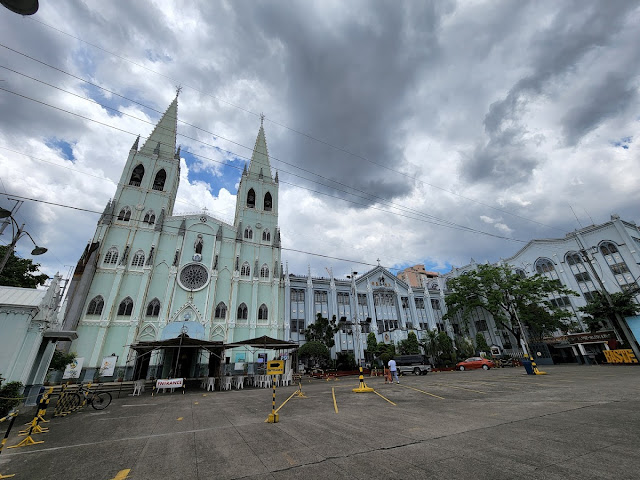
The Minor Basilica of San Sebastian, better known as San Sebastian Church or San Sebastian Basilica is a minor basilica of the Roman Catholic Church in Manila, Philippines. It is the church of the Parish of San Sebastian, and also a Shrine of Nuestra Senora del Monte Carmelo, or Our Lady of Mount Carmel.

Minor Basilica of San Sebastian

Completed in 1891, San Sebastian Church is noted for its architecture. An example of the Gothic Revival architecture in the Philippines, it is the only steel building church in the Philippines. It was designated as a National Historical Landmark in 1973 and as a National Cultural Treasure in 2011.

Church founded: 1621 first church was built, 1891 the present church was completed
Declared as a basilica: June 24, 1890
Location: Pasaje del Carmen St, Quiapo, Manila, 1001 Metro Manila Get Directions ]


Basilica del Santo NiƱo

The Basílica Menor del Santo Niño de Cebú (Minor Basilica of the Holy Child of Cebú), commonly known as Santo Niño Basilica, is a basilica in Cebu City in the Philippines that was founded in 1565 by Fray Andrés de Urdaneta and Fray Diego de Herrera.

Basílica Menor del Santo Niño de Cebú

It is the oldest Roman Catholic church in the country, allegedly built on the spot where the image of the Santo Niño de Cebú was found during the expedition of Miguel López de Legazpi.

This image of the Child Jesus is the same presented by Ferdinand Magellan to the chief consort of Rajah Humabon on the occasion of their royal Baptism to Roman Catholicism on 14 April 1521. The image was found by a soldier named Juan de Camuz forty years later, preserved in a wooden box, after Legazpi had razed a local village.

When Pope Paul VI made the church a basilica in 1965, he declared it to be "the symbol of the birth and growth of Christianity in the Philippines." The present building was completed from 1739–1740, and was designated by the Holy See as the "Mother and Head of all Churches in the Philippines".

Church founded: April 28, 1565
Declared as a basilica: 1965
Location: Pilgrim’s Center, OsmeƱa Blvd, Cebu City, 6000 Cebu Get Directions ]


Basilica Minore de Santuario de San Pedro Bautista

The Basilica Menor de San Pedro Bautista (Minor Basilica of Saint Pedro Bautista), also known as the San Francisco del Monte Church is a parish church in the San Francisco del Monte district of Quezon City, in the Philippines.

Basilica Minore de Santuario de San Pedro Bautista

It is one of the oldest churches in the country having founded in 1590. The church is dedicated to its founder Padre Pedro Bautista (Peter Baptist), a Spanish missionary from Ɓvila, Spain, one of the 26 Christians martyred in Japan in 1597.

Church founded: 1590 (sub-parish)
Declared as a basilica: July 9, 2020
Location: 69 San Pedro Bautista, San Francisco del Monte, Quezon City Get Directions ]


Sinait Basilica

The Minor Basilica of Saint Nicholas of Tolentino and Shrine of El Santo Cristo Milagroso is a Roman Catholic church in the municipality of Sinait, Ilocos Sur, in northern Philippines. The church is known for housing the El Santo Cristo Milagroso, a life-sized dark-skinned image of crucified Christ.

Sinait Basilica

It is dedicated to Saint Nicholas of Tolentino and is under the administration of the Archdiocese of Nueva Segovia. In May 2021, it was announced that it was granted the title of minor basilica, the 19th in the Philippines and the first in its archdiocese.

Church founded: 1574
Declared as a basilica: September 10, 2021
Location: VF85+638, Sinait, Ilocos Sur Get Directions ]


ATTRACTIONS TO SEE IN MANILA 

Klook.com

Taal Basilica

The Taal Basilica, canonically known as the Minor Basilica of Saint Martin of Tours, is a minor basilica in the town of Taal, Batangas, in the Philippines, within the Archdiocese of Lipa.

Taal Basilica

It is considered to be the largest church in the Philippines and in Asia, standing 88.6 meters (291 ft) long and 48 meters (157 ft) wide. Martin of Tours is the patron saint of Taal, whose fiesta is celebrated every November 11.

Church founded: 1572
Declared as a basilica: December 8, 1954
Location: Calle San Martin, Taal, 4208 Batangas Get Directions ]


Taguig Church

The Saint Anne Parish Church, also known as Santa Ana Church or also known in its formal name as the Minor Basilica and Archdiocesan Shrine of St. Anne, is a Catholic church and minor basilica located in Barangay Santa Ana, Taguig.

sta ana taguig church mass schedule sta ana church taguig mass schedule 2022 st anne parish church mass schedule catholic churches in taguig st anne church, taguig history sta ana church manila parish of saint anne location
Saint Anne Parish Church

It is situated next to the Taguig River and across Plaza Quezon, where the statue of Manuel L. Quezon was erected when he was still serving as President of the Philippines. Saint Anne is the patroness of the church.

Church founded: 1587
Declared as a basilica: July 26, 2022
Location: 41 Liwayway Street, Santa Ana, Taguig Get Directions ]


Tayabas Basilica

The Minor Basilica of Saint Michael the Archangel, commonly known as the Tayabas Basilica, is a Roman Catholic basilica located in Tayabas, Quezon, Philippines under the Roman Catholic Diocese of Lucena. Its titular is Saint Michael the Archangel, whose feast is celebrated annually on September 29.

Facade of Tayabas Basilica

The church is the largest in the province of Quezon; and is built in the shape of a key. Locals often refer to the church as Susi ng Tayabas ("The Key of Tayabas"). The church's 103-metre (338-foot) aisle also has the longest nave among Spanish colonial era churches in the Philippines.

Church founded: 1585
Declared as a basilica: October 18, 1988
Location: Lopez Jaena Street, Tayabas, 4327 Quezon Get Directions ]


ACTIVITIES AND TOURS IN MANILA


Here's a list of basilica churches in the Philippines in alphabetical order:
  • Badoc Basilica
  • Binondo Church
  • Minor Basilica of the Immaculate Conception (Batangas City)
  • Malolos Cathedral
  • Manaoag Church
  • Manila Cathedral
  • Orani Church
  • Basilica Minore of Our Lady of Charity
  • Basilica of Our Lady of Piat
  • PeƱafrancia Basilica
  • Immaculate Conception Parish Church (Santa Maria)
  • Quiapo Church
  • San Sebastian Church (Manila)
  • Basilica del Santo NiƱo
  • Basilica Minore de Santuario de San Pedro Bautista
  • Sinait Basilica
  • Taal Basilica
  • Taguig Church
  • Tayabas Basilica


READ NEXT:

 basilica vs cathedral major basilica basilica near me 17 minor basilica in the philippines oldest basilica in the philippines first minor basilica in the philippines national shrines in the philippines  basilicas in the world 17 minor basilica in the philippines oldest basilica in the philippines first minor basilica in the philippines 13 minor basilica in the philippines list of basilicas famous basilicas how many minor basilicas are in the philippines

List of Basilica Churches in the Philippines (and Where to Find Them!)


All you need to know about this historic church in Quiapo, Manila.


The Minor Basilica of San Sebastian (Filipino: Basilika Menor ng San Sebastian; Spanish: BasĆ­lica Menor de San SebastiĆ”n), better known as San Sebastian Church (Filipino: Simbahan ng San Sebastian) or San Sebastian Basilica is a minor basilica of the Roman Catholic Church in Manila, Philippines.

It is the church of the Parish of San Sebastian, and also a Shrine of Nuestra Senora del Monte Carmelo, or Our Lady of Mount Carmel.

Loading...

Completed in 1891, San Sebastian Church is noted for its architecture. An example of the Gothic Revival architecture in the Philippines, it is the only steel building church in the Philippines. It was designated as a National Historical Landmark in 1973 and as a National Cultural Treasure in 2011.

San Sebastian Church

San Sebastian Church is under the care of the Order of Augustinian Recollects, who also operate the San Sebastian College-Recoletos adjacent to the basilica. It is located at Plaza del Carmen, at the eastern end of Recto Avenue, in Quiapo, Manila.


San Sebastian Church in Details

Names: San Sebastian Basilica, Basilika Menor ng San Sebastian, BasĆ­lica Menor de San SebastiĆ”n
Location: Quiapo, Manila
Country: Philippines
Denomination: Roman Catholic
Status: Minor Basilica
Dedication: St. Sebastian
Consecrated: 1891
Functional status: Active
Heritage designation: National Cultural Treasure
Designated: August 15, 2011
Architect: D. Genaro Palacios y Guerra
Architectural type: Basilica
Style: Neo-Gothic
Groundbreaking: 1888
Completed: 1891
Number of domes: 1
Number of towers: 2
Number of spires: 64
Materials: steel, mixed sand, gravel and cement
Administration Subdivision: Vicariate of Jose de Trozo
Archdiocese: Manila


San Sebastian Church History

San Sebastian Church 1936 
In 1621, Bernardino Castillo, a generous patron and a devotee of the 3rd-century Roman martyr Saint Sebastian, donated the land upon which the church stands. The original structure, made of wood, burned in 1651 during a Chinese Filipino uprising. Succeeding structures, which were built of brick, were destroyed by fire and earthquakes in 1859, 1863, and 1880.

In the 1880s, Esteban MartĆ­nez, the parish priest of the ruined church, approached Spanish Architect Genaro Palacios to build a church that will withstand the earthquakes.

Palacios planned to build a fire and earthquake-resistant structure made entirely of steel. He completed a design that fused Earthquake Baroque with the Neo-Gothic style. His final design was said to have been inspired by the famed Gothic Burgos Cathedral in Burgos, Spain.

Cheapest Flights and Airline Tickets Online Booking

San Sebastian Church Construction (1888–1891)

The prefabricated steel sections that would compose the church were manufactured in Binche, Belgium. According to historian Ambeth Ocampo, the knockdown steel parts were ordered from the Societe anonyme des Enterprises de Travaux Publiques in Brussels.

In all, 52 metric tons (51 long tons; 57 short tons) of prefabricated steel sections were transported in eight separate shipments from Belgium to the Philippines, the first shipment arriving in 1888.

Belgian engineers supervised the assembly of the church, the first column of which was erected on September 11, 1890.

The walls were filled with mixed sand, gravel, and cement. The stained glass windows were imported from the Heinrich Oidtmann Company, a German stained glass firm, while local artisans assisted in applying the finishing touches.

San Sebastian Church altar

According to JesĆŗs Pastor Paloma, an Augustinian Recollect priest, the structure was also supposed to have a prefabricated retablo (reredos) altar, which was lost at sea when the ship carrying it from Belgium capsized in a storm.

A wooden altar was made locally in its stead. Paloma also noted that the bottom part of the church was designed to resemble a ship's hull, so that it would sway during an earthquake.


Restoration (2011–present)

Restoration works for San Sebastian Church began in 2011.

San Sebastian Church


OTHER CHURCHES TO VISIT IN MANILA


San Sebastian Church Features

San Sebastian Church has two openwork towers and steel vaulting. From its floor, the basilica's nave rises 12 meters (39 ft) to the dome, and 32 meters (105 ft) to the tip of the twin spires.

The faux finished interior of the church incorporates groined vaults in the Gothic architecture style permitting very ample illumination from lateral windows.

The steel columns, walls and ceiling were painted by Lorenzo Rocha, Isabelo Tampingco and FĆ©lix MartĆ­nez to give the appearance of marble and jasper. Trompe-l'œil paintings of saints and martyrs by Rocha were used to decorate the interiors of the church.

True to the Gothic revival spirit of the church are its confessionals, pulpit, altars and five retablos designed by Lorenzo Guerrero and Rocha. The sculptor Eusebio Garcia carved the statues of holy men and women. Six holy water fonts were constructed for the church, each crafted from marble obtained from Romblon.

The ceiling of the church, showing the groin vaults.

Above the main altar is an image of Our Lady of Mount Carmel, given to the church by Carmelite sisters from Mexico City in 1617. The image withstood all the earthquakes and fires which had destroyed previous incarnations of San Sebastian Church, but its ivory head was stolen in 1975.


Cultural and Historical Declarations

San Sebastian Church was declared a National Historical Landmark by President Ferdinand Marcos through Presidential Decree No. 260 on August 1, 1973. Subsequently, the church was declared a National Cultural Treasure by the National Museum of the Philippines on August 15, 2011, with the unveiling of the marker on January 20, 2012.

San Sebastian Church Historical Marker

On May 16, 2006, San Sebastian Church was included by the National Historical Institute (now the National Historical Commission of the Philippines) in the Philippines' Tentative List for possible designation as a World Heritage Site, on account of its architectural and historical heritage.

As of 2017, the church is no longer included in the Tentative List.


Preservation

In recent years, San Sebastian Church has encountered threats to its structural integrity. The steel structure has been beset by rust and corrosion due to sea breezes from nearby Manila Bay.

State funding was accorded to the church through the National Historical Institute which undertook restoration in 1982. The Recollect community has likewise expended funds for the church's maintenance and restoration.


In 1998, it was placed on the biennial watchlist of the 100 Most Endangered Sites by the World Monuments Fund, though it was not retained in the subsequent watchlists.

The church was listed again as one of the most endangered monuments in the world by World Monuments Fund in the 2010 World Monuments Watch, along with the Rice Terraces of the Philippine Cordilleras and Santa Maria Church. All of the sites were taken off the list in 2011 after the passage of the National Cultural Heritage Act.


How to Get to San Sebastian Church

If you are coming around LRT 1, head to the Doroteo Jose Station as your drop-off point. Ride a jeep in Recto with Sta. Mesa route. Afterward, get off around Mendiola before reaching the crossing, walk through the Ayala Bridge, and turn right before reaching San Rafael Street. From there, you will catch sight of a light blue Gothic church.


ATTRACTIONS TO SEE IN MANILA 

Klook.com

San Sebastian Church

Address: Pasaje del Carmen St, Quiapo, Manila, 1001 Metro Manila
Phone Number: (02) 8708 5122
Email Address: savesansebastian.org@gmail.com


San Sebastian Church Mass Schedule

The San Sebastian Church is open from Tuesday-Friday at 9:00 AM- 3:00 PM, and the mass schedule:
  • Tuesday-Friday: 8:00 AM
  • Saturday: 4:00 PM Mass with Sign Language Interpreter
  • Sunday: 8:00 AM & 10:00 AM


ACTIVITIES AND TOURS IN MANILA


WHERE TO STAY IN MANILA

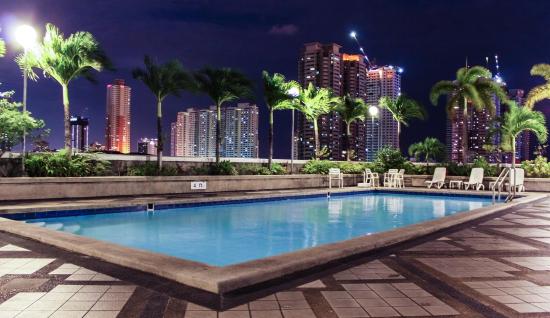
Pearl Manila Hotel

Here's a list of hotel accommodation you can book in Manila:


IMPORTANT NOTE: The rates, contact details and other information indicated in this post are accurate from the time of writing but may change without IMFWJ's notice. Should you know the updated information, please let us know by leaving a message in the comment box below.


SAN SEBASTIAN CHURCH: Guide to Minor Basilica of San Sebastian (Architecture, History & Mass Schedule)