In the Catholic Church, a basilica is a designation given by the Pope to a church building. Basilicas are distinguished for ceremonial purposes from other churches.
The building need not be a basilica in the architectural sense (a rectangular building with a central nave flanked by two or more longitudinal aisles).
Basilicas are either major basilicas – of which there are four, all in the Diocese of Rome – or minor basilicas, of which there were 1,810 worldwide as of 2019.
RELATED: List of Marian Shrines in the Philippines

Here are the 19 basilica churches designated in the Philippines:
The basilica houses the Virgin Milagrosa statue of the Virgin Mary. It is dedicated to John the Baptist and has the title of a minor basilica since 2018. It was built in the 17th century in the Baroque style.
The original building was destroyed in 1762 by British bombardment. A new granite church was completed on the same site in 1852 however it was greatly damaged during the Second World War, with only the western façade and the octagonal belfry surviving.
On February 13, 1945, the church was declared a minor basilica of the Immaculate Conception. The declaration was made upon the request of Lipa's bishop, Alfredo Verzosa. On January 16, 2022, the Basilica was also declared as the Archdiocesan Shrine of Santo Niño de Batangan.
The cathedral is the see of the Bishop of Malolos, whose diocese is a suffragan of the Archdiocese of Manila.
The parish encompassing Manaoag and the surrounding towns is administered by the Order of Preachers under the Roman Catholic Archdiocese of Lingayen-Dagupan. It was officially declared a Basilica in 2015.
The historic bell of the church of the Parish of the beloved Nuestra Señora del Rosario was presented to the public and installed in front of the church on June 7, 1998. It is a symbol of the undying, truthful and timeless faith of the people of Orani to the Lord.
It is the seat of the Santa Monica Parish of the Roman Catholic Diocese of San Fernando de La Union under the Vicariate of St. Francis Xavier (Vicar Forane Raul S. Panay). The diocese of San Fernando La Union is part of the territory of the Archdiocese of Nueva Segovia.

It is one of the largest Marian pilgrimage sites in Asia. The icon of Our Lady of Peñafrancia is enshrined in this sanctuary. Rev. Fr. Rodel Cajot is the present Rector of the Basilica, having been appointed in 2011. It is the only basilica in the Bicol Region and the Roman Catholic Archdiocese of Caceres.

It was declared by Pope Francis on March 21, 2021 that the parish will be elevated into a Minor Basilica. On November 27, 2021, the church was formally declared as a Minor Basilica which was headed by Charles Brown, the apostolic nuncio to the Philippines.
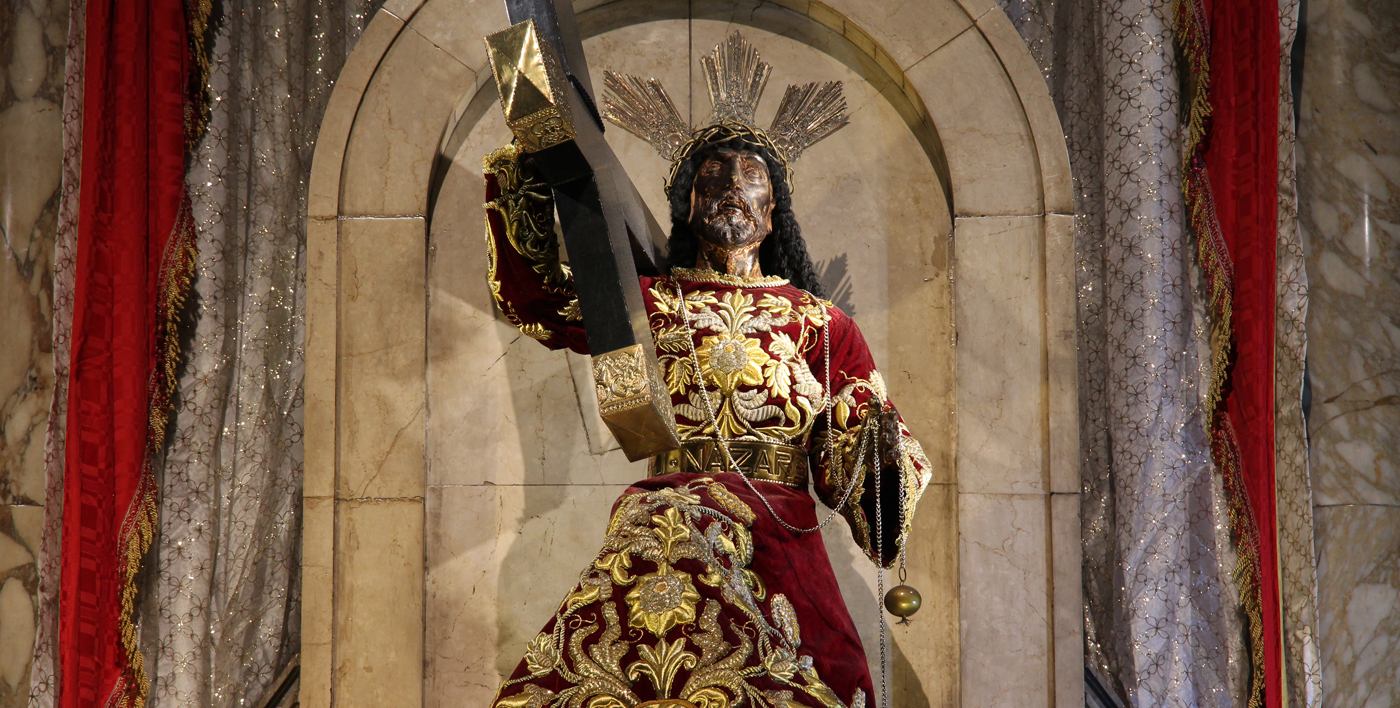
The basilica is famous home for the Black Nazarene, a dark statue of Jesus Christ said to be miraculous. The basilica is under the jurisdiction of the Archdiocese of Manila and its current rector is Rev. Fr. Rufino C. Sescon, Jr.
Completed in 1891, San Sebastian Church is noted for its architecture. An example of the Gothic Revival architecture in the Philippines, it is the only steel building church in the Philippines. It was designated as a National Historical Landmark in 1973 and as a National Cultural Treasure in 2011.
It is the oldest Roman Catholic church in the country, allegedly built on the spot where the image of the Santo Niño de Cebú was found during the expedition of Miguel López de Legazpi.
It is one of the oldest churches in the country having founded in 1590. The church is dedicated to its founder Padre Pedro Bautista (Peter Baptist), a Spanish missionary from Ávila, Spain, one of the 26 Christians martyred in Japan in 1597.
It is dedicated to Saint Nicholas of Tolentino and is under the administration of the Archdiocese of Nueva Segovia. In May 2021, it was announced that it was granted the title of minor basilica, the 19th in the Philippines and the first in its archdiocese.
It is considered to be the largest church in the Philippines and in Asia, standing 88.6 meters (291 ft) long and 48 meters (157 ft) wide. Martin of Tours is the patron saint of Taal, whose fiesta is celebrated every November 11.
The church is the largest in the province of Quezon; and is built in the shape of a key. Locals often refer to the church as Susi ng Tayabas ("The Key of Tayabas"). The church's 103-metre (338-foot) aisle also has the longest nave among Spanish colonial era churches in the Philippines.
Loading...
Numerous basilicas are notable shrines, often even receiving significant pilgrimages, especially among the many that were built above a confessio or the burial place of a martyr – although this term now usually designates a space before the high altar that is sunk lower than the main floor level (as in the case in St Peter's and St John Lateran in Rome) and that offer more immediate access to the burial places below.
Some Catholic basilicas are Catholic pilgrimage sites, receiving tens of millions of visitors per year.
Churches designated as papal basilicas, in particular, possess a papal throne and a papal high altar, at which no one may celebrate Mass without the pope's permission.
Badoc Basilica
The Saint John the Baptist Basilica, also known as the Shrine of La Virgen Milagrosa de Badoc, is a Roman Catholic church in Badoc, in the northern Philippine province of Ilocos Norte.
 |
| Badoc Basilica in 2013 |
The basilica houses the Virgin Milagrosa statue of the Virgin Mary. It is dedicated to John the Baptist and has the title of a minor basilica since 2018. It was built in the 17th century in the Baroque style.
Church founded: 1714
Declared as a basilica: 2018
Location: Brgy Soriano Street, Badoc, Ilocos Norte [ Get Directions ]
Binondo Church
Binondo Church, also known as the Minor Basilica and National Shrine of Saint Lorenzo Ruiz and formerly known as Our Lady of the Most Holy Rosary Parish, is located in the District of Binondo, Manila fronting Plaza San Lorenzo Ruiz, in the Philippines. This church was founded by Dominican priests in 1596 to serve their Chinese converts to Christianity.
 |
| Binondo Church |
The original building was destroyed in 1762 by British bombardment. A new granite church was completed on the same site in 1852 however it was greatly damaged during the Second World War, with only the western façade and the octagonal belfry surviving.
Church founded: 1596
Declared as a basilica: July 23, 1992
Location: 1006 Plaza Lorenzo Ruiz, Binondo, 1006 Metro Manila [ Get Directions ]
Minor Basilica of the Immaculate Conception (Batangas City)
Minor Basilica of the Immaculate Conception is a minor basilica in Batangas City, Philippines. It was made an independent parish in 1614 under the advocation of the Immaculate Conception.
 |
| Minor Basilica of the Immaculate Conception |
On February 13, 1945, the church was declared a minor basilica of the Immaculate Conception. The declaration was made upon the request of Lipa's bishop, Alfredo Verzosa. On January 16, 2022, the Basilica was also declared as the Archdiocesan Shrine of Santo Niño de Batangan.
Church founded: 1578 (first temporary church), 1857 present church
Declared as a basilica: February 13, 1945
Location: M.H.Del Pilar, Poblacion, Batangas [ Get Directions ]
Malolos Cathedral
Malolos Cathedral, formally known as the Minor Basilica and Cathedral of the Immaculate Conception of Malolos, is a historic church in the Philippines located in city of Malolos, the capital of the province of Bulacan.
.jpg) |
| Malolos Cathedral in 2017 |
The cathedral is the see of the Bishop of Malolos, whose diocese is a suffragan of the Archdiocese of Manila.
Church founded: 11 June 1580, consecrated in 1817
Declared as a basilica: December 4, 1999
Location: RRV6+4H4, Malolos, Bulacan [ Get Directions ]
Manaoag Church
The Minor Basilica of Our Lady of the Rosary of Manaoag, located on top of a hill in the town, has been canonically affiliated with the Papal Basilica of Saint Mary Major in Rome since June 2011.
.jpg) |
| Manaoag Church |
The parish encompassing Manaoag and the surrounding towns is administered by the Order of Preachers under the Roman Catholic Archdiocese of Lingayen-Dagupan. It was officially declared a Basilica in 2015.
Some of the miracles attributed to Our Lady of Manaoag are depicted in murals inside the church's transepts and nave. The Paschal Chapel beside the south flank of the church has icons of the Black Nazarene similar to that of the Quiapo Church, the Santo Entierro (Dead Christ), and other statues of the Virgin Mary.
Church founded: 1600s by the Augustinians as Santa Monica Chapel, established by Captain Gaspar de Gamboa in 1720
Declared as a basilica: February 2015
Location: Milo St, Manaoag, Pangasinan [ Get Directions ]
Manila Cathedral
The Minor Basilica and Metropolitan Cathedral of the Immaculate Conception, also known as the Manila Cathedral (Spanish: Catedral de Manila), is the cathedral of Manila and basilica located in Intramuros, the historic walled city within today's modern city of Manila, Philippines.
 |
| Front view of The Cathedral in Intramuros, Manila as of April 2015 |
It is dedicated to the Immaculate Conception of the Blessed Virgin Mary as the Patroness of the country. The cathedral serves as the episcopal seat of the Archbishop of Manila. On April 27, 1981, Pope John Paul II issued papal bull Quod Ipsum designating the cathedral as a minor basilica by his own Motu Proprio.
Church founded: 1571
Declared as a basilica: April 27, 1981
Location: Cabildo, 132 Beaterio St, Intramuros, Manila [ Get Directions ]
Orani Church
The Roman Catholic church of Orani, declared as an independent parish on April 21, 1714, and also known as Our Lady of the Most Holy Rosary Parish Church ("Our Lady of the Rosary of Orani Church", "Nuestra Señora del Rosario Parish Church", "Simbahan ng Orani" or "Virgen Milagrosa Del Rosario del Pueblo de Orani Shrine") is a Neoclassical (heritage) Diocesan Marian Shrine and Pilgrimage church located in the center of Orani, Bataan in the Philippines.
 |
| Orani Church façade |
The historic bell of the church of the Parish of the beloved Nuestra Señora del Rosario was presented to the public and installed in front of the church on June 7, 1998. It is a symbol of the undying, truthful and timeless faith of the people of Orani to the Lord.
Church founded: April 21, 1714 as an independent parish
Declared as a basilica: September 5, 2019
Location: QFVH+794, Orani, Bataan [ Get Directions ]
Basilica Minore of Our Lady of Charity
The Basilica Minore of Our Lady of Charity, better known as Agoo Basilica, is a Roman Catholic minor basilica in Agoo, La Union, the Philippines dedicated to Our Lady of Charity.
 |
| Agoo Basilica |
It is the seat of the Santa Monica Parish of the Roman Catholic Diocese of San Fernando de La Union under the Vicariate of St. Francis Xavier (Vicar Forane Raul S. Panay). The diocese of San Fernando La Union is part of the territory of the Archdiocese of Nueva Segovia.
The basilica is under the leadership of parish priest Alfonso V. Lacsamana and parish vicar Liberato A. Apusen. It is situated along MacArthur Highway in Agoo, La Union in front of the Jose D. Aspiras Civic Center.
Church founded: 1578
Declared as a basilica: July 15, 1982
Location: Poblacion, Agoo, La Union [ Get Directions ]
Basilica of Our Lady of Piat
The Basilica Minore of Our Lady of Piat is one of the Minor Basilicas in the Philippines.

Church founded: 1604
Declared as a basilica: June 22, 1999
Location: QFPJ+R28, Basilica Minore of Our Lady of Piat Rd, Piat, Cagayan [ Get Directions ]
Peñafrancia Basilica
The Peñafrancia Minor Basilica or the Minor Basilica of Our Lady of Peñafrancia is a Roman Catholic minor basilica located on the outskirts of Naga City — also known as the Pilgrim City and Queen City of Bicol — in the Bicol Region of the Philippines.
 |
| Peñafrancia Basilica |
It is one of the largest Marian pilgrimage sites in Asia. The icon of Our Lady of Peñafrancia is enshrined in this sanctuary. Rev. Fr. Rodel Cajot is the present Rector of the Basilica, having been appointed in 2011. It is the only basilica in the Bicol Region and the Roman Catholic Archdiocese of Caceres.
Church founded: May 22, 1982
Declared as a basilica: May 22, 1985
Location: Balatas Road, Naga, 4400 Camarines Sur [ Get Directions ]
Immaculate Conception Parish Church (Santa Maria)
The Minor Basilica of La Purísima Concepción, locally known as Santa Maria Church is a Roman Catholic Church located in the municipality of Santa Maria, in the province of Bulacan, Philippines. It is under the coat of arms and jurisdiction of the Roman Catholic Bishop of Malolos and Seat of the Episcopal Vicar of the Eastern District of the Diocese of Malolos.

It was declared by Pope Francis on March 21, 2021 that the parish will be elevated into a Minor Basilica. On November 27, 2021, the church was formally declared as a Minor Basilica which was headed by Charles Brown, the apostolic nuncio to the Philippines.
Church founded: 1793
Declared as a basilica: November 27, 2021
Location: RX97+R72, Santa Maria, 3022 Bulacan [ Get Directions ]
Quiapo Church
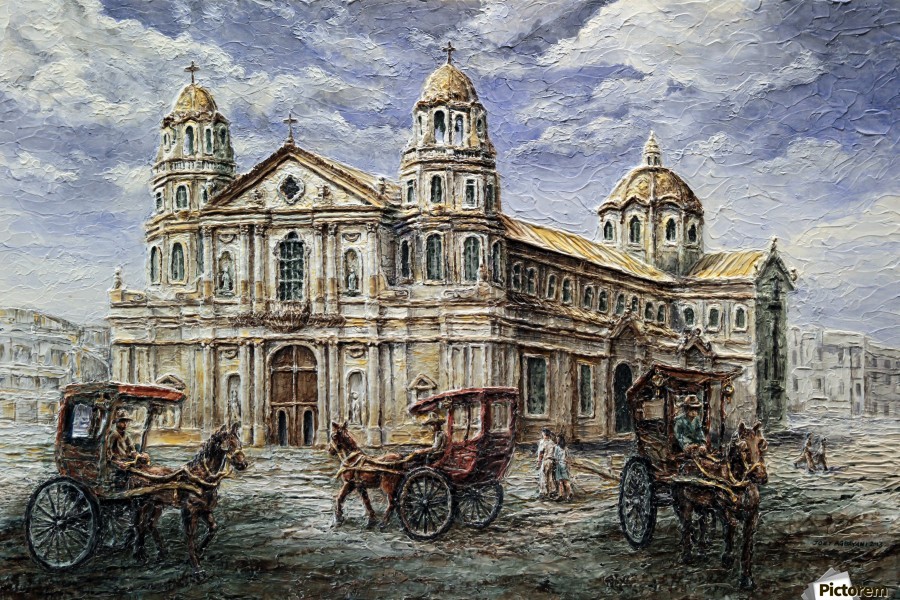
The Minor Basilica of the Black Nazarene, known canonically as the Parish of Saint John the Baptist and also known as Quiapo Church, is a prominent basilica in the district of Quiapo in the city of Manila, Philippines.
 |
| Quiapo Church |
The basilica is famous home for the Black Nazarene, a dark statue of Jesus Christ said to be miraculous. The basilica is under the jurisdiction of the Archdiocese of Manila and its current rector is Rev. Fr. Rufino C. Sescon, Jr.
The masses go to Quiapo Church in downtown Plaza Miranda and drop a visit to the Nuestro Señor Jesús Nazareno (a dark figure of Christ carved by a Mexican artist from black wood) whose image, reputedly miraculous, was brought to the country in a Spanish galleon in the 17th century. The Feast of the Black Nazarene on 9 January celebrates the traslación (solemn translation) of the statue to the church from the Church of Saint Nicholas Tolentino.
Church founded: 1586
Declared as a basilica: December 11, 1987
Location: 391, Quiapo, Manila, 1001 Metro Manila [ Get Directions ]
San Sebastian Church (Manila)
The Minor Basilica of San Sebastian, better known as San Sebastian Church or San Sebastian Basilica is a minor basilica of the Roman Catholic Church in Manila, Philippines. It is the church of the Parish of San Sebastian, and also a Shrine of Nuestra Senora del Monte Carmelo, or Our Lady of Mount Carmel.
 |
| Minor Basilica of San Sebastian |
Completed in 1891, San Sebastian Church is noted for its architecture. An example of the Gothic Revival architecture in the Philippines, it is the only steel building church in the Philippines. It was designated as a National Historical Landmark in 1973 and as a National Cultural Treasure in 2011.
Church founded: 1621 first church was built, 1891 the present church was completed
Declared as a basilica: June 24, 1890
Location: Pasaje del Carmen St, Quiapo, Manila, 1001 Metro Manila [ Get Directions ]
Basilica del Santo Niño
The Basílica Menor del Santo Niño de Cebú (Minor Basilica of the Holy Child of Cebú), commonly known as Santo Niño Basilica, is a basilica in Cebu City in the Philippines that was founded in 1565 by Fray Andrés de Urdaneta and Fray Diego de Herrera.
 |
| Basílica Menor del Santo Niño de Cebú |
It is the oldest Roman Catholic church in the country, allegedly built on the spot where the image of the Santo Niño de Cebú was found during the expedition of Miguel López de Legazpi.
This image of the Child Jesus is the same presented by Ferdinand Magellan to the chief consort of Rajah Humabon on the occasion of their royal Baptism to Roman Catholicism on 14 April 1521. The image was found by a soldier named Juan de Camuz forty years later, preserved in a wooden box, after Legazpi had razed a local village.
When Pope Paul VI made the church a basilica in 1965, he declared it to be "the symbol of the birth and growth of Christianity in the Philippines." The present building was completed from 1739–1740, and was designated by the Holy See as the "Mother and Head of all Churches in the Philippines".
Church founded: April 28, 1565
Declared as a basilica: 1965
Location: Pilgrim’s Center, Osmeña Blvd, Cebu City, 6000 Cebu [ Get Directions ]
Basilica Minore de Santuario de San Pedro Bautista
The Basilica Menor de San Pedro Bautista (Minor Basilica of Saint Pedro Bautista), also known as the San Francisco del Monte Church is a parish church in the San Francisco del Monte district of Quezon City, in the Philippines.
 |
| Basilica Minore de Santuario de San Pedro Bautista |
It is one of the oldest churches in the country having founded in 1590. The church is dedicated to its founder Padre Pedro Bautista (Peter Baptist), a Spanish missionary from Ávila, Spain, one of the 26 Christians martyred in Japan in 1597.
Church founded: 1590 (sub-parish)
Declared as a basilica: July 9, 2020
Location: 69 San Pedro Bautista, San Francisco del Monte, Quezon City [ Get Directions ]
Sinait Basilica
The Minor Basilica of Saint Nicholas of Tolentino and Shrine of El Santo Cristo Milagroso is a Roman Catholic church in the municipality of Sinait, Ilocos Sur, in northern Philippines. The church is known for housing the El Santo Cristo Milagroso, a life-sized dark-skinned image of crucified Christ.
 |
| Sinait Basilica |
It is dedicated to Saint Nicholas of Tolentino and is under the administration of the Archdiocese of Nueva Segovia. In May 2021, it was announced that it was granted the title of minor basilica, the 19th in the Philippines and the first in its archdiocese.
Church founded: 1574
Declared as a basilica: September 10, 2021
Location: VF85+638, Sinait, Ilocos Sur [ Get Directions ]
ATTRACTIONS TO SEE IN MANILA
Klook.comTaal Basilica
The Taal Basilica, canonically known as the Minor Basilica of Saint Martin of Tours, is a minor basilica in the town of Taal, Batangas, in the Philippines, within the Archdiocese of Lipa.
 |
| Taal Basilica |
It is considered to be the largest church in the Philippines and in Asia, standing 88.6 meters (291 ft) long and 48 meters (157 ft) wide. Martin of Tours is the patron saint of Taal, whose fiesta is celebrated every November 11.
Church founded: 1572
Declared as a basilica: December 8, 1954
Location: Calle San Martin, Taal, 4208 Batangas [ Get Directions ]
Taguig Church
The Saint Anne Parish Church, also known as Santa Ana Church or also known in its formal name as the Minor Basilica and Archdiocesan Shrine of St. Anne, is a Catholic church and minor basilica located in Barangay Santa Ana, Taguig.
 |
| Saint Anne Parish Church |
It is situated next to the Taguig River and across Plaza Quezon, where the statue of Manuel L. Quezon was erected when he was still serving as President of the Philippines. Saint Anne is the patroness of the church.
Church founded: 1587
Declared as a basilica: July 26, 2022
Location: 41 Liwayway Street, Santa Ana, Taguig [ Get Directions ]
Tayabas Basilica
The Minor Basilica of Saint Michael the Archangel, commonly known as the Tayabas Basilica, is a Roman Catholic basilica located in Tayabas, Quezon, Philippines under the Roman Catholic Diocese of Lucena. Its titular is Saint Michael the Archangel, whose feast is celebrated annually on September 29.
 |
| Facade of Tayabas Basilica |
The church is the largest in the province of Quezon; and is built in the shape of a key. Locals often refer to the church as Susi ng Tayabas ("The Key of Tayabas"). The church's 103-metre (338-foot) aisle also has the longest nave among Spanish colonial era churches in the Philippines.
Church founded: 1585
Declared as a basilica: October 18, 1988
Location: Lopez Jaena Street, Tayabas, 4327 Quezon [ Get Directions ]
ACTIVITIES AND TOURS IN MANILA
Here's a list of basilica churches in the Philippines in alphabetical order:
- Badoc Basilica
- Binondo Church
- Minor Basilica of the Immaculate Conception (Batangas City)
- Malolos Cathedral
- Manaoag Church
- Manila Cathedral
- Orani Church
- Basilica Minore of Our Lady of Charity
- Basilica of Our Lady of Piat
- Peñafrancia Basilica
- Immaculate Conception Parish Church (Santa Maria)
- Quiapo Church
- San Sebastian Church (Manila)
- Basilica del Santo Niño
- Basilica Minore de Santuario de San Pedro Bautista
- Sinait Basilica
- Taal Basilica
- Taguig Church
- Tayabas Basilica
READ NEXT:
basilica vs cathedral major basilica basilica near me 17 minor basilica in the philippines oldest basilica in the philippines first minor basilica in the philippines national shrines in the philippines basilicas in the world 17 minor basilica in the philippines oldest basilica in the philippines first minor basilica in the philippines 13 minor basilica in the philippines list of basilicas famous basilicas how many minor basilicas are in the philippines