Showing posts with label School. Show all posts

Makati Science High School officially adopted its enhanced new logo, a symbol-rich design that encapsulates the institution's enduring ideals and future aspirations.


Mandated by School Memorandum No. 112, s. 2025, the updated emblem visually articulates the school's commitment to academic excellence, holistic development, and its unique identity within the educational landscape.

Loading...

Decoding the Symbols: What the New Logo Represents

The enhanced Makati Science High School logo is meticulously designed, with each element carrying significant meaning:

1. Makati Science High School (Name): This prominent display of the school's official name, as reflected in its legal documents, anchors the logo in its established identity.

2. Laurel Leaves (Right Side): The laurel leaves are a classic symbol of excellence, representing the school's dedication to fostering outstanding learners in both academic and non-academic endeavors. They signify the holistic development and achievements of its students.

3. Presence of 13 Cogs or Gear Teeth (Left Side): The 13 cogs symbolize the Department of Education’s K-12 curriculum. Their interconnectedness represents the integrated and comprehensive educational framework implemented by the school, preparing students for higher education and future careers.


4. Atom (Electron) & 5. Laptop: These two elements collectively symbolize the school's core focus on the Science, Technology, Engineering, and Mathematics (STEM) curriculum. The atom represents fundamental scientific principles and exploration, while the laptop signifies technological advancement and modern learning.

6. DepEd Logo (Central Design of the Laptop): The inclusion of the Department of Education (DepEd) logo within the laptop design underscores the school's mission to instill and reinforce the DepEd Core Values: Maka-Diyos (God-fearing), Maka-Tao (Humanitarian), Makakalikasan (Environmentally Conscious), and Makabansa (Nationalistic). This highlights the school's role in character formation alongside academic rigor.


7. 1986: This number signifies the founding year of Makati West High School, the institution's former name. It serves as a historical anchor, connecting the present identity to its origins.

8. Two Red Dots: These two distinct red dots symbolize the two accepted names of the school. The first dot represents its former identity as Makati West High School, while the second dot signifies its current legal name, Makati Science High School, acknowledging its evolution and continuous legacy.

9. City of Taguig: The inclusion of "City of Taguig" specifies the jurisdiction and geographical location of Makati Science High School. This explicitly indicates its direct supervision under the Schools Division Office of Taguig City and Pateros, reflecting the change in territorial jurisdiction.


10. Internal (Red) and External Rings (Blue):

  • The internal ring (red), which encloses all elements except the school's name and city, represents the internal stakeholders: the dedicated teachers, school administrators, and diligent students. These are the primary individuals actively involved in executing the mission and vision of the school.

  • The external ring (blue), which encompasses all elements, signifies the presence and importance of external stakeholders. This includes parents, alumni, government officials, and various partner organizations who provide crucial support to help actualize the school's mission and vision, fostering a collaborative educational ecosystem.

The adoption of this enhanced logo marks a new chapter for Makati Science High School, visually articulating its rich history, core educational philosophy, and commitment to nurturing future leaders in science and technology.

The New Makati Science High School Logo Meaning


Makati Science High School (MSHS), affectionately known as "MakSci," stands as a beacon of specialized secondary education in the Philippines. Renowned for its rigorous Science, Technology, Engineering, and Mathematics (STEM) curriculum, MSHS has a rich history of fostering academic excellence and holistic development. From its humble beginnings as Makati West High School to its current status under the Schools Division Office of Taguig City and Pateros, MSHS continues to shape future leaders and innovators.


Historical Roots and Transformation

Makati Science High School's journey began on June 16, 1986, initially established as Makati West High School. It was founded to address the educational needs of elementary graduates in Makati's first legislative district, becoming one of the first public secondary schools in the then-municipality of Makati.

In 1994, recognizing its growing specialization in science and technology education, the school was officially renamed Makati Science High School. Over the years, MSHS has seen several relocations, moving from Mayapis Street to Osias Street in 1997, and finally to its current modern campus along Kalayaan Avenue in Barangay Cembo in 2014.

Makati Science High School along Kalayaan Avenue in Cembo, Taguig

This 10-story building boasts state-of-the-art facilities, including numerous science laboratories, computer labs, a speech lab, an auditorium, and even a dormitory, providing an environment conducive to advanced learning.

Loading...

A significant administrative shift occurred in 2022 when the Supreme Court ruled that Barangay Cembo, where MSHS is located, falls under the jurisdiction of Taguig City. Consequently, the administration, management, and supervision of the school were officially transferred from Makati City's Schools Division Office to the Schools Division Office of Taguig City and Pateros (SDO-TaPat) for the Academic Year 2023-2024 onwards. This transition underscores the school's adaptability and commitment to maintaining its high standards regardless of administrative changes.


A Glimpse into MakSci's Profile

Makati Science High School's identity is deeply embedded in its commitment to specialized education and the development of well-rounded individuals. This is powerfully reflected in its recently enhanced official logo, effective July 14, 2025, which visually articulates its ideals:

  • Name & History: Prominently features "Makati Science High School" and "1986" (its founding year as Makati West High School), with two red dots symbolizing its former and current names, acknowledging its legacy.

  • Excellence & Curriculum: Laurel leaves denote academic and non-academic excellence, while 13 cogs represent the DepEd K-12 curriculum. The Atom and Laptop distinctly symbolize the school's focus on Science, Technology, Engineering, and Mathematics (STEM).

  • Values & Governance: The DepEd logo within the laptop emphasizes the school's mission to instill DepEd Core Values (Maka-Diyos, Maka-Tao, Makakalikasan, Makabansa). The inclusion of "City of Taguig" signifies its current jurisdiction and supervision under the SDO-TaPat.

  • Community: Internal (red) and external (blue) rings highlight the crucial roles of both internal stakeholders (teachers, administrators, students) and external partners (parents, alumni, government officials) in fulfilling the school's mission and vision.

MSHS implements a Special Science and Technology Curriculum for Junior High School and offers the STEM strand for Senior High School, attracting students who are passionate about scientific inquiry and innovation.


Admission Process: Pathways to MakSci

Gaining admission to Makati Science High School is a competitive, multi-stage process designed to identify academically promising and well-rounded Grade 6 learners. For School Year 2025-2026, the admissions follow these key guidelines:

A. Qualifications:


Open to All: Admission is open to all Grade 6 elementary learners from public and private schools, both within and outside the City of Taguig.

Academic Standards: Applicants must achieve:

  • At least 85% in Mathematics, Science, and English.

  • At least 83% in all other subjects.

These grades are assessed based on the First, Second, or Third Quarter report, whichever is applicable.

Good Moral Character: A certification of good moral character is required.

Two-Stage Evaluation:

  • On-site Admission Test (80%): Covers Mathematics, Science, English, and Non-verbal Ability.

  • On-site Interview (20%): Only students who meet the admission test cut-off score will be invited for an interview.

A combined overall score of 80% is needed for eligibility.


B. Requirements for Test Permit Issuance:


Completely filled-out Application Form (downloadable from the MSHS Facebook Page).

Certified True Copy of Grade 6 School Form 9 (Learner's Progress Report Card).

Certificate of Good Moral Character.


C. Application Submission:


Filing Period: From December 16, 2024, to January 24, 2025, Monday to Friday, 7:00 a.m. to 3:30 p.m.

Submission Channels:

  • DepEd-Taguig City Public Schools: Submit documents to respective guidance counselors/teachers.

  • Private Schools & Other Public Schools (outside Taguig City): Submit documents directly to the School Guidance Office at MSHS.


D. Admission Test Details:


Date & Time: February 1, 2025 (Saturday), 8:00 a.m. to 12:00 p.m.

Location: Makati Science High School Testing Rooms (on-site).

Essentials: Bring pencil and eraser, test permit, and school ID. Applicants should arrive 30 minutes early.


E. Interview Process:


Face-to-Face: Interviews are conducted in person for those who pass the admission test.

Attendance: Failure to attend the scheduled interview results in a zero rating for this component.


F. Results and Acceptance:


Limited Slots: Only a maximum of 210 learners will be accepted for Grade 7.

Ranking: Students are ranked separately:

  • Top 126 learners from DepEd-Taguig City public schools.

  • Top 84 learners from private schools and public schools outside Taguig City.

Announcement: Results will be posted on the Makati Science High School grounds and its official Facebook Page.


Recent Updates and Future Outlook

Makati Science High School continuously adapts to educational advancements and administrative shifts. The formal adoption of its enhanced logo signifies a renewed commitment to its values and specialized curriculum. Despite its relocation to Taguig's jurisdiction, MSHS maintains its distinct identity and high academic standards, serving as a beacon for aspiring scientists and innovators. Its state-of-the-art facilities and dedicated faculty underscore its mission to produce globally competitive and values-driven graduates ready to contribute meaningfully to society.

Makati Science High School (MSHS)


The Muntinlupa Educational Assistance Program is a comprehensive scholarship and financial aid initiative implemented by the City Government of Muntinlupa, Philippines.


Muntinlupa Educational Assistance Program

Managed by the Muntinlupa Scholarship Division (MSD), the program aims to provide financial support to qualified students residing in the city, covering various levels of education from elementary to postgraduate studies. It is a cornerstone of the city's commitment to enhancing educational access and quality for its constituents.

The Muntinlupa Educational Assistance Program is designed to cater to a wide range of students, with financial grants varying based on the educational level and type of institution. The program's annual budget was notably increased to P500 million in late 2023, following Mayor Ruffy Biazon's signing of Ordinance No. 2023-143, aiming to benefit nearly 80,000 students.


Loading...

Distribution Through Tranches

Financial grants are typically disbursed in tranches rather than strict monthly payments, with each tranche covering expenses for several months of the school year. 

  • Public Elementary School Students: Eligible pupils receive an annual financial grant of up to P5,000. This is commonly disbursed in two tranches of P2,500 each, covering approximately five months per tranche (e.g., August-December and January-May).

  • Public Junior High School Students: Students at this level are eligible for an annual grant of up to P6,000, typically disbursed as P3,000 per tranche.

  • Public Senior High School Students: These students receive an annual allowance of up to P7,000, generally amounting to P3,500 per tranche.

  • Alternative Learning System (ALS) Program: Students under the ALS program are also eligible for financial assistance (e.g., P3,000 covering six months).


The educational assistance received typically covers a specific period, for example, for the last five months of the 10-month school year, depending on the tranche being disbursed.


Eligibility and Application Process

To qualify for the Muntinlupa Educational Assistance Program, applicants must meet specific criteria and submit required documentation to the MSD. While precise requirements may vary slightly by category and academic year, general qualifications and processes include:

Residency: Applicants must be bona fide residents of Muntinlupa City.

Enrollment: Must be officially enrolled in a public elementary, junior high, senior high school, or a qualified private institution (depending on the specific scholarship category).


Disbursement

Once approved, beneficiaries are informed of the schedule for claiming their allowances. Disbursements is done through cash distribution at designated venues announced by the Muntinlupa Scholarship Division.


Required Documents

When claiming the educational assistance, applicants or their authorized representatives must bring:

  • Their own black ballpen.

  • The student's Care Card or official receipt with the Care Card number (Original and Photocopy).

  • Proof of Enrollment (e.g., Certificate of Enrollment or Registration Form from the school).

Other documents as required by MSD (e.g., valid IDs of student/parent/guardian, birth certificate, academic records, income proof if applicable).


Schedule and Coordination

The schedule for the recording and distribution of educational assistance for each school is determined based on the recommendation of the respective School Scholarship Committee.

Note: Students and parents should wait for direct advisories from their schools regarding the exact date and time of distribution, as these schedules are often not publicly announced by the MSD on city social media pages.

Any disruption or non-compliance with the established guidelines may lead to the Muntinlupa Scholarship Division (MSD) temporarily or permanently halting the allowance distribution at any time.


The program is centrally managed by the Muntinlupa Scholarship Division (MSD), operating under the purview of the Muntinlupa City Government. It is a vital part of Mayor Ruffy Biazon's "7K Agenda," specifically prioritizing "Karunungan" (Knowledge/Education).

The Muntinlupa Educational Assistance Program significantly contributes to reducing the financial burden on families, encouraging higher school retention rates, and fostering a culture of continuous learning among Muntinlupa residents. By investing heavily in education, the city aims to equip its youth with the necessary tools and opportunities for a brighter future.

Guide to Muntinlupa Educational Assistance Program by City's Scholarship Division (MSD)


In response to the sweltering temperatures sweeping across the nation, the Department of Education (DepEd) has issued a reminder to schools regarding the suspension of in-person classes in the event of extreme heat. The reminder comes amidst concerns over the health and well-being of students as the heatwave intensifies.


DepEd Spokesperson Michael Poa emphasized that schools have the authority to suspend face-to-face classes and transition to alternative delivery modes (ADM) when faced with adverse weather conditions.

The memo, issued on April 20, serves as a proactive measure to safeguard students' health and ensure optimal learning conditions.

"With varying situations in our schools, it will be the school heads who will determine the need for suspension," Poa stated. "We want to prevent the adverse effects of the scorching weather on our learners' health, so we remind school heads that they can swiftly switch to ADMs."

Loading...

The move comes in light of warnings from the Philippine Atmospheric, Geophysical, and Astronomical Services Administration (PAGASA) of even higher heat index values in the coming days.

Recent reports indicate alarming temperatures, with Metro Manila recording its highest temperature yet at 36.2 degrees Celsius. Pagasa forecasts a heat index of up to 56 degrees Celsius in Muñoz, Nueva Ecija, and 50 degrees Celsius in Cabanatuan.


Pagasa categorizes heat indices between 41 and 54 degrees Celsius as "dangerous," with the potential to cause heat-related illnesses such as cramps, exhaustion, and, in extreme cases, heat stroke. 

Senator Sherwin Gatchalian, Chairman of the Senate Committee on Basic Education, echoed concerns over the impact of the heatwave on students' health. He advocated for the adjustment of the academic calendar to accommodate summer vacation in April-May rather than July-August.


Gatchalian's proposal gains traction following an incident in Cabuyao City, Laguna, where over a hundred students fell ill during a fire drill conducted amidst hot weather. The incident underscores the urgency of addressing the challenges posed by extreme heat on students' safety and well-being.

As temperatures continue to rise, the DepEd's reminder serves as a timely precautionary measure to ensure the health and safety of students across the country. By empowering schools to make informed decisions regarding class suspension, DepEd aims to mitigate the adverse effects of the heatwave on the education sector.

Visit PAGASA's latest reports and updates to know the weather, temperature and heat index in your area.


ATTRACTIONS TO SEE IN MANILA 

Klook.com


DepEd Issues Reminder on Suspension of In-Person Classes Due to Hot Weather


Looking to elevate your career and skills in the competitive landscape?


CPDC Training & Testing Corp. in Taguig is your gateway to a world of professional growth and development. The have openings for the following programs that cater to various career paths:

Loading...

Japanese Language and Culture Level II
Develop your proficiency in the Japanese language and immerse yourself in the rich culture.

Shielded Metal Arc Welding (SMAW) NC II
Master the art of Shielded Metal Arc Welding, gaining a National Certificate Level II qualification.

Shielded Metal Arc Welding (SMAW) NC III
Elevate your welding skills to the next level with the SMAW NC III program.

Gas Metal Arc Welding (GMAW) NC III
Become an expert in Gas Metal Arc Welding and obtain a National Certificate Level III.


CPDC Training & Testing Corp.

For inquiries, reach out to:

Mobile Number: +6399238343948
Tel. Number: (02) 8334 1176
Email Address: cpdccorp@gmail.com
Location: #8 CPDC Building, Lontoc St. cor. Virata St. near Samaca II, Brgy. Calzada, Taguig City


Discover a learning environment that prioritizes excellence and hands-on experience. CPDC Training & Testing Corp. is committed to providing top-notch education and skills enhancement.

Whether you are aiming to master a new language or looking to excel in the field of welding, CPDC is your partner in achieving success. Seize the opportunity! Your journey towards personal and professional advancement begins at CPDC Training & Testing Corp. in Taguig.

Check out my list of 10 FREE TESDA Online Courses


ATTRACTIONS TO SEE IN MANILA 

Klook.com

List of TESDA NC II and NC III Courses & Certification


Enroll to FREE Training Programs at CPDC Training & Testing Corp. (TESDA Scholarship)


This was once the 'Largest Secondary School in the World'!


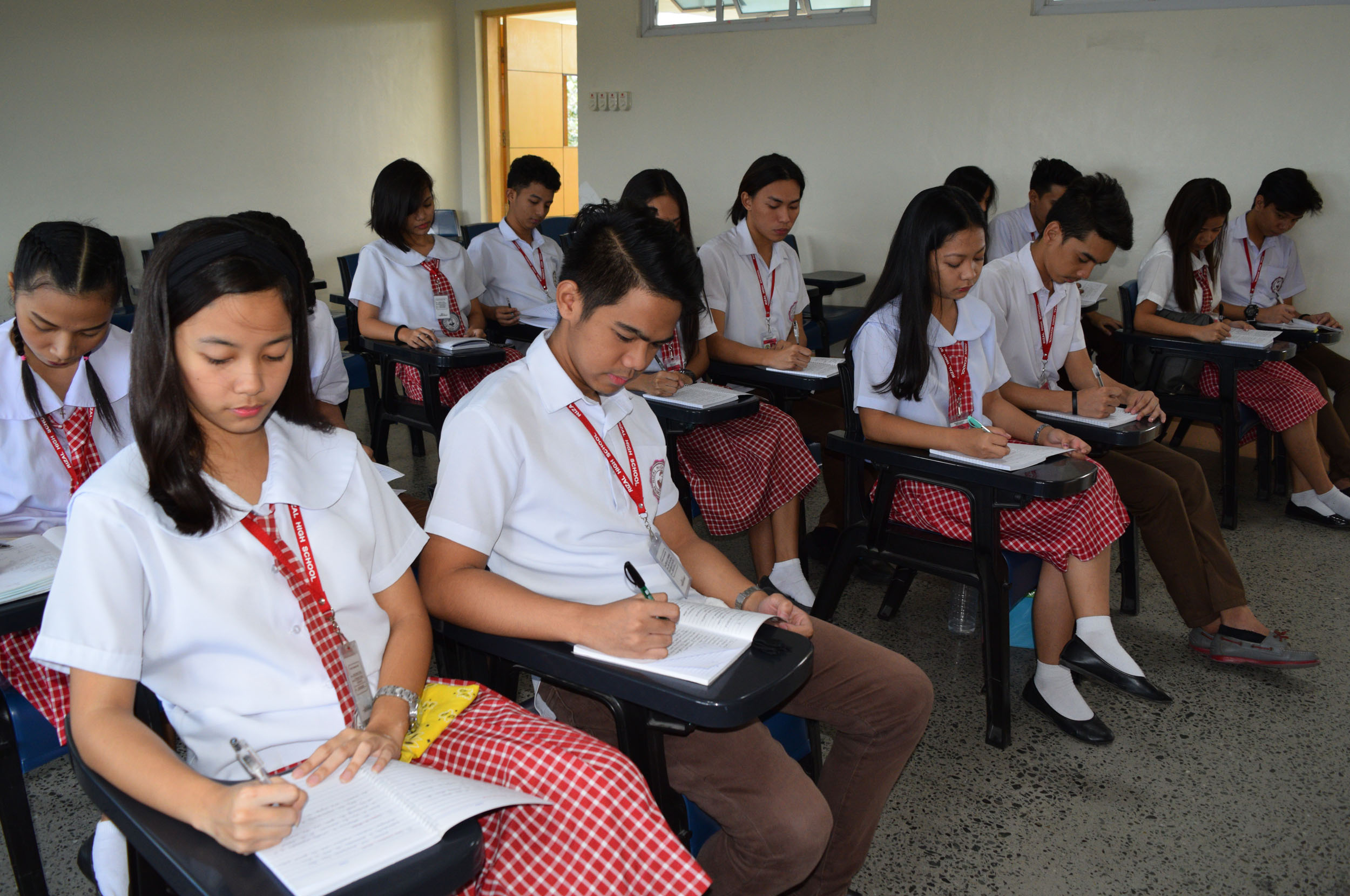
Rizal High School (FilipinoMataas na Paaralang Rizal) or commonly known as RHS an institution of secondary education based in PasigMetro ManilaPhilippines, has been listed as the “largest secondary school in the world” since 1993 by the Guinness Book of World Records until 2005 when City Montessori School in Lucknow, India held the title of the world's biggest school, when it had 29,212 pupils, beating Rizal High School in Manila, Philippines, which had 19,738 pupils.

Loading...

HISTORY OF RIZAL HIGH SCHOOL

Pasig Secondary School

The first secondary school in the province of Rizal known as the Pasig Secondary School was established in 1902 during the incumbency of Governor Ambrosio Flores with an enrollment of 28 pupils. The students came from five neighboring towns including Pasig.

The enrollment increased to 45 pupils in November, 65 in December and 88 in January and February in 1903, all intermediate pupils. The pupils were taught in a room of a rented building, 30 meters by 30 meters. The cost of the rent was $15, local currency, the amount paid from the provincial fund. 

RHS Class of 1975-76

At the beginning, the Provincial Board was against the establishment of a provincial school in Pasig, which is near Manila. The increase in American financial support by the provincial government was subject to the condition that the pupils from adjoining towns would attend classes in the provincial school rather than seeking enrollment in Manila.


Immediately after the military post occupied by American soldiers was vacated, it was turned over to the provincial government for the use of the Pasig Secondary School in November 1903. The building, although quite spacious, was old and dilapidated with a badly damaged roof. The teachers assigned to this school were all Americans, namely, Messrs. Laughlin, Click and Scruton. The Superintendent of Schools was Charles Rummel.
 
The military post was vacated when a new building was constructed in 1902 during the administration of Governor Jose Tupas. The basement of the building was used as a woodworking shop. This was the time when a first year class was organized.

RHS field in 1996

RHS field today

In 1913 a site of ten lots, of 63,700 square meters, was acquired through expropriation proceedings from landowners. The estimated value of the site was P38,540. It was surveyed on November 8, 1928 and registered on October 27, 1931 under Certificate of Title No. 4553. Soon, after the acquisition of the site, a modern, reinforced concrete and modified Standard Plan No. 20 school building was constructed.

This was in 1914 during the tenure of Governor Mariano Melendres. The building was completed and occupied in 1915.

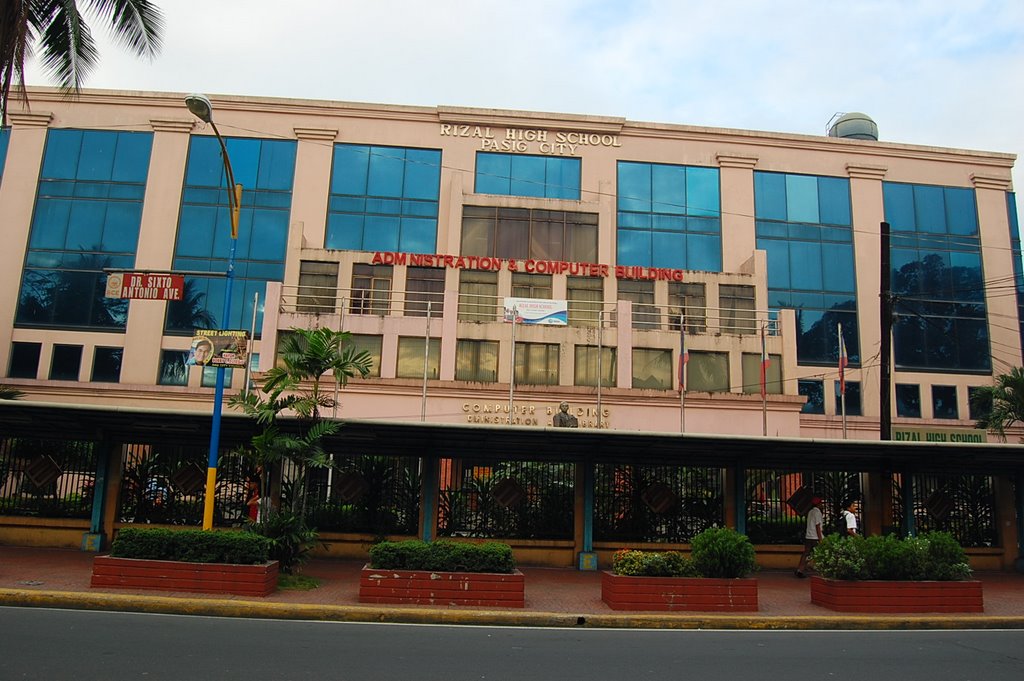
RHS as seen from Dr. Sixto Antonio Avenue


Change of Name

The name of Pasig Secondary School was changed to Rizal High School when a first year class of eleven pupils was organized and when the province was already putting up the greater bulk of the financial support for the school. The change to the present name Rizal High School was made in 1914 when the new building was completed and occupied by the school.
 
For many years since its establishment in 1902, the intermediate classes were under the supervision and administration of the secondary school principal. These classes were considered a preparatory department of the secondary school. The gradual change in administration started with the school year 1902-1921. The complete separation of the intermediate classes as a preparatory department to the high school took effect in 1924.
 
RHS students in 1996
 
RHS class today

The first graduating class was in 1918. Of the 30 fourth year students for the month of March, 27 qualified for graduation. Two of the graduates who later distinguished themselves in their chosen professions were U.P. Professor Cecilio Lopez and Dr. Elpidio Alcantara.
 
The first principal of the Pasig Secondary School was Steward Laughlin who also served as one of its earliest teachers. The first Filipino principal was Marcelino Bautista who served during the school year 1929-1930, followed by Ricardo Castro in 1930-1935, Aquilino Carino in 1935-1935, Eufrocino Malonzo in 1936-1939. The years preceding the Second World War saw Eliseo Tayao as principal of the Rizal High School (1939–41). The school was closed for sometime and was reopened with Cesario Bandong.

RHS Admin Building

ATTRACTIONS TO SEE IN MANILA 

Klook.com

Classes after Liberation

The carpet-bombing employed by the American Liberation Forces destroyed the Rizal High School building and grounds. Classes therefore were reorganized in 1945 at the Pasig Elementary School by Paterno Santiago (later to become principal of Morong High School). He took charge of the administration of the Rizal High School for about a month when he gave way to Cesario Bandong who served as principal until 1950.

The reconstruction of the Rizal High School was started on February 4, 1948 out of the War Damage Fund in the amount of P101,445.49 during the incumbency of Governor Sixto Antonio. The reconstruction was completed on August 15, 1949.

Demetrio M. Suguitan took over from Bandong (1950–1960). Modesta T. Javier became the principal in 1960-1974; Cesar S. Tiangco came in 1975 up to January 1980. Diana C. Santos became principal from 1980 until 1999. Josephine M. Cruz, who was then the Schools Division English Supervisor for the secondary level, was installed as Santos' replacement in 1999. Josephine M. Cruz was principal until 2012.

Now the school is under the management of Virginia R. Membrebe, a former Social Studies teacher of Rizal High School prior to her elevation to the principalship of Santa Lucia High School.


RIZAL HIGH SCHOOL EDUCATIONAL SERVICE / OFFERS


ACADEMIC
Appeals to those who have set their minds towards college education. Divided into degree-specific courses, the Academic track in senior high school aims to prepare students to more advanced university courses. Under this umbrella are three strands: Humanities and Social Sciences (HUMMS), Science, Technology, Engineering and Mathematics (STEM) and Accountancy, Business and Management (ABM)

TVL
It calls out to eligible students with subjects focused on job-ready skills. Besides, it offers practical knowledge with matching certificates to help students land their desired job after they graduate from SHS. Under the senior high school tech-voc track are the following strands. Home Economics, Industrial Arts and Information and Communications Technology (ICT).

ARTS & DESIGN
Inside this course, students with a penchant for the Arts can enroll in subjects that will hone their skills in visual design and the performing arts.

SPORTS
Developed to equip Senior High School students with sports-related and physical fitness and safety knowledge, this track appeals to those who wish to venture into athletics, fitness, and recreational industries.


Rizal High School

Address: Dr. Sixto Antonio Avenue, Pasig, 1600 Metro Manila
RHS logo
Phone: 0976 947 2375
Principal: Gilbert O. Inocencio (2019)
Founded: October 1, 1902
Motto: "Strive for Excellence for the Glory of God"
Colors: Red, Brown
School types: Secondary school, State school, Public school
Campus: Urban


Frequently Asked Questions (FAQs) Related To Rizal High School

  • Is Rizal High School Public or private?
    Rizal High School Formerly Pasig Secondary School is a DepED Managed Monograde Public Secondary School Located in 1st Districtof NCR SECOND DISTRICT.

  • How many students are in Rizal High School?
    21,139 students

  • Where is the biggest high school in the world?
    At 7:15am in the northern Indian city of Lucknow, a stream of children flows through the gates of the Kanpur Road campus of City Montessori school. A dozen helpers pull school bags off roof racks and direct traffic to keep things moving.

  • Where did Rizal take high school?
    On June 10, 1872, four months after the execution of Gomburza, accompanied by Paciano, Jose went to Manila and took an entrance examination at the Colegio de San Juan de Letran.

  • What is the biggest school in the Philippines?
    University of the Philippines Los Banos. "Elbi", as students would fondly call it, spans across a whopping 15, 000 hectares making it the biggest in the country


Where to Stay in Pasig

Whether you're a local looking for a quick getaway or a traveler exploring the wonders of Metro Manila, Pasig's hotels provide the perfect blend of comfort and luxury. Here are the top hotel accommodations in Pasig:


Also in Pasig


IMPORTANT NOTE: The rates, contact details and other information indicated in this post are accurate from the time of writing but may change without IMFWJ's notice. Should you know the updated information, please let us know by leaving a message in the comment box below.

WHERE TO STAY IN PASIG:

IMFWJ IS NOW ON YOUTUBE!

RIZAL HIGH SCHOOL: The Largest Secondary School in the World 1992-2005