Showing posts sorted by relevance for query National Historical Commission of the Philippines. Sort by date Show all posts

Here's everything you need to know about NHCP.


What is NHCP?

The National Historical Commission of the Philippines (NHCP), known in Filipino as Pambansang Komisyong Pangkasaysayan ng Pilipinas, is a vital government agency tasked with promoting Philippine history and cultural heritage. Established in its current form in 1972 during the reorganization of the government under President Ferdinand Marcos' martial law, the NHCP has deep roots dating back to the early 20th century.

NHCP building in Manila

The NHCP's core functions include research, dissemination, conservation, site management, and heraldry works aimed at fostering awareness and appreciation of Philippine history and heroes. It is responsible for maintaining historical sites, organizing commemorative events such as Independence Day and Rizal Day, and publishing works related to Philippine history.


NHCP in Details

NHCP Logo
Abbreviation: NHCP
Formation: 1933
Type: Historical commission
Headquarters: NHCP Building, T.M. Kalaw Avenue, Ermita, Manila
Location: Manila, Philippines
Website: nhcp.gov.ph

Loading...

Foundation of NHCP

The NHCP's origins trace back to 1933 when the Philippine Historical Research and Markers Committee (PHRMC) was established by U.S. Governor General Frank Murphy. The committee's primary objective was to identify and mark historic sites and structures, initially focusing on Manila before expanding its scope nationwide. Despite the destruction caused by World War II, the committee's efforts persisted, with many markers replaced during the post-war era.

With the establishment of the Philippine Commonwealth in 1935, President Manuel L. Quezon signed Executive Order No. 91 in 1937, creating the Philippines Historical Committee (PHC) to continue the work of the PHRMC. Throughout the war years and post-war reconstruction, the PHC remained committed to preserving the nation's historical legacy.


In 1965, the National Historical Commission (NHC) was created under Republic Act No. 4368, consolidating the functions of various historical commissions into one body. This laid the groundwork for the institution we know today. However, it wasn't until 1972, amidst political changes, that the NHC was renamed the National Historical Institute (NHI).

Finally, in 2010, under President Gloria Macapagal-Arroyo, the NHI was reverted to its original form as the National Historical Commission of the Philippines (NHCP) through Republic Act No. 10086.


NHCP Functions

The National Historical Commission of the Philippines (NHCP) is tasked with several important functions aimed at preserving, promoting, and disseminating Philippine history and cultural heritage. Some of the key functions of the NHCP include:

  • Research: The NHCP conducts research on various aspects of Philippine history, including events, personalities, and cultural practices. This research helps deepen the understanding of the nation's past and contributes to the development of historical knowledge.

  • Dissemination: The NHCP disseminates information about Philippine history through publications, educational materials, and online platforms. By making historical information accessible to the public, the NHCP helps raise awareness and appreciation of the country's heritage.

  • Conservation: One of the primary functions of the NHCP is the conservation and preservation of historical sites, structures, artifacts, and documents. The NHCP works to safeguard these cultural treasures for future generations and ensures that they remain intact and accessible to the public.


  • Site Management: The NHCP is responsible for the management and maintenance of national monuments, shrines, museums, and other historical sites. This includes overseeing restoration projects, implementing conservation measures, and managing visitor services.

  • Heraldry Works: The NHCP is also involved in heraldry works, including the design and regulation of national symbols, emblems, and coats of arms. This function helps uphold national identity and heritage through the use of official insignias and symbols.

  • Commemorative Events: The NHCP organizes and coordinates commemorative events related to Philippine history, such as Independence Day, Rizal Day, and other significant anniversaries and celebrations. These events serve to honor the achievements and sacrifices of national heroes and highlight important milestones in the country's history.


ATTRACTIONS TO SEE IN MANILA 

Klook.com

Through its efforts, the NHCP strives to instill pride in the Filipino people and preserve the rich tapestry of the nation's past for future generations. As custodians of the Philippines' historical narrative, the NHCP continues to play a pivotal role in shaping the country's cultural identity.


Understanding the Government Agencies in the Philippines


Understanding the National Historical Commission of the Philippines (NHCP)


All you need to know about this historic church in Quiapo, Manila.


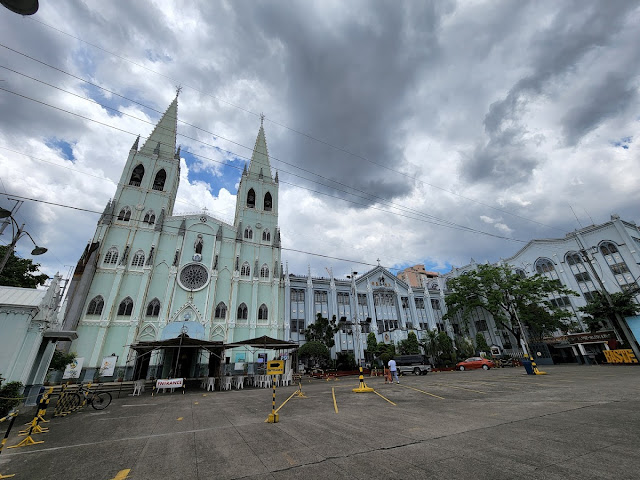
The Minor Basilica of San Sebastian (Filipino: Basilika Menor ng San Sebastian; Spanish: Basílica Menor de San Sebastián), better known as San Sebastian Church (Filipino: Simbahan ng San Sebastian) or San Sebastian Basilica is a minor basilica of the Roman Catholic Church in Manila, Philippines.

It is the church of the Parish of San Sebastian, and also a Shrine of Nuestra Senora del Monte Carmelo, or Our Lady of Mount Carmel.

Loading...

Completed in 1891, San Sebastian Church is noted for its architecture. An example of the Gothic Revival architecture in the Philippines, it is the only steel building church in the Philippines. It was designated as a National Historical Landmark in 1973 and as a National Cultural Treasure in 2011.

San Sebastian Church

San Sebastian Church is under the care of the Order of Augustinian Recollects, who also operate the San Sebastian College-Recoletos adjacent to the basilica. It is located at Plaza del Carmen, at the eastern end of Recto Avenue, in Quiapo, Manila.


San Sebastian Church in Details

Names: San Sebastian Basilica, Basilika Menor ng San Sebastian, Basílica Menor de San Sebastián
Location: Quiapo, Manila
Country: Philippines
Denomination: Roman Catholic
Status: Minor Basilica
Dedication: St. Sebastian
Consecrated: 1891
Functional status: Active
Heritage designation: National Cultural Treasure
Designated: August 15, 2011
Architect: D. Genaro Palacios y Guerra
Architectural type: Basilica
Style: Neo-Gothic
Groundbreaking: 1888
Completed: 1891
Number of domes: 1
Number of towers: 2
Number of spires: 64
Materials: steel, mixed sand, gravel and cement
Administration Subdivision: Vicariate of Jose de Trozo
Archdiocese: Manila


San Sebastian Church History

San Sebastian Church 1936 
In 1621, Bernardino Castillo, a generous patron and a devotee of the 3rd-century Roman martyr Saint Sebastian, donated the land upon which the church stands. The original structure, made of wood, burned in 1651 during a Chinese Filipino uprising. Succeeding structures, which were built of brick, were destroyed by fire and earthquakes in 1859, 1863, and 1880.

In the 1880s, Esteban Martínez, the parish priest of the ruined church, approached Spanish Architect Genaro Palacios to build a church that will withstand the earthquakes.

Palacios planned to build a fire and earthquake-resistant structure made entirely of steel. He completed a design that fused Earthquake Baroque with the Neo-Gothic style. His final design was said to have been inspired by the famed Gothic Burgos Cathedral in Burgos, Spain.

Cheapest Flights and Airline Tickets Online Booking

San Sebastian Church Construction (1888–1891)

The prefabricated steel sections that would compose the church were manufactured in Binche, Belgium. According to historian Ambeth Ocampo, the knockdown steel parts were ordered from the Societe anonyme des Enterprises de Travaux Publiques in Brussels.

In all, 52 metric tons (51 long tons; 57 short tons) of prefabricated steel sections were transported in eight separate shipments from Belgium to the Philippines, the first shipment arriving in 1888.

Belgian engineers supervised the assembly of the church, the first column of which was erected on September 11, 1890.

The walls were filled with mixed sand, gravel, and cement. The stained glass windows were imported from the Heinrich Oidtmann Company, a German stained glass firm, while local artisans assisted in applying the finishing touches.

San Sebastian Church altar

According to Jesús Pastor Paloma, an Augustinian Recollect priest, the structure was also supposed to have a prefabricated retablo (reredos) altar, which was lost at sea when the ship carrying it from Belgium capsized in a storm.

A wooden altar was made locally in its stead. Paloma also noted that the bottom part of the church was designed to resemble a ship's hull, so that it would sway during an earthquake.


Restoration (2011–present)

Restoration works for San Sebastian Church began in 2011.

San Sebastian Church


OTHER CHURCHES TO VISIT IN MANILA


San Sebastian Church Features

San Sebastian Church has two openwork towers and steel vaulting. From its floor, the basilica's nave rises 12 meters (39 ft) to the dome, and 32 meters (105 ft) to the tip of the twin spires.

The faux finished interior of the church incorporates groined vaults in the Gothic architecture style permitting very ample illumination from lateral windows.

The steel columns, walls and ceiling were painted by Lorenzo Rocha, Isabelo Tampingco and Félix Martínez to give the appearance of marble and jasper. Trompe-l'œil paintings of saints and martyrs by Rocha were used to decorate the interiors of the church.

True to the Gothic revival spirit of the church are its confessionals, pulpit, altars and five retablos designed by Lorenzo Guerrero and Rocha. The sculptor Eusebio Garcia carved the statues of holy men and women. Six holy water fonts were constructed for the church, each crafted from marble obtained from Romblon.

The ceiling of the church, showing the groin vaults.

Above the main altar is an image of Our Lady of Mount Carmel, given to the church by Carmelite sisters from Mexico City in 1617. The image withstood all the earthquakes and fires which had destroyed previous incarnations of San Sebastian Church, but its ivory head was stolen in 1975.


Cultural and Historical Declarations

San Sebastian Church was declared a National Historical Landmark by President Ferdinand Marcos through Presidential Decree No. 260 on August 1, 1973. Subsequently, the church was declared a National Cultural Treasure by the National Museum of the Philippines on August 15, 2011, with the unveiling of the marker on January 20, 2012.

San Sebastian Church Historical Marker

On May 16, 2006, San Sebastian Church was included by the National Historical Institute (now the National Historical Commission of the Philippines) in the Philippines' Tentative List for possible designation as a World Heritage Site, on account of its architectural and historical heritage.

As of 2017, the church is no longer included in the Tentative List.


Preservation

In recent years, San Sebastian Church has encountered threats to its structural integrity. The steel structure has been beset by rust and corrosion due to sea breezes from nearby Manila Bay.

State funding was accorded to the church through the National Historical Institute which undertook restoration in 1982. The Recollect community has likewise expended funds for the church's maintenance and restoration.


In 1998, it was placed on the biennial watchlist of the 100 Most Endangered Sites by the World Monuments Fund, though it was not retained in the subsequent watchlists.

The church was listed again as one of the most endangered monuments in the world by World Monuments Fund in the 2010 World Monuments Watch, along with the Rice Terraces of the Philippine Cordilleras and Santa Maria Church. All of the sites were taken off the list in 2011 after the passage of the National Cultural Heritage Act.


How to Get to San Sebastian Church

If you are coming around LRT 1, head to the Doroteo Jose Station as your drop-off point. Ride a jeep in Recto with Sta. Mesa route. Afterward, get off around Mendiola before reaching the crossing, walk through the Ayala Bridge, and turn right before reaching San Rafael Street. From there, you will catch sight of a light blue Gothic church.


ATTRACTIONS TO SEE IN MANILA 

Klook.com

San Sebastian Church

Address: Pasaje del Carmen St, Quiapo, Manila, 1001 Metro Manila
Phone Number: (02) 8708 5122
Email Address: savesansebastian.org@gmail.com


San Sebastian Church Mass Schedule

The San Sebastian Church is open from Tuesday-Friday at 9:00 AM- 3:00 PM, and the mass schedule:
  • Tuesday-Friday: 8:00 AM
  • Saturday: 4:00 PM Mass with Sign Language Interpreter
  • Sunday: 8:00 AM & 10:00 AM


ACTIVITIES AND TOURS IN MANILA


WHERE TO STAY IN MANILA

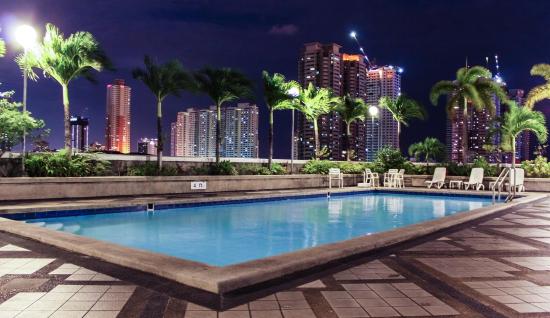
Pearl Manila Hotel

Here's a list of hotel accommodation you can book in Manila:


IMPORTANT NOTE: The rates, contact details and other information indicated in this post are accurate from the time of writing but may change without IMFWJ's notice. Should you know the updated information, please let us know by leaving a message in the comment box below.


SAN SEBASTIAN CHURCH: Guide to Minor Basilica of San Sebastian (Architecture, History & Mass Schedule)


The National Economic and Development Authority or NEDA, stands at the forefront of the Philippines' pursuit of economic growth and sustainable development.


Established in 1972, NEDA has played a pivotal role in shaping the nation's policies and strategies to address various socioeconomic challenges.

NEDA Central Office

In this article, we will explore the functions, objectives, and impact of NEDA in the Philippines.

Loading...

NEDA Historical Background


NEDA's origins can be traced back to the country's economic planning efforts during the 1960s. Recognizing the need for a centralized body to coordinate development planning, the Philippine government enacted Presidential Decree No. 107 on January 24, 1973, formally creating NEDA. Since then, NEDA has evolved to adapt to the ever-changing landscape of economic and social development.


Child Agencies

  • Philippine Statistics Authority (PSA)
  • Philippine Statistical Research and Training Institute (PSRTI)
  • Philippine Institute for Development Studies (PIDS)
  • Public-Private Partnership Center (PPPC)
  • Tariff Commission
  • Philippine National Volunteer Service Coordinating Agency (PNVSCA)
  • Commission on Population and Development (CPD)


NEDA Key Functions

a. Policy Formulation and Coordination:
  • NEDA serves as the chief planning and policy-formulating body of the Philippine government.
  • It coordinates with various government agencies to develop and implement plans and programs for sustainable development.

b. Socioeconomic Planning:
  • NEDA conducts comprehensive socioeconomic studies and analyses to guide policy decisions. It assesses the impact of policies and projects on various sectors of society, ensuring that development benefits are equitable and sustainable.

c. Investment Coordination:
  • NEDA evaluates proposed public and private sector projects to determine their feasibility and alignment with national development goals. It provides recommendations and guidelines for project implementation.

d. Research and Data Analysis:
  • NEDA collects and analyzes economic and social data to monitor progress and identify areas needing intervention. These insights inform policy decisions and development strategies.

e. Regional Development:
  • NEDA promotes regional development by ensuring that resources are allocated efficiently across different regions of the Philippines, reducing disparities in development and improving the quality of life for all Filipinos.


Objectives of NEDA

NEDA's core objectives are:

a. Sustainable Development:
  • NEDA aims to foster balanced and sustainable development that addresses the needs of the present without compromising the ability of future generations to meet their own needs.

b. Poverty Reduction:
  • The agency is committed to reducing poverty and promoting inclusive growth, targeting vulnerable sectors and regions to ensure that development benefits are distributed equitably.

c. Economic Stability:
  • NEDA plays a crucial role in maintaining macroeconomic stability, which is essential for attracting investments, creating jobs, and sustaining economic growth.

d. Infrastructure Development:
  • NEDA works to improve infrastructure development, enhancing the country's connectivity and competitiveness on the global stage.


Governing Law

The present form of the NEDA was organized by President Corazon C. Aquino on July 22, 1987, through EO 230. It defined the composition of the NEDA Board and the Secretariat and its powers and functions, the powers and functions of the Authority and its committees.

On July 26, 1994, President Fidel V. Ramos signed Memorandum Order No. 222 which reactivated the NEDA Board Executive Committee and mandating that the decisions of the NEDA Board Executive Committee shall be final, executory and binding upon the NEDA Board.

On July 27, 1992, President Ramos signed Republic Act No. 7640, which constituted the Legislative-Executive Development Advisory Committee (LEDAC). The LEDAC serves as a consultative and advisory body to the President as the head of the NEDA and gives advice on certain programs and policies, which are essential to the realization of the goals of national development.


NEDA Board

The powers and functions of NEDA reside within the NEDA Board. The NEDA Board is the country's premier socioeconomic development planning and policy coordinating body, responsible for developing the social and economic policies, plans, and programs of the government.

The Board is composed of the President as the Chair, the NEDA Secretary as the Vice-Chair, and the following as members: the Executive Secretary of the Office of the President, and the Secretaries of the Departments of Budget and Management, Finance, Energy, Human Settlements and Urban Development, Public Works and Highways, and Transportation.

The Chairperson of the Mindanao Development Authority and Deputy Governor of the Bangko Sentral ng Pilipinas are also members of the NEDA Board.

Previous members of the Board included: the Secretaries of Health, Foreign Affairs, and Agrarian Reform (per Memorandum Order No. 164, dated March 21, 1988); the Secretary of Science and Technology (per Memorandum Order No. 235, dated May 19, 1989); and the Secretary of Transportation and Communications (per Memorandum Order No. 321, dated September 26, 1990). However, the Secretary of Energy (per Republic Act No. 7638, approved December 9, 1992) and the Governor of the Bangko Sentral ng Pilipinas (per Section 124 of Republic Act No. 7653, approved June 14, 1993) have since been included in the Board.

On April 22, 2006, the NEDA Board was reconstituted through Administrative Order (AO) No. 148, adding eight new members and replacing five original members.

Under EO No. 230, s. 1987 (Reorganizing NEDA), the President may revise the membership of the NEDA Board whenever necessary through an administrative or memorandum order for the Board to effectively perform its functions. Pursuant to said EO and to streamline the decision-making process in the bureaucracy, including the NEDA Board and the Investment Coordination Committee (ICC), the President issued Administrative Order (AO) 8, s. 2017 reconstituting the NEDA Board, reactivating and reorganizing the NEDA Board Executive Committee (ExCom), and reconstituting the ICC.

As stated in the said AO, the NEDA Board ExCom shall have the following powers and functions:
  • Provide policy direction and resolve policy issues involving a number of agencies or a specific socioeconomic sector, without the need to convene the entire NEDA Board in accordance with existing laws, rules, and regulations;
  • Approve development plans and programs consistent with the policies set by the President of the Philippines; and
  • Confirm ICC-approved projects classified as extremely urgent by the ICC.

The Board is assisted by seven (7) Cabinet-level Inter-agency Committees:
  • Development Budget Coordination Committee (DBCC)
  • Committee on Infrastructure (InfraCom)
  • Investment Coordination Committee (ICC)
  • Social Development Committee (SDC)
  • Committee on Tariff and Related Matters (CTRM)
  • Regional Development Committee (RDCom)
  • National Land Use Committee (NLUC)

Further, Section 34, Article VII of Republic Act 11054: Bangsamoro Organic Law, provides that the Chief Minister of the Bangsamoro Region shall be an Ex-Officio Member of the NEDA Board on matters concerning the Bangsamoro Region.


Other Offices

  • The Legislative-Executive Development Advisory Council (LEDAC) Secretariat.
  • The Legislative Liaison Office (LLO)


NEDA Achievements

NEDA's impact on the Philippines can be seen through several achievements:

a. Sustainable Economic Growth:
  • NEDA's long-term planning and policy coordination have contributed to the country's sustained economic growth, making it one of the fastest-growing economies in Asia.

b. Poverty Reduction:
  • Through its inclusive policies and programs, NEDA has made significant strides in reducing poverty rates and improving the standard of living for millions of Filipinos.

c. Infrastructure Development:
  • NEDA's rigorous project evaluation and coordination have led to the construction of critical infrastructure, improving transportation, communication, and utilities nationwide.

d. Environmental Conservation:
  • NEDA has integrated environmental sustainability into its development plans, promoting responsible resource management and conservation.


ATTRACTIONS TO SEE IN MANILA 

Klook.com

The National Economic and Development Authority (NEDA) plays a pivotal role in guiding the Philippines towards sustainable development. Its multifaceted functions, comprehensive research, and policy coordination have contributed to the country's economic growth and improved quality of life for its citizens.

As the Philippines faces new challenges in the 21st century, NEDA continues to be a vital institution driving progress and prosperity for the nation.


ACTIVITIES AND TOURS IN MANILA

Understanding the Government Agencies in the Philippines

What is NEDA: National Economic and Development Authority (Background and Funtions)


The Philippine National Police (PNP) serves as the premier law enforcement agency of the Philippines. Operating under the motto "To Serve and Protect," the PNP is a community-oriented, national institution tasked with maintaining peace and order across the archipelago's 7,000+ islands.

This comprehensive guide details the history, structure, functions, and career pathways of the country’s civilian police force.


History and Foundation


When and How It Was Formed

The PNP was officially established on January 29, 1991, through Republic Act No. 6975, otherwise known as the Department of the Interior and Local Government (DILG) Act of 1990.

Prior to its creation, internal security and law enforcement were fragmented. The country relied on a dual system: the Philippine Constabulary (PC), which was a military component under the Armed Forces of the Philippines (AFP), and the Integrated National Police (INP), a coalition of local municipal police forces.

PNP Personnels

Following the 1987 Constitution, which mandated a police force that is national in scope and civilian in character, RA 6975 merged the PC and the INP to form the modern PNP, officially severing the police force from the military chain of command.


Loading...

Key People of Its Foundation


President Corazon C. Aquino: The 11th President of the Philippines signed RA 6975 into law, fulfilling the constitutional mandate to establish a civilian-led national police force following the restoration of democracy.
Major General Cesar P. Nazareno

Major General Cesar P. Nazareno: He made history as the first Director General of the Philippine National Police. As the final chief of the PC-INP, Nazareno was the central figure responsible for overseeing the complex transition, organizing the civilian workforce, and decommissioning the military structures of the old regime.


Famous Generals and Their Notable Works


Director General Panfilo "Ping" Lacson (1999–2001): Known for his strict discipline and "leadership by example" approach. Lacson instituted the famous "85-15" rule (where 85% of police personnel were deployed to the field and only 15% remained in offices). He earned public acclaim for aggressively tackling high-profile kidnap-for-ransom syndicates and eradicating "kotong" (extorting) cops by cleaning up the ranks.

Director General Panfilo "Ping" Lacson

Director General Jesse M. Robredo (Honorary Mention / DILG Secretary): While not a police general, as DILG Secretary (2010–2012), he revolutionized police accountability by implementing the Seal of Good Local Governance and pushing for transparency in PNP procurement, heavily influencing modern police ethics.


National Headquarters: Camp Crame

The epicenter of police operations and administration in the Philippines is Camp General Rafael Crame, located along Epifanio de los Santos Avenue (EDSA) in Bagong Lipunan ng Crame, Quezon City.

PNP Headquarters

Historical Context and Details of the Headquarters


Naming: The camp is named after Brigadier General Rafael Crame, who became the first Filipino chief of the Philippine Constabulary in 1917. He was widely respected for his integrity and efforts to professionalize early law enforcement.

The Precinct of Power: Spanning over 30 hectares, Camp Crame houses the office of the Chief, PNP (CPNP) inside the PNP National Headquarters (NHQ) Building.

Key Operational Hubs: It contains critical national operational support units, including the Criminal Investigation and Detection Group (CIDG), the PNP Forensic Group (formerly Crime Laboratory), the Intelligence Group (IG), and the Special Action Force (SAF) headquarters. It also features custody facilities, medical centers, and administrative offices that dictate nationwide deployment strategies.


PNP Core Functions

Under Philippine law, the PNP's operational mandate is broad, covering both standard municipal policing and specialized internal security tasks. Its primary functions include:

Law Enforcement: Investigate crimes, prevent criminal activities, apprehend violators, and assist in the prosecution of offenders.

Maintenance of Peace and Order: Maintain public safety, control civil disturbances, and ensure order during national events, elections, and crises.

PNP during COVID-19 pandemic

Internal Security Operations (ISO): In coordination with the Armed Forces of the Philippines (AFP), the PNP (primarily through the Special Action Force and Regional Mobile Force Battalions) suppresses insurgency, terrorism, and subversion.

Statutory Regulatory Duties: The PNP regulates the licensing of firearms, ammunition, and explosives, as well as the operations of private security agencies across the country.


The Officers Chart (Rank Ladder)

In 2019, through Republic Act No. 11200, the PNP officially updated its rank classification. The confusing, military-style old titles (such as "Director General" or "Superintendent") were replaced with clearer, modernized designations to mirror traditional police hierarchies while maintaining a civilian character.

The structure is split into two distinct categories: Commissioned Officers (management and leadership) and Non-Commissioned Officers (operational and field personnel).


Police Commissioned Officers (PCOs)


Police General (P GEN): The highest rank in the PNP, held exclusively by the Chief of the PNP (4 Stars).

Police Lieutenant General (P LTGEN): Deputy Chiefs and the Commander of the Area Police Commands (3 Stars).

Police Major General (P MAJGEN): Directors of National Bureaus and Directorates (2 Stars).

Police Brigadier General (P BGEN): Regional Directors (1 Star).

Police Colonel (P COL)

Police Lieutenant Colonel (P LTCOL)

Police Major (P MAJ)

Police Captain (P CPT)

Police Lieutenant (P LT)


Police Non-Commissioned Officers (PNCOs)


Police Executive Master Sergeant (PEMS)

Police Chief Master Sergeant (PCMS)

Police Senior Master Sergeant (PSMS)

Police Master Sergeant (PMSg)

Police Staff Sergeant (PSSg)

Police Corporal (PCpl)

Patrolman / Patrolwoman (Pat) — The entry-level rank.

PNP Uniforms

ATTRACTIONS TO SEE IN MANILA 

Klook.com

How to Become a Police Officer

There are two primary entry paths to joining the PNP ranks: via the PNP Recruitment Process (Lateral Entry or Regular) or by graduating from the Philippine National Police Academy (PNPA).

PNPA Cadets

Basic Qualifications (Regular Recruitment)

To apply as a Patrolman or Patrolwoman, an applicant must meet the following statutory requirements:

  • Citizenship: Must be a citizen of the Philippines.

  • Character: Must be a person of good moral conduct.

  • Education: Must possess a Bachelor’s Degree from a recognized institution.

  • Eligibility: Must pass at least one of the following eligibility exams:

    • NAPOLCOM Entrance Exam

    • R.A. 1080 (Bar/Board Exam Passers)

  • Age: Must be at least twenty-one (21) years old but not more than thirty (30) years old at the time of appointment.

  • Health: Must pass rigorous physical, psychological, psychiatric, and drug testing.


ACTIVITIES AND TOURS IN MANILA


The Academy Route (PNPA)

Young applicants (aged 18 to 22) can take the PNPA Cadet Admission Test. If accepted into the academy located in Camp General Mariano N. Castañeda in Silang, Cavite, they undergo a rigorous four-year scholarship program. Upon graduation, they are automatically conferred a Bachelor's Degree and commissioned directly as Police Lieutenants.

PNPA Campus

Conclusion

From its roots as a military-controlled constabulary to its modern incarnation as a fully civilian national police agency, the Philippine National Police has underwent decades of institutional evolution. Centered in Camp Crame, its hierarchy manages everything from everyday barangay patrolling to elite counter-terrorism tasks.

As security landscapes shift toward cybercrime and highly organized networks, the PNP continues to adapt its recruitment, rank professionalization, and operational tactics to fulfill its foundational promise to the Filipino people: keeping the peace with honor and integrity.


The Philippine National Police (PNP): A Complete Institutional Explainer


All you need to know about EDSA.


Epifanio de los Santos Avenue, commonly referred to by its acronym EDSA, is a limited-access circumferential highway around Manila, the capital city of the Philippines.


It passes through 6 of Metro Manila's 17 local government units or cities, namely, from north to south, Caloocan, Quezon City, San Juan, Mandaluyong, Makati, and Pasay.

Epifanio de los Santos
Named after academic Epifanio de los Santos, the road links the North Luzon Expressway at the Balintawak Interchange in the north to the South Luzon Expressway at the Magallanes Interchange in the south, as well as the major financial districts of Makati Central Business District, Ortigas Center, and Araneta City. It is the longest and the most congested highway in the metropolis, stretching some 23.8 kilometers (14.8 mi).

Loading...

EDSA in Details

EDSA on map
Name: Epifanio de los Santos Avenue, EDSA
Part of: AH26
Maintained by: the Department of Public Works and Highways and the Metropolitan Manila Development Authority
Length: 23.8 km (14.8 mi) includes extension in Bay City, Pasay
Existed: 1940–present
Component highways: 
  • C-4 from Monumento to Roxas Boulevard
  • AH 26 (N1) from Monumento to Roxas Boulevard
  • N145 in Bangkal, Makati

Restrictions: No heavy trucks, tricycles


EDSA Major Junctions

  • North end: Bonifacio Monument Circle in Caloocan
  • AH 26 (E1) (North Luzon Expressway) / N160 (A. Bonifacio Avenue) at Balintawak Cloverleaf in Quezon City
  • N171 (West Avenue) / N173 (North Avenue) in Quezon City
  • N170 (Quezon Avenue) in Quezon City
  • N172 (Timog Avenue) / N174 (East Avenue) in Quezon City
  • N180 / N59 (Aurora Boulevard) in Cubao, Quezon City
  • N184 / N60 (Ortigas Avenue) at Ortigas Interchange in Quezon City and Mandaluyong
  • N141 (Shaw Boulevard) in Mandaluyong
  • N190 (Gil Puyat Avenue / Kalayaan Avenue) in Makati
  • N145 (Osmeña Highway) / AH 26 (E2) (South Luzon Expressway) at Magallanes Interchange in Makati
  • N170 (Taft Avenue) at Pasay Rotunda in Pasay
  • AH 26 (N120) / N61 (Roxas Boulevard) in Pasay
  • South end: SM Mall of Asia Globe Rotunda in Bay City, Pasay


EDSA Structure

The entire avenue forms part of Circumferential Road 4 (C-4) of Metro Manila's arterial road network, National Route 1 (N1) of the Philippine highway network and Asian Highway 26 (AH26) of the Asian Highway Network, while its westbound service road from Osmeña Highway in barangay Bangkal, Makati forms part of National Route 145 (N145).

The locations around the avenue were marked with great economic and industrial growth, proven by the fact that all but two industrial centers in the Metropolis are directly accessible from the thoroughfare. The decent economic growth of the areas around the avenue adds a significant volume of traffic on the avenue, and in recent estimates, and an average of 2.34 million vehicles go through it every day.

Heavy traffic on EDSA as seen from Boni station, looking south towards Guadalupe

The avenue is a divided carriageway, often consisting of 12 lanes, 6 in either direction, with the elevated railroads Manila Metro Rail Transit System Line 3 and Manila Light Rail Transit System Line 1 often serving as its median.

EDSA and MRT-3 Stops

Although it is not an expressway, traffic rules and speed limits are strictly implemented to the vehicles that pass along it.

EDSA is operated by the Metro Manila Development Authority and is maintained and constantly being repaired by the Department of Public Works and Highways, whose maintenance over EDSA excludes the extension at Bay City in Pasay.

Cheapest Flights and Airline Tickets Online Booking

EDSA Traffic Management

The lead agency that manages the flow of traffic along EDSA is the Metropolitan Manila Development Authority (MMDA), a government agency under the Office of the President of the Philippines and is advised by the Metro Manila Mayors League.

One of the MMDA's traffic management schemes that is in effect on EDSA, among other major thoroughfares in the metropolis, is the Uniform Vehicular Volume Reduction Program.

Motorcycle and Bus lanes in 2018

The MMDA is strictly implementing also the Motorcycle and Bus laning in EDSA, making it the second highway in the Philippines ever to have such traffic rule to be enforced, after Commonwealth Avenue.

The average speed of vehicles in EDSA is 15 kilometers per hour (9.3 mph).


On January 18, 2016, strict implementation on bus lanes started on the Shaw–Guadalupe segment, where plastic barriers are placed and prohibited entry of private vehicles and taxis on the bus lanes except when turning to EDSA's side streets.

Buses inside EDSA Carousel

In June 2020, bus routes in the avenue were rationalized, creating the EDSA Carousel line carried by the new EDSA Busway. The EDSA Busway is separated from normal road traffic and now used only for buses and emergency vehicles. The new bus lane spans from Monumento to PITX and is divided by concreted barriers and steel fences.

The old rightmost bus lanes was now opened for all vehicles, with the avenue now having total of 4-5 public-use lanes per direction instead of 3, excluding interchanges.


ATTRACTIONS TO SEE IN MANILA 

Klook.com


History of EDSA

Construction of what was then called the North and South Circumferential Road began in 1939 under President Manuel L. Quezon. The construction team was led by engineers Florencio Moreno and Osmundo Monsod.

The road, starting from North Bay Boulevard in Navotas and ending at Taft Avenue (formerly known as Taft Avenue Extension / Manila South Road) in Pasay, then in the province of Rizal, was finished in 1940 shortly before the outbreak of World War II and the subsequent Japanese Occupation. It was then known as the Manila Circumferential Road or simply as Circumferential Road. It was also renamed to Highway 54 and thus designated as Route 54. Due to the route number, there was a common misconception on that time that the avenue is 54 kilometers (34 mi) long.

EDSA looking north to SM City North EDSA

The present-day North EDSA section in Caloocan and Quezon City was referred to as Calle Samson (Samson Street), while its section in Pasay was also known as P. Lovina Street. After the independence of the Philippines from the United States in 1946, the road was renamed Avenida 19 de Junio (June 19 Avenue), after the birth date of national hero José Rizal.

In the 1950s, the northern end of the avenue was designated to its present terminus at Bonifacio Monument in Caloocan and its section west of it later became known as Samson Road, General San Miguel Street, and Letre Road, respectively.

The northern terminus of EDSA at the Bonifacio Monument in Caloocan.

In the same decade, Rizalists wanted the avenue's name to remain 19 de Junio, while President Ramon Magsaysay wanted the avenue named after Rizal. Residents of Rizal province (to which most parts of Metro Manila belonged until 1975) wanted the avenue to be named after a Rizaleño: the historian, jurist and scholar named Epifanio de los Santos y Cristóbal.

EDSA corner Ortigas Avenue in the 90's

The Philippine Historical Committee (now the National Historical Commission of the Philippines), the Philippine Historical Association, the Philippine Library Association, Association of university and College Professors, the Philippine China Cultural Association, and the Philippine National Historical Society, led by fellow Rizaleños Eulogio Rodríguez, Sr. and Juan Sumulong, supported the renaming of Highway 54 to Epifanio de los Santos Avenue.

On April 7, 1959, De los Santos' birth anniversary, Republic Act No. 2140 was passed, renaming the avenue to honor him.

Makati eagle boundary marker in EDSA in the 90's

Rapid urbanization in the 1960s and 1970s, particularly after the annexation of several Rizal towns to the newly established National Capital Region, marked the growth of the industrial centers along the road, and several other roads connected to the avenue, such as Ayala Avenue and McKinley Road in Makati.

During the rule of President Ferdinand Marcos, traffic jams along the avenue started to build up. Several interchanges were constructed to relieve congestion, including the Balintawak and Magallanes Interchanges.

Magallanes Interchange

Later, with the implementation of the Metro Manila Arterial Road System in 1965, in order to complete the Circumferential Road 4 system, EDSA was extended from Taft Avenue to Roxas Boulevard, occupying parcels of land along the old F. Rein and Del Pan Streets in Pasay. Until the mid-1980s, many parts of the highway still overlooked vast grassland and open fields.

EDSA Extension looking west towards SM Mall of Asia


ACTIVITIES AND TOURS IN MANILA


The EDSA Revolution

By 1986, political opposition to the 20-year dictatorship of President Ferdinand Marcos mounted. In late February, high-ranking military officers including Defence Minister Juan Ponce Enrile and General Fidel Ramos, defected from the Marcos government and seized Camp Crame and Camp Aguinaldo, two military bases located across each other midway along EDSA. This triggered three days of peaceful demonstrations that became the People Power Revolution.

People Power Revolution in EDSA in 1986

The majority of protesters were gathered at the gates of the two bases, along a stretch of EDSA between the commercial districts of Cubao in Quezon City and Ortigas Center in Mandaluyong. Over two million Filipino civilians, along with political, military, and religious groups led by Archbishop of Manila Cardinal Jaime Sin, succeeded in toppling President Marcos. Corazon Aquino, the widow of assassinated opposition senator Benigno Aquino Jr., was installed as president on the morning of February 25; by midnight, Marcos had escaped Malacañang Palace with his family, and was flying to exile in Hawaii.


Monuments in EDSA

Several landmarks commemorate historical events that occurred along the avenue. At the intersection of EDSA and Ortigas Avenue is EDSA Shrine, a Catholic church capped by a bronze statue of the Blessed Virgin Mary as Our Lady of Peace.

EDSA Shrine today

The shrine is dedicated to this Marian title in memory of the pious folk belief that in the 1986 Revolution, the Virgin Mary personally shielded the protesters – many of whom were peacefully praying and singing – as they faced government troops, tanks, and aircraft.

The People Power Monument (Tagalog: Monumento ng Lakás ng Bayan), consisting of a giant statue and esplanade, sits at the corner of EDSA and White Plains Avenue. Sculpted by Eduardo Castrillo and unveiled in 1993, the central sculpture depicts protesters standing upon a circular podium, all surrounding a woman (representing Ináng Bayan or the Motherland), reaching up to the heavens with her outstretched hands and broken shackles.

People Power Monument

A Philippine flag rises behind her, while a statue of Ninoy Aquino and an eternal flame stand on either side at its base. A huge, limestone-faced wall with grooves for ribbons in the national colors forms a backdrop to the scene. The surrounding pavement contains a row of flagstaffs, and is the center for protests and ceremonies held on the Revolution's anniversary of February 25.


EDSA Live Update

MMDA feeds live traffic updates on their social media for EDSA on an hourly and daily basis. See below updates:


EDSA: Guide to Epifanio de los Santos Avenue (C-4 of Manila)