Showing posts sorted by relevance for query Chinatown. Sort by date Show all posts

Located in the heart of Manila’s historic Binondo district—the oldest Chinatown in the world—Lucky Chinatown Mall serves as a unique bridge between centuries-old tradition and modern lifestyle convenience.

Whether you are a food enthusiast, a history buff, or a shopper looking for a comfortable refuge from the Manila heat, this mall offers a curated experience that honors its vibrant cultural surroundings.


About Lucky Chinatown Mall

Lucky Chinatown Mall was officially opened on August 15, 2012, as a centerpiece of the Chinatown Heritage Project. Developed by Megaworld Corporation, the mall sits on land previously occupied by two Manila public high schools, which were relocated to newer facilities elsewhere. Its establishment was part of a larger effort to revitalize the area while remaining sensitive to Binondo’s deep-rooted Filipino-Chinese culture.

Lucky Chinatown Mall

In 2019, the complex expanded significantly with the inauguration of Hotel Lucky Chinatown and the Chinatown Museum, further cementing its role as a cultural and commercial hub.

Loading...

What It’s Known For

Lucky Chinatown is known for being more than just a retail center; it is a cultural gateway. Unlike standard malls in newly developed business districts, it is deeply integrated into a neighborhood that has served as a center of commerce for centuries. It is celebrated for its blend of:

  • Authentic Experiences: Easy access to traditional shops, temples, and historic food establishments nearby.

  • Modern Comfort: A clean, air-conditioned environment to relax after exploring the bustling, often humid, streets of Binondo.

  • Cultural Preservation: The presence of the Chinatown Museum, which offers a deep dive into the district's history.


What to See & Highlights


Chinatown Museum: Located on the fourth level, this is a must-visit for those who want to understand the rich heritage of Binondo. It is the first cultural museum in the country dedicated to the history of the Filipino-Chinese community.

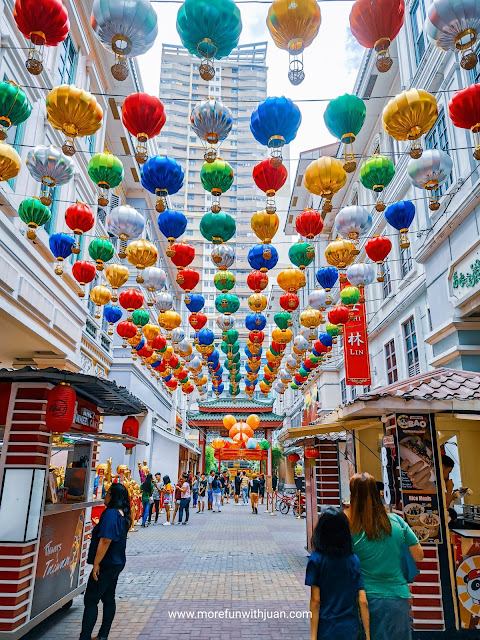
Chinatown Walk: Inspired by the bustling markets of Hong Kong and Shanghai, this area recreates the aesthetic of old Chinatown, perfect for finding specialty goods like jade, herbal medicine, and porcelain.

Seasonal Food Bazaars: The mall frequently hosts food bazaars, which are excellent opportunities to sample a wide array of street food and local delicacies in a controlled, accessible setting.

Entertainment: The mall features cinemas and a Timezone branch, providing family-friendly entertainment.


binondo food trip 2022 binondo food trip budget binondo food trip with map and price best food in binondo binondo food trip map binondo street food best machang in binondo divisoria food trip

Where to Eat

Dining is one of the mall's primary attractions. You can find a mix of:

  • Traditional Chinese Cuisine: Restaurants like King Chef are popular for authentic Chinese dishes.

  • Popular Favorites: You will find familiar names like Manam (Filipino), Marugame Udon (Japanese), Classic Savory, and various cafés like Cafe Mary Grace.

  • Casual Eats: Plenty of options for quick bites, milk tea, and dessert shops are scattered throughout the mall.

You may also opt for BINONDO FOOD CRAWL


Visiting Tips


Go Early: To beat the crowds and secure easier parking, aim for a morning visit (around 10:00 AM).

Use it as a Base: Binondo is best explored on foot. Many visitors park at the mall and then walk to nearby landmarks like the Binondo Church, Ongpin Street, and various famous hole-in-the-wall eateries.

Wear Comfortable Shoes: Even though the mall is air-conditioned, you will likely spend much of your time walking through the surrounding historic streets.

Bring Cash: While major shops accept cards, keeping some cash on hand is helpful for smaller stalls in the market areas.


Mall Details


Location: Reina Regente Street, Binondo, Manila, Philippines

Opening Hours: Generally 10:00 AM – 9:00 PM daily (Hours may vary during holidays or special events).

Accessibility: Easily accessible via ride-sharing apps (Grab) or public transport like the LRT, jeepneys, and e-trikes.


ATTRACTIONS TO SEE IN MANILA 

Klook.com

WHERE TO STAY IN MANILA

Here's a list of hotel accommodation you can book in Manila:


ALSO IN MANILA


IMPORTANT NOTE: The rates, contact details and other information indicated in this post are accurate from the time of writing but may change without IMFWJ's notice. Should you know the updated information, please let us know by leaving a message in the comment box below.

Lucky Chinatown Mall: A Complete Visitor’s Guide


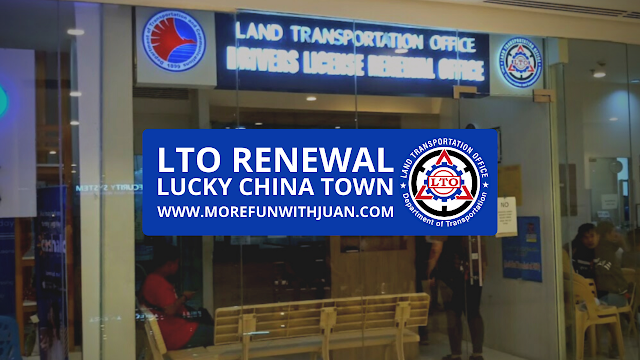
Looking to renew your driver's license soon? You can visit this place in Binondo, Manila for your driver's license renewal.


Your driver's license is expiring and you are thinking where to renew it. Good news because you can now renew your driver's license at LTO DLRO - Lucky Chinatown Mall!


In this guide, I will share important details for your Driver’s License Renewal at LTO DLRO - Lucky Chinatown Mall.

Loading...

HELPFUL ITEMS YOU CAN USE FOR DRIVING!

Here's my list of useful items for you and your vehicle:

Shopee is my go-to app for things I needed like the ones above. If you'd like discounts and vouchers, you may get the best offers here:

Things to remember before going to LTO renewal center

  • Research carefully and understand everything about driver license in the Philippines.
  • Don’t forget to renew your license card before its expiration date. You will have to pay a fine up to Php 250 for a late renewal.
  • Book LTO online appointment on the system. Remember to print out the proof of reservation.
  • Prepare your medical certificate in advance.
  • Complete the application form before heading up to LTO branches
  • Bring alongside your expired license card
  • Arrive at the LTO branch at least 30 minutes earlier.
  • Be careful and stay away from the broker.


LTO DLRO - Lucky Chinatown Mall

Here are the following services you can avail at LTO DLRO - Lucky Chinatown Mall:
  • Driver's License Renewal
  • Vehicle Registration Renewal

See my complete list of LTO Driver's License Renewal Requirements before visiting the LTO DLRO.

Cheapest Flights and Airline Tickets Online Booking

How Much Does Driver's License Renewal Cost?


Student permit renewal: ₱250–₱400

Driver's license renewal: ₱685–₱1,000


How to get to LTO DLRO - Lucky Chinatown Mall

Jeepneys from Baclaran, Pasay Rotunda, Harrison Plaza, Taft and Mabini pass near Lucky Chinatown Mall.

Jeepney sign reads "Divisoria". After the jeep crosses Pasig River via Jones Bridge, it will take Quintin Paredes which ends up in Plaza Lorenzo Ruiz.

Get off the jeep after it passes by Binondo Church and reaches the tall building of Metrobank Downtown Center, opposite Plaza Lorenzo Ruiz Park (Unloading area three).

Walk along the road that continues Quintin Paredes, that's Reina Regente. Lucky Chinatown is to the left past the small bridge over the creek. You can easily see it from afar. See map below.


ATTRACTIONS TO SEE IN MANILA 

Klook.com

LTO DLRO – LUCKY CHINA TOWN

Location: Lucky Chinatown Mall Annex, B 3rd St, Binondo, Manila
Office Hours: 9AM to 6PM, Monday to Friday only
Contact Number: +632 7971-8187, +632 8292-1447


ACTIVITIES AND TOURS IN MANILA


About Land Transportation Office (LTO)

The Land Transportation Office or LTO is an agency of the Philippine government under the Department of Transportation and is responsible for all land transportation in the Philippines.

Functions of the Land Transportation Office include the inspection and registration of motor vehicles, issuance of license and permits, enforcement of land transportation rules and regulations, adjudication of traffic cases, and the collection of revenues for the government of the Philippines.


IMPORTANT NOTE: The rates, contact details and other information indicated in this post are accurate from the time of writing but may change without IMFWJ's notice. Should you know the updated information, please message us on Facebook.


LTO Lucky China Town DLRO Schedule for Driver's License Renewal in Binondo


Stepping across the Jones Bridge over the Pasig River feels like entering a different world. The modern skyline of Manila gives way to a dense, chaotic labyrinth of narrow alleys, fragrant smoke from incense and roasted ducks, and a distinct architectural blend of Spanish colonial and traditional Chinese designs.

Welcome to Binondo, established in 1594, making it the oldest Chinatown in the world.

More than just a tourist spot, Binondo is a living, breathing testament to the centuries-old fusion of Chinese and Filipino cultures—a community known locally as the Tsinoy.


The Dynamic History of Binondo

Binondo was founded by Spanish Governor-General Luis Pérez Dasmariñas in 1594. It wasn't built purely out of goodwill; the Spanish colonial government wanted a dedicated settlement to confine Hokkien Chinese immigrants (sangleys) who had converted to Catholicism.

Aerial View of Binondo District (Post War Era)

The Spanish strategically positioned it across the river from the walled city of Intramuros, keeping the merchants close enough for trade but easily monitorable in case of an uprising.

Binondo, Manila in 2020

Over the centuries, Binondo evolved from a restricted settlement into the economic heartbeat of Manila.
Loading...


The Wall Street of the Philippines

By the 19th and early 20th centuries, Binondo—specifically Escolta Street—became the country's premier financial and luxury shopping district. It home to the nation's earliest banks, insurance companies, and high-end department stores.

Escolta

While modern financial hubs have since shifted to Makati and Bonifacio Global City (BGC), Binondo remains a powerhouse for wholesale trade, jewelry, traditional finance, and family-run conglomerates.


A Unique Cultural Blend

The soul of Binondo lies in its seamless blending of Hokkien Chinese traditions and Filipino-Catholic culture. This syncretism is highly visible in two iconic landmarks situated at opposite ends of the district's main thoroughfare.

Binondo Church

Minor Basilica and National Shrine of Saint Lorenzo Ruiz (Binondo Church)

Founded by Dominican priests in 1596, this church features a stunning facade blending Spanish colonial architecture with subtle Chinese design elements, such as its octagonal bell tower resembling a pagoda. It is dedicated to Saint Lorenzo Ruiz, the first Filipino saint, who was born and raised in Binondo to a Chinese father and a Filipino mother.


The Santo Cristo de Longos Shrine

A short walk away on Ongpin Street, you will find an outdoor shrine dedicated to a wooden crucifix known as Santo Cristo de Longos. According to local lore, a deaf-mute Chinese man discovered the miraculous image in a well in the 16th century. 

The Santo Cristo de Longos Shrine

Today, you will witness locals praying the Catholic rosary here while simultaneously burning red joss sticks and offering fresh fruits—a beautiful display of dual religious devotion.

Cheapest Flights and Airline Tickets Online Booking

The Ultimate Food Hub: What to Eat in Binondo

For many locals and travelers, Binondo is synonymous with an unforgettable culinary pilgrimage. The food culture here centers around Chuka—localized Chinese-Filipino comfort food.

Soup No. 5

Soup No. 5
A traditional herbal soup made from bull's testes and phallus, believed to have aphrodisiac qualities.
Where to try it: Lumpia House / Local eateries

Fried Xiao Long Bao
Pan-fried pork soup dumplings with a crispy bottom and a burst of savory broth inside.
Where to try it: Shanghai Fried Dumpling


Lumpia
Massive, fresh Hokkien-style spring rolls packed with shredded vegetables, seaweed, and crushed peanuts.
Where to try it: New Po-Heng Lumpia House

Kiampong
A savory, sticky Hokkien rice casserole mixed with pork, mustard greens, and dried shrimp.
Where to try it: Mañosa Restaurant Co.

New Po Heng Lumpia House

Pro Tip: Don't leave without swinging by Eng Bee Tin or Salazar Bakery to grab some hopo (flaky pastry filled with sweet mung bean or purple yam paste) and tikoy (sweet glutinous rice cake) to take home.

Visit my BINONDO FOOD CRAWL to see more restaurants and stores!


ATTRACTIONS TO SEE IN MANILA 

Klook.com

Iconic Streets and Hidden Alleys

Navigating Binondo requires embracing a bit of chaos. The district is best explored on foot. Keep a lookout for these key areas:

  • Ongpin Street: The spine of Chinatown. This bustling, neon-lit street is lined with gold jewelers, traditional Chinese medicine apothecaries dispensing dried herbs, and fruit stalls selling imported luck-bringing produce.

  • Carvajal Street (Umbrella Alley): A narrow hidden lane packed with market stalls selling fresh seafood, specialized snacks, and home-cooked ulam (dishes).

  • Quintin Paredes Street: The gateway into the district from Jones Bridge, featuring towering historical buildings and leading straight into Plaza Lorenzo Ruiz.


How to Get to Binondo

Getting to Binondo and navigating its vibrant, narrow streets can be an adventure in itself. Because the district is one of the densest and busiest commercial hubs in Manila, planning your transportation carefully will make your trip much more enjoyable.

Depending on where you are coming from and your preferred style of travel, there are several convenient ways to reach Chinatown:

Carriedo

1. By Light Rail Transit (LRT-1) – Highly Recommended

Taking the train is often the fastest way to beat Manila’s notorious traffic.

The Route: Take the LRT-1 and get off at Carriedo Station.

Getting to Chinatown: From Carriedo Station, you can walk past the historic Santa Cruz Church directly toward Plaza Lacson and the start of Ongpin Street (marked by the Filipino-Chinese Friendship Arch). It is a short, 5-to-10-minute walk into the heart of Binondo.


2. By Metro Rail Transit (MRT-3) and LRT-2 Line

If you are coming from the eastern parts of Metro Manila (like Quezon City or Pasig):

The Route: Take the MRT-3 to Cubao Station, transfer to the LRT-2, and ride it westbound to the Recto Station (the terminal stop).

Getting to Chinatown: From Recto, you can either take a short 10-minute walk south down Rizal Avenue/Alonzo Street into Binondo, or hail a tricycle or jeepney heading toward Divisoria/Ongpin.

Recto Avenue-Quezon Blvd. Underpass

3. By Pasig River Ferry – The Scenic Route

For a unique and traffic-free commute, you can use the government-operated Pasig River Ferry Service.

The Route: Board at any open station (such as Guadalupe in Makati or Hulo in Mandaluyong) and get off at the Escolta Station.

Getting to Chinatown: The Escolta Station drops you right at the edge of Binondo, meaning you are instantly steps away from the historic financial district and a short walk away from Ongpin Street.


Pasig River Ferry - Escolta Station

4. By Jeepney

Jeepneys are highly accessible if you are coming from neighboring districts.

Look for jeepneys with signboards reading Divisoria, Plaza Lawton, or Monumento via Rizal Ave.

If you take a Divisoria-bound jeepney from Taft Avenue or Quezon Boulevard, ask the driver to drop you off near Binondo Church or Jones Bridge.


5. By Ride-Hailing Apps or Car (Grab / Taxi)

If you prefer private comfort, you can book a Grab or hail a taxi.

Drop-off tip: Instead of setting your destination to a specific narrow alley deep inside Chinatown (where cars easily get stuck), set your drop-off point to an accessible perimeter landmark like Binondo Church, Plaza Lorenzo Ruiz, or The Lucky Chinatown Mall.

Lucky Chinatown Mall

Note: Finding parking in Binondo is exceptionally difficult, so bringing a private car is generally discouraged unless you plan to park in the multi-level garage at Lucky Chinatown Mall.


ACTIVITIES AND TOURS IN MANILA


How to Get Around Binondo

Once you arrive, the layout of Chinatown requires a different approach to moving around.

On Foot (Walking): This is unequivocally the best way to experience Binondo. The district’s famous food spots, hidden apothecary shops, and historic shrines are tucked away in narrow alleys (like Carvajal Street) where vehicles cannot go. Wear comfortable, closed-toe walking shoes, stay mindful of your surroundings, and enjoy the sights and smells.

Tricycles and E-Trikes: You will see numerous motorized and electric tricycles roaming the streets. They are perfect for short hops when your feet get tired or if you are carrying heavy shopping bags. Always agree on the fare with the driver before you step inside the vehicle to avoid overcharging.

Calesas (Horse-Drawn Carriages): Primarily found around Binondo Church and Plaza Lorenzo Ruiz, these traditional carriages offer a nostalgic, historic experience. They are largely geared toward tourists looking for a leisurely heritage ride rather than point-to-point transit, so ensure you clarify the routing and price beforehand.


Binondo-Intramuros Bridge

Another highlight in the area is the Binondo-Intramuros Bridge. It's a modern, iconic steel-arch bridge spanning the Pasig River that directly connects Manila's historic walled city with the world's oldest Chinatown.


Featuring a striking, basket-handle loop design, it drastically cuts travel time between the two districts while offering dedicated, scenic lanes for pedestrians and cyclists.


Modern Challenges and Preservation

Today, Binondo faces the classic dilemmas of a historic urban core. Narrow streets struggle against modern vehicular traffic, and historic Art Deco buildings face the constant threat of demolition to make way for high-rise residential condominiums.

Despite these challenges, grassroots heritage groups and the local community continue to push for preservation, ensuring that the stories carved into Binondo's decades-old walls aren't lost to time.


WHERE TO STAY IN MANILA

Here's a list of hotel accommodation you can book in Manila:


ALSO IN MANILA


IMPORTANT NOTE: The rates, contact details and other information indicated in this post are accurate from the time of writing but may change without IMFWJ's notice. Should you know the updated information, please let us know by leaving a message in the comment box below.


Inside Binondo: A Guide to the World’s Oldest Chinatown in Manila


Stepping into Binondo is like entering a living time capsule where centuries-old Chinese traditions seamlessly blend with vibrant Filipino culture. Established in 1594 by Spanish Governor-General Luis Pérez Dasmariñas, this bustling district in the heart of Manila holds the proud title of the oldest Chinatown in the world.

Whether you are a history buff eager to trace ancestral roots, a culture seeker drawn to incense-filled temples, or a dedicated foodie ready for a legendary culinary marathon, Binondo delivers an unforgettable sensory adventure.


🚤 Start Your Adventure: The Scenic, Free Route

Before diving into the crowded streets, begin your journey with a unique perspective of the capital. You can enjoy a free ride via the Pasig River Ferry Service, which offers a scenic, traffic-free way to cruise straight into downtown Manila.

Jones Bridge

Disembark at the Escolta Station or Quintin Paredes (Jones Bridge) area, and you will find yourself steps away from the gateway of Chinatown.


🏛️ Historical & Cultural Landmarks

Binondo’s rich cultural tapestry is written into its architecture and open plazas. Make sure to weave these essential historical stops into your walking tour:

  • Binondo Church (Minor Basilica of St. Lorenzo Ruiz): Founded by Dominican friars in 1594, this stunning 400-year-old basilica has survived earthquakes and wartime bombings. Its unique octagonal bell tower stands as a monument to Spanish-Chinese colonial architecture.

  • Plaza San Lorenzo Ruiz: This historic public square sits directly in front of Binondo Church. Named after the first Filipino saint (who was born and raised in Binondo), it is surrounded by remnants of colonial-era buildings and serves as the neighborhood's open-air centerpiece.

  • Ongpin Street: The energetic, bustling main artery of Binondo. Walking down Ongpin is an experience in itself—the air is a mix of roasting chestnuts, herbal medicines, and incense, with the street lined by traditional gold jewelers and feng shui shops.

  • Kuang Kong Temple: A small, traditional Taoist temple hidden along the bustling streets. Dedicated to Guan Di, the God of War and Justice, it is a frequent stop for locals who come to light incense, offer fruits, and seek guidance through fortune sticks.

  • Seng Guan Temple: Widely considered the main Buddhist temple in the area, this peaceful sanctuary features intricate wooden carvings, massive golden Buddha statues, and a grand, incense-filled main hall that offers a quiet escape from the outdoor chaos.

A fountain at Plaza San Lorenzo Ruiz and Binondo Church in the background

RIZAL PARK: Guide to Luneta, the Largest Urban Park in Manila, Philippines (Attractions to See & Things to Do)


🍜 Food Crawl Hotspots: Iconic Chinese-Filipino Flavors

You cannot visit Binondo without going on a full-scale food crawl. The district is home to an incredible array of family-run heritage eateries and hole-in-the-wall joints.


🛍️ Shopping & Souvenirs

Don't leave Chinatown empty-handed. Take home a piece of the oldest Chinatown with these essential culinary stops:

  • Eng Bee Tin: The ultimate go-to flagship shop for Chinese delicacies. They revolutionized the local pastry scene with their famous Ube Hopia. It is the best place to stock up on tikoy (sticky rice cake), frozen dim sum, and a mind-boggling variety of hopia flavors.

  • Salazar Bakery: A timeless staple operating since post-war Manila. Head here for traditional Chinese pastries, egg tarts, diced hopia, and beautiful, intricate mooncakes during the Mid-Autumn Festival.

  • Ying Ying Tea House: While it doubles as an excellent sit-down restaurant, it is also a fantastic classic tea house where you can purchase loose-leaf teas, traditional snacks, and takeout dim sum treats to enjoy later.


🌆 Beyond Binondo: Extensions to Your Itinerary

If you still have energy after your food walk, expand your exploration to these nearby scenic and cultural boundaries:

  • Escolta Street: Located right next to Binondo, this was once Manila's "Queen of Streets" and premier financial district during the early 20th century. Today, it is undergoing a creative revival, showcasing magnificent Art Deco and neoclassical buildings that house hidden artisan cafés and independent art spaces.

  • Pasig River Esplanade: Manila's newest riverside pedestrian attraction. It is a beautifully lit promenade along the banks of the Pasig River, making it the perfect spot for a relaxing evening stroll to catch the cool breeze and digest your food crawl feast.

  • Binondo-Intramuros Bridge: Another highlight in the area is this modern, iconic steel-arch bridge spanning the Pasig River that directly connects Manila's historic walled city with the world's oldest Chinatown. Featuring a striking, basket-handle loop design, it drastically cuts travel time between the two districts while offering dedicated, scenic lanes for pedestrians and cyclists.


Pasig River Esplanade and Binondo-Intramuros Bridge at the back


Quick Tips for Your Binondo Run


Wear Comfortable Shoes: Binondo is best explored entirely on foot. The streets are narrow, and traffic can be slow, so walking is often faster than taking a vehicle.

Bring Cash: While modern flagship stores like Eng Bee Tin accept e-wallets, many of the smaller hole-in-the-wall dumpling spots and temples strictly accept cash.

Go with a Group: The best way to experience the food crawl hotspots is to go with friends so you can order various dishes to share at each stop without getting full too quickly!


WHERE TO STAY IN MANILA

Here's a list of hotel accommodation you can book in Manila:


ALSO IN MANILA


IMPORTANT NOTE: The rates, contact details and other information indicated in this post are accurate from the time of writing but may change without IMFWJ's notice. Should you know the updated information, please let us know by leaving a message in the comment box below.

The Ultimate Binondo Travel Guide: Exploring the World’s Oldest Chinatown


If Metro Manila has a single epicenter for pure, unadulterated commerce, it is Divisoria. Known affectionately to locals as "Divi," this sprawling commercial district in the heart of Tondo, San Nicolas, and Binondo is a legendary maze of multi-story shopping malls, packed street markets, and hidden alleyways. For entrepreneurs, bargain hunters, and curious travelers alike, Divisoria offers the lowest prices in the country—provided you know how to navigate its vibrant chaos.


History: The "Divide" of Trade

The name Divisoria comes from the Spanish word for "division" or "line of demarcation." During the Spanish colonial era, the area literally functioned as a boundary. The Spanish authorities restricted Chinese merchants and non-Christian residents from living and trading freely inside the fortified walls of Intramuros.

Old photo of back then, Public Market, Manila

Forced to settle across the Pasig River in Binondo and Tondo, these industrious traders established their own massive, unregulated marketplace. Over the centuries, this historical "divide" evolved into the country's main trade hub.

Old Tutuban Train Station

Its commercial significance cemented further in 1892 with the opening of the Tutuban Central Station, the main terminus of the Philippine National Railways (PNR). The station allowed raw goods and agricultural produce from northern provinces to flood directly into the markets of Divisoria, transforming it into the retail giant it is today.

Loading...

Things to Do

While shopping is the obvious primary objective, a trip to Divisoria is a sensory cultural experience in its own right:


  • Practice the Art of Tawad (Bargaining): Testing your negotiation skills is the highlight of any visit. Prices drop significantly if you buy in bulk (pakyawan), but even retail buyers can snag discounts with a friendly smile and polite negotiation.

  • Experience Night Market Vibe: As the indoor malls wind down in the late afternoon, the streets surrounding Recto and Juan Luna transform into a bustling night market lit by makeshift lamps, offering incredibly cheap clothes, snacks, and housewares.

  • Go Heritage Hunting: Walk the peripheral streets to spot historic architecture and centuries-old business establishments that have survived since the pre-war era.


Shopping Guide: What to Buy & Where to Go

Divisoria is massive, and wandering aimlessly will exhaust you quickly. The key to surviving a trip is knowing which mall or street specializes in what you need.


Where to Eat

Shopping in Divisoria burns serious calories. Skip the usual fast-food joints and head into these food havens:

168 & 999 Food Courts: Located on the upper floors of these mega-malls, the food courts host hidden culinary gems serving authentic, budget-friendly Chinese-Filipino dishes. Try the affordable dim sum, lechon macau, and hot pot noodle soups.

Lucky Chinatown Walk: Located right outside Lucky Chinatown Mall, this outdoor pedestrian street features upscale food stalls serving traditional Chinese street snacks, roasts, and modern milk teas.

Binondo Border Eats: Because Divisoria seamlessly bleeds into Binondo (the world's oldest Chinatown), you are just a short walk or tricycle ride away from legendary culinary institutions like New Po-Heng Lumpia House for fresh spring rolls or Wai Ying Fastfood for top-tier dim sum.


How to Get There

Traffic around Divisoria is notoriously heavy, so taking public transport or a light rail network is highly recommended.

By Train (Fastest Route)
  • Ride the LRT Line 2 (LRT-2) and take it to the western terminus: Recto Station.
  • From Recto Station, walk down toward the intersection of Recto Avenue and Rizal Avenue.
  • Catch a jeepney bound for Divisoria. It will drop you directly in front of Tutuban Center or near 168 Mall within 10 to 15 minutes.


By Jeepney

From Taft Avenue / Quiapo: Look for jeepneys with signboards reading Divisoria. They traverse Padre Burgos, cross the river, and head straight down Claro M. Recto Avenue.

From Cubao / Santa Mesa: Board a jeepney bound for Divisoria running along Aurora Boulevard and Magsaysay Boulevard/Recto Avenue.


Nearby Hotels

If you are a reseller buying stock or a tourist wanting to split your trip over two days, staying nearby makes logistical sense.

Hotel Lucky Chinatown: Perfect for business travelers who want to drop off heavy shopping bags and immediately rest in an air-conditioned room with full amenities.

Red Planet Manila Binondo: Located slightly south of the main markets, this hotel provides a reliable, budget-friendly, and very clean stay tailored for transit travelers and fast turnarounds.

Hotel Lucky Chinatown

ATTRACTIONS TO SEE IN MANILA 

Klook.com

Survival Tips for the Ultimate "Divi" Run


Dress Down: Leave the flashy jewelry, expensive watches, and designer bags at home. Wear comfortable clothes and walking shoes.

Secure Your Valuables: Keep your cash in a secure front pocket or wear your backpack facing forward (frontpack style).

Bring Cash and Small Change: While some larger mall stalls accept digital wallets, cash is king—especially coins and 20, 50, and 100-peso bills for fast bargaining.


ACTIVITIES AND TOURS IN MANILA


Divisoria is far more than an ordinary retail center; it is a chaotic, beautiful testament to Filipino grit, entrepreneurial drive, and cultural blending. It is a place where small business owners jumpstart their dreams and families stretch their budgets to the absolute limit. While the crowds and noise can be overwhelming at first glance, surviving and thriving in its mazes is a true rite of passage for anyone looking to experience Manila at its most authentic and vibrant.


WHERE TO STAY IN MANILA

Here's a list of hotel accommodation you can book in Manila:


ALSO IN MANILA


IMPORTANT NOTE: The rates, contact details and other information indicated in this post are accurate from the time of writing but may change without IMFWJ's notice. Should you know the updated information, please let us know by leaving a message in the comment box below.


The Ultimate Guide to Divisoria: Manila’s Wholesale Capital and Retail Haven