Showing posts with label Phivolcs. Show all posts
earthquake safety tips before during and after  earthquake safety steps  earthquake safety procedures  earthquake preparedness pdf  safety measures during earthquake wikipedia  how to prepare for an earthquake  earthquake preparedness checklist  safety steps during earthquake

Here's your guide before, during, and after an earthquake.


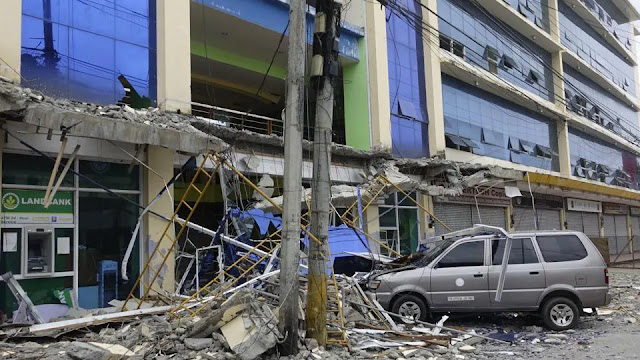
The Philippine Institute of Volcanology and Seismology (Phivolcs) has been urging the public to be prepared for earthquakes, considering that they are unpredictable and may strike anytime. Read: What dangers await when the West Valley Fault moves

Loading...

Before Earthquake

In an Earthquake Preparedness Guide on its website, Phivolcs lists the things one should do before, during and after an earthquake.
  • Know the hazards. Familiarize yourself with earthquake hazards in your area.
  • Know the EVACUATION AREA. Check the nearest route going to identified evacuation area.
  • Prepare your house or workplace.
  • Prepare an EMERGENCY SUPPLY KIT. Make it accessible at all times.
  • Learn to use first aid kit, fire extinguishers, alarms, switching off waterlines, gas tanks and circuit breaker.
  • Participate during DRILLS. Regularly practice the evacuation procedure.


EMERGENCY KIT AND ESSENTIALS

Here are the best options to shop for your emergency kit and life essentials:

Shopee is my go-to app for things I needed like the ones above. If you'd like discounts and vouchers, you may get the best offers here:

During Earthquake

During an earthquake, Phivolcs advises affected persons to stay indoors if they are already within a structurally sound building or home. In particular, the agency cites the following tips:
  • If possible, quickly open the door for exit
  • Duck under a sturdy desk or table, and hold on to it, or protect your head with your arms
  • Stay away from glass windows, shelves, cabinets, and other heavy objects
  • Beware of falling objects. Be alert and keep your eyes open


Meanwhile, those who are outside should move to an open area, and follow these safety measures:
  • Stay away from trees, power lines, posts, and concrete structures
  • Move away from steep slopes which may be affected by landslides
  • If near the shore and feeling an earthquake, especially a strong one, quickly move to higher grounds in anticipation of possible tsunamis


Those who are in a moving vehicle should stop and get out, the agency adds. “Do not attempt to cross bridges, overpasses, or flyovers which may have been damaged.”


After Earthquake

Immediately after an earthquake, Phivolcs advises affected persons to take “the fastest and safest way out of the building.” One should not use elevators, enter damaged buildings, or use telephones unless necessary, the agency says.


Most of all, do not panic, according to Phivolcs.

Meanwhile, before an earthquake, the agency emphasizes planning. (See the rest of the Phivolcs infographic below)


ATTRACTIONS TO SEE IN MANILA 

Klook.com

A 2004 study conducted by the Japan International Cooperation Agency, the Metro Manila Earthquake Impact Reduction Study (MMEIRS), indicated that an earthquake hitting Metro Manila could destroy 40% of the buildings in the metropolis and kill about 34,000.


WHAT TO READ NEXT


ACTIVITIES AND TOURS IN MANILA

what to do before, during and after an earthquake pdf what to do before, during and after earthquake ppt what to do after earthquake what to do during earthquake what to do before earthquake what to do before an earthquake with pictures 5 things to do after earthquake what to do before, during and after a disaster earthquake safety tips before during and after  earthquake safety steps  earthquake safety procedures  earthquake preparedness pdf  safety measures during earthquake wikipedia  how to prepare for an earthquake  earthquake preparedness checklist  safety steps during earthquake

SAFETY TIPS: What to do Before, during, and After Earthquake

phivolcs fault line google map fault finder phivolcs fault line map phivolcs fault finder app list of philippine fault line fault finder philippines valley fault system

The Philippine Institute of Volcanology and Seismology or more commonly known to be PHIVOLCS, is the country’s department who takes charge in providing information and data on the activities of different natural disasters like volcanic eruptions, tsunamis, earthquakes, flooding, and the like.


In 2019, PHIVOLCS had launching different mobile applications that would help citizens in reducing risk for these disasters and how to mitigate them. One of which was PHIVOLCS FaultFinder.

Earthquake Tips: What to do before, during, and after

Loading...

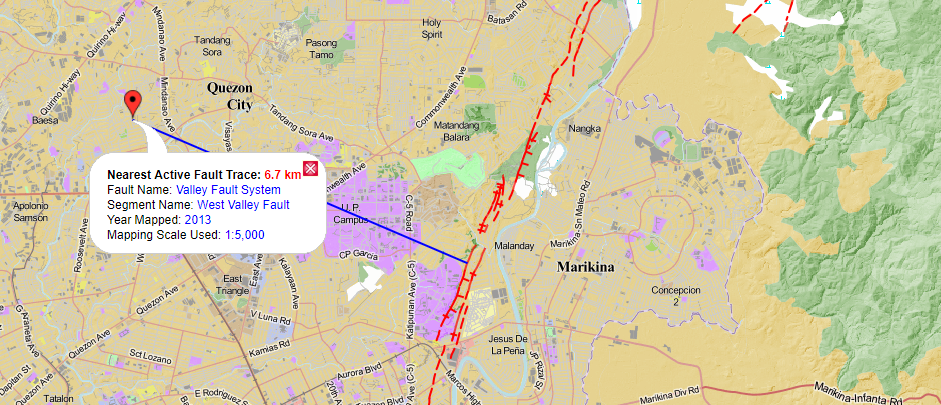
The PHIVOLCS FaultFinder is an application capable to do proximity searches to active faults. It may be used to determine the location of active faults in an area and to measure the shortest distance between an active fault and a user’s current location, which is determined by the gadget’s tracking device. It may also be used to measure the shortest distance between an active fault and a specific site, which is identified by a user.

PHIVOLCS FaultFinder

The app would be useful for land-use planning, risk assessment, disaster risk reduction plan, and awareness. This web app is a product of the joint collaboration between the Philippine Institute of Volcanology and Seismology (PHIVOLCS), Department of Science and Technology (DOST), Geological Survey of Japan (GSJ), National Institute of Advanced Industrial Science and Technology (AIST), Japan. It was developed by Dr. Joel C. Bandibas of GSJ with the cooperation of the research and development personnel of PHIVOLCS.


The app uses three (3) base maps, Philippines Geoportal from NAMRIA, Google Maps, and Openstreet. Information about a particular query includes information on the Distance to the Nearest Active Fault, Fault Name, Fault Segment Name, Year of the Mapping, and Map Scale used during the mapping.If you are currently located, or if want to know the location of active faults, in the Greater Metro Manila Area (GMMA), click "Valley Fault System (VFS)" in the opening page, otherwise, click "Other Fault Systems".

PHIVOLCS FaultFinder

To determine the distance of your current location to the nearest fault, turn on your gadget’s tracking device. Click the “VFS Fault Nearest You” or “Active Fault Nearest You”. You may click on “Active Fault Based on Location” tab if you want to know the distance of a Barangay to the nearest active fault. Or you may choose “Double Click a Place on the Map” and double click your cursor on any area of interest. You may click “Base Maps” located at the upper rightmost corner of the map, to change maps. Click “Legend” located at the lower rightmost corner of the map to see the legend.


PHIVOLCS takes the necessary steps to continually improve the accuracy of the fault information reflected in this application. The institute does not guarantee information from third-party sources. The public is advised to consult PHIVOLCS directly for official hazards assessment.


EMERGENCY KIT AND ESSENTIALS

Here are the best options to shop for your emergency kit and life essentials:

Shopee is my go-to app for things I needed like the ones above. If you'd like discounts and vouchers, you may get the best offers here:

RELATED INFO


ACTIVITIES AND TOURS IN MANILA

 phivolcs fault line google map fault finder phivolcs fault line map phivolcs fault finder app list of philippine fault line fault finder philippines valley fault system

What is PHIVOLCS FaultFinder and how to use it