Social Items


The Philippine Deposit Insurance Corp. (PDIC) announced that it will double the maximum deposit insurance coverage (MDIC) for bank deposits, increasing it from PHP500,000 to PHP1 million per depositor per bank.


In its Memorandum 2025-01 released on Friday, the PDIC confirmed that the new MDIC will take effect on March 15.

"The increase in the MDIC was approved by the PDIC Board of Directors to provide enhanced protection and more confidence for the depositing public," the PDIC said in a separate statement.


Loading...

Deposit insurance serves as a government policy and financial safety net designed to protect depositors and promote financial stability. Depositors are not required to pay for this insurance.

Under Republic Act 3591, as amended, the PDIC Board of Directors has the authority to adjust the MDIC based on inflation or other relevant economic indicators. The PDIC Charter mandates that the MDIC undergoes review every three years.


With the new MDIC of PHP1 million, 136 million deposit accounts, or 98.6 percent of the total 138 million deposit accounts in the country, will be fully insured. This marks an improvement from the current 97.6 percent coverage under the PHP500,000 MDIC.


In terms of insured deposits, the total will increase to PHP4.8 trillion, representing 24.5 percent of the PHP19.5 trillion in total deposits, compared to the previous 18.3 percent coverage.

Despite the increase in coverage, the PDIC assured that the Deposit Insurance Fund (DIF) remains sufficient to address potential insurance risks. The DIF-to-estimated insured deposits ratio is expected to reach 5.3 percent in 2025 and is projected to grow to the target ratio of 8 percent by 2031, in line with international best practices.


Rizal Commercial Banking Corp. chief economist Michael Ricafort welcomed the move, stating that the higher deposit insurance coverage would provide greater confidence to the depositing public.

"This would also respond to higher prices to be more attuned to the realities in terms of sufficiency of deposit insurance coverage," Ricafort said.

He further noted that the adjustment would enhance stability and trust in the local banking system.


ATTRACTIONS TO SEE IN MANILA 

Klook.com

RELATED GUIDES


PDIC Doubles Deposit Insurance Coverage to PHP1 Million


Makati Science High School (MSHS), affectionately known as "MakSci," stands as a beacon of specialized secondary education in the Philippines. Renowned for its rigorous Science, Technology, Engineering, and Mathematics (STEM) curriculum, MSHS has a rich history of fostering academic excellence and holistic development. From its humble beginnings as Makati West High School to its current status under the Schools Division Office of Taguig City and Pateros, MSHS continues to shape future leaders and innovators.


Historical Roots and Transformation

Makati Science High School's journey began on June 16, 1986, initially established as Makati West High School. It was founded to address the educational needs of elementary graduates in Makati's first legislative district, becoming one of the first public secondary schools in the then-municipality of Makati.

In 1994, recognizing its growing specialization in science and technology education, the school was officially renamed Makati Science High School. Over the years, MSHS has seen several relocations, moving from Mayapis Street to Osias Street in 1997, and finally to its current modern campus along Kalayaan Avenue in Barangay Cembo in 2014.

Makati Science High School along Kalayaan Avenue in Cembo, Taguig

This 10-story building boasts state-of-the-art facilities, including numerous science laboratories, computer labs, a speech lab, an auditorium, and even a dormitory, providing an environment conducive to advanced learning.

Loading...

A significant administrative shift occurred in 2022 when the Supreme Court ruled that Barangay Cembo, where MSHS is located, falls under the jurisdiction of Taguig City. Consequently, the administration, management, and supervision of the school were officially transferred from Makati City's Schools Division Office to the Schools Division Office of Taguig City and Pateros (SDO-TaPat) for the Academic Year 2023-2024 onwards. This transition underscores the school's adaptability and commitment to maintaining its high standards regardless of administrative changes.


A Glimpse into MakSci's Profile

Makati Science High School's identity is deeply embedded in its commitment to specialized education and the development of well-rounded individuals. This is powerfully reflected in its recently enhanced official logo, effective July 14, 2025, which visually articulates its ideals:

  • Name & History: Prominently features "Makati Science High School" and "1986" (its founding year as Makati West High School), with two red dots symbolizing its former and current names, acknowledging its legacy.

  • Excellence & Curriculum: Laurel leaves denote academic and non-academic excellence, while 13 cogs represent the DepEd K-12 curriculum. The Atom and Laptop distinctly symbolize the school's focus on Science, Technology, Engineering, and Mathematics (STEM).

  • Values & Governance: The DepEd logo within the laptop emphasizes the school's mission to instill DepEd Core Values (Maka-Diyos, Maka-Tao, Makakalikasan, Makabansa). The inclusion of "City of Taguig" signifies its current jurisdiction and supervision under the SDO-TaPat.

  • Community: Internal (red) and external (blue) rings highlight the crucial roles of both internal stakeholders (teachers, administrators, students) and external partners (parents, alumni, government officials) in fulfilling the school's mission and vision.

MSHS implements a Special Science and Technology Curriculum for Junior High School and offers the STEM strand for Senior High School, attracting students who are passionate about scientific inquiry and innovation.


Admission Process: Pathways to MakSci

Gaining admission to Makati Science High School is a competitive, multi-stage process designed to identify academically promising and well-rounded Grade 6 learners. For School Year 2025-2026, the admissions follow these key guidelines:

A. Qualifications:


Open to All: Admission is open to all Grade 6 elementary learners from public and private schools, both within and outside the City of Taguig.

Academic Standards: Applicants must achieve:

  • At least 85% in Mathematics, Science, and English.

  • At least 83% in all other subjects.

These grades are assessed based on the First, Second, or Third Quarter report, whichever is applicable.

Good Moral Character: A certification of good moral character is required.

Two-Stage Evaluation:

  • On-site Admission Test (80%): Covers Mathematics, Science, English, and Non-verbal Ability.

  • On-site Interview (20%): Only students who meet the admission test cut-off score will be invited for an interview.

A combined overall score of 80% is needed for eligibility.


B. Requirements for Test Permit Issuance:


Completely filled-out Application Form (downloadable from the MSHS Facebook Page).

Certified True Copy of Grade 6 School Form 9 (Learner's Progress Report Card).

Certificate of Good Moral Character.


C. Application Submission:


Filing Period: From December 16, 2024, to January 24, 2025, Monday to Friday, 7:00 a.m. to 3:30 p.m.

Submission Channels:

  • DepEd-Taguig City Public Schools: Submit documents to respective guidance counselors/teachers.

  • Private Schools & Other Public Schools (outside Taguig City): Submit documents directly to the School Guidance Office at MSHS.


D. Admission Test Details:


Date & Time: February 1, 2025 (Saturday), 8:00 a.m. to 12:00 p.m.

Location: Makati Science High School Testing Rooms (on-site).

Essentials: Bring pencil and eraser, test permit, and school ID. Applicants should arrive 30 minutes early.


E. Interview Process:


Face-to-Face: Interviews are conducted in person for those who pass the admission test.

Attendance: Failure to attend the scheduled interview results in a zero rating for this component.


F. Results and Acceptance:


Limited Slots: Only a maximum of 210 learners will be accepted for Grade 7.

Ranking: Students are ranked separately:

  • Top 126 learners from DepEd-Taguig City public schools.

  • Top 84 learners from private schools and public schools outside Taguig City.

Announcement: Results will be posted on the Makati Science High School grounds and its official Facebook Page.


Recent Updates and Future Outlook

Makati Science High School continuously adapts to educational advancements and administrative shifts. The formal adoption of its enhanced logo signifies a renewed commitment to its values and specialized curriculum. Despite its relocation to Taguig's jurisdiction, MSHS maintains its distinct identity and high academic standards, serving as a beacon for aspiring scientists and innovators. Its state-of-the-art facilities and dedicated faculty underscore its mission to produce globally competitive and values-driven graduates ready to contribute meaningfully to society.

Makati Science High School (MSHS)


When it comes to online shopping in the Philippines, Lazada is a major player. Recognizing the loyalty of its customers, Lazada has teamed up with UnionBank to offer a suite of financial products that reward your spending: the Lazada Debit Card and the Lazada Credit Card.


These cards are more than just payment methods; they're loyalty tools designed to give you exclusive benefits and maximize your savings every time you shop on the platform.


The UnionBank Lazada Credit Card: The Ultimate Shopper's Companion

The UnionBank Lazada Credit Card is the go-to choice for avid online shoppers who want to turn their spending into serious rewards. It’s a Credit Card built for the digital age, offering a seamless way to earn as you spend.

Loading...

Key Benefits of the Credit Card


  • Massive Rewards on Lazada: The biggest perk is the accelerated rewards system. You earn 6 Lazada Credits for every ₱200 you spend on the Lazada app. For all other purchases outside of Lazada, you still earn 1 Lazada Credit for every ₱200 spent. These credits can be easily converted into discounts on your next purchase.

  • Exclusive Vouchers and Discounts: Cardholders get exclusive access to monthly free shipping vouchers and special discount vouchers during major Lazada sale events like 6.6, 11.11, and the Brand Mega Offers.

  • Instant Virtual Card: No need to wait for the physical card to arrive. Upon approval, you'll get an instant virtual card that you can immediately use for online purchases, letting you start earning rewards right away.

To apply, you need a minimum annual income of ₱360,000 and must be a Filipino resident. The application is a hassle-free online process through the UnionBank app or website.


The UnionBank Lazada Debit Card: Smart Spending, Smart Savings

If you prefer to spend within your means, the Lazada Debit Card is an excellent alternative. It functions like a regular debit and ATM card but with the added benefit of Lazada-specific rewards.


Key Benefits of the Debit Card


  • Rewards on Your Own Terms: You earn 2 Lazada Credits for every ₱200 spent on Lazada and for paying your bills through the app. It's a great way to get rewarded for everyday transactions without relying on credit.

  • No Fees to Get Started: The account requires no initial deposit and no maintaining balance, making it accessible to anyone. It’s a completely free way to open a bank account that comes with shopping perks.

  • Instant Virtual Card: Similar to the credit card, you get an instant virtual debit card through the UnionBank Online app. You can fund it and start shopping immediately after opening your account.

  • Full Banking Features: As a UnionBank account, it’s not just for shopping. You can use it for all your banking needs, including fund transfers to other banks and cash deposits at a wide network of partner merchants.

You can open the account in minutes directly through the UnionBank Online app with just a valid government-issued ID.


Making the Right Choice for You

Whether you choose the credit or debit card depends on your spending habits and financial goals.

Opt for the Credit Card if you're a heavy spender on Lazada and want to maximize your rewards through credit, with the ability to pay later.

Choose the Debit Card if you prefer to spend what you have in your account and still want to enjoy exclusive discounts and earn rewards on your purchases.

Both cards are a testament to the evolving synergy between banking and e-commerce, offering a powerful way for Lazada users to get more value out of every purchase.


You Can Get a Lazada Debit or Credit Card Powered by UnionBank


Whether you’re planning a weekend family bonding activity or a weekday reward for your little one, Metro Manila offers a wide variety of fun, safe, and interactive playgrounds perfect for kids of all ages.


From immersive fantasy zones to STEM-based play areas, there’s something for every family. Here’s your updated guide to the best kid-friendly indoor playgrounds and parks in Metro Manila, with entrance fees, locations, and key features.


1. Fantasy World

An exciting mix of amusement rides, arcade games, and interactive fun, Fantasy World offers multiple branches around the metro.

🌟 Highlights: Kiddie rides, arcade games, VR booths, colorful play zones

Fantasy World - Market Market

📍 Branches:


💸 Rates: Starts at ₱550 for 3 hours (1 child + 1 adult companion, weekdays)

🧦 Non-slip socks required: ₱50 per pair for both kids and adults

Loading...

2. Underwater Adventure – SM North EDSA

Dive into ocean-themed fun at Underwater Adventure, a play space filled with glowing sea creatures, ball pits, and interactive sensory zones.

🌟 Highlights: Under-the-sea sensory play, glowing aquatic walls, safe toddler zones

Underwater Adventure – SM North EDSA

📍 Location: Level 5, The Block, SM North EDSA (near Lazer Quest)

🕙 Hours: Daily, 10 AM – 9 PM

💸 Rates:

  • 1 Hour – ₱299
  • 3 Hours – ₱420

(Rates include access for 1 child + 1 guardian)


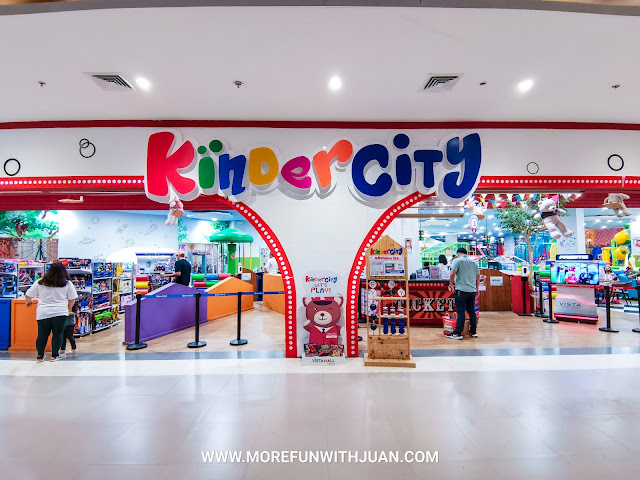
3. KinderCity – Vista Mall Taguig

Perfect for toddlers and younger kids, KinderCity is a vibrant, activity-packed playground that encourages imaginative and active play.

🌟 Highlights: Obstacle courses, ball pits, slides, soft play areas

kindercity ph kindercity sta rosa kindercity dasma kindercity website kindercity malolos kindercity evia play@kindercity kindercity dasmarinas cavite
KinderCity - Vista Mall Taguig

📍 Location: 2F Phase 1 Vista Mall Taguig

💸 Rates:

  • ₱320 – 1 Hour Pass (1 Child)
  • ₱120 – 1 Hour Adult Companion

Promo: ₱650 for 3 hours


4. Koobo PH – Pasig City

Koobo PH is a cozy, Montessori-style indoor playground that blends wooden climbing equipment, sensory toys, and imaginative corners for younger kids.

🌟 Highlights: Wooden play structures, reading nooks, sensory-friendly play

Koobo PH - Pasig

📍 Location: 9544 C. Raymundo Ave., Brgy. Caniogan, Pasig (Behind Jollibee C. Raymundo)

💸 Rates: ₱450 for 1.5 hours (1 child + 1 guardian)


5. Enchanted Park – Opus Mall, Quezon City

A magical play space inside the new Opus Mall, Enchanted Park offers creative and physically engaging play structures for kids.

🌟 Highlights: Fantasy-themed interiors, climbing zones, indoor slides

Enchanted Park – Opus Mall

📍 Location: 4th Floor, Opus Mall, Bridgetowne Destination Estate, Quezon City

🕙 Open: Tuesday – Sunday, 10 AM – 7 PM

💸 Rates:

  • 1 Hour: ₱600
  • 2 Hours: ₱700
  • 3 Hours: ₱800

(All rates include 1 child + 1 guardian)


6. Kidzooona – Multiple Locations

A well-loved Japanese-style indoor playground known for imaginative role-play zones and active play areas. Perfect for toddlers to elementary-age kids.

🌟 Highlights: Ball pits, role-play town, inflatables, slides

Kidzooona


📍 Metro Manila Branches:


💸 Rates: ₱300–₱450 per hour (depending on branch); ₱100 for adult guardian


7. PlayLab – Robinsons Galleria Ortigas

A digital and science-inspired playground where art meets interactive technology. Great for curious and creative kids.

🌟 Highlights: Light art walls, interactive floors, digital storytelling zones

PlayLab – Robinsons Galleria Ortigas

📍 Location: 4th Floor, Robinsons Galleria Ortigas

💸 Rate: ₱450 per child (90 minutes)


8. Dino Land – SM City North EDSA

Step back in time at Dino Land, where kids can explore realistic dinosaur exhibits, excavation sites, and themed play areas.

🌟 Highlights: Life-sized dinos, fossil dig zones, dino rides

Dino Land – SM City North EDSA

📍 Location: SM City North EDSA, The Block

💸 Rates: ₱300–₱500 per child (1–2 hours); adults enter free with child


9. Wetpark Adventure Lagoon – McKinley Hill, Taguig

Beat the heat in this indoor water playground packed with inflatable obstacle courses and water slides—all in a safe, air-conditioned space.

🌟 Highlights: Splash zones, giant slides, aquatic challenges

Wetpark Adventure Lagoon – McKinley Hill

📍 Location: Venice Grand Canal Mall, McKinley Hill, Taguig

💸 Rates:

  • ₱550 – Kids (90cm & above)
  • ₱200 – Kids below 90cm
  • ₱200 – Adult companion


10. Pixie Forest & X-Site – Festival Mall, Alabang

These adjacent attractions are classic go-to playgrounds for South Manila families. Pixie Forest is great for toddlers, while X-Site offers fun for older kids.

🌟 Highlights: Carousel, arcade games, kiddie cars, family-friendly rides

Pixie Forest

📍 Location: Festival Mall, Filinvest City, Alabang

💸 Rates:

  • Pixie Forest: ₱60 per ride
  • X-Site: ₱5–₱20 per arcade game


Tips for Visiting Metro Manila Playgrounds


Bring non-slip socks – Required in most playgrounds; check if they’re selling on-site.

Arrive early on weekends – Crowds build up fast, especially in mall-based playgrounds.

Check for promos – Some parks offer weekday or combo discounts.

Age/height rules apply – Some parks have minimum age or height for certain activities.

Follow safety & sanitation rules – Hand sanitizing and guardian supervision are often required.


Whether you’re planning a short play session or an all-day bonding experience, these playgrounds offer safe, enriching, and fun activities for kids—all within Metro Manila. Make memories and explore one park at a time!


More Tips and Metro Manila City Guides


10 Kid-Friendly Playgrounds & Indoor Theme Parks in Metro Manila (Locations and Entrance Fees)


When our son’s 2nd birthday came in February 2025, we wanted to make it a special day filled with laughter and play. While browsing through social media, we discovered Koobo PH, an inviting indoor playground in Pasig. The photos looked promising—spacious, clean, and uncrowded. We decided to visit on a quiet Tuesday afternoon, and it turned out to be the perfect little celebration for our small family.


Koobo PH


Koobo PH is conveniently located behind Jollibee C. Raymundo in Pasig City, so it was easy to find even without knowing the area well.

From the moment we stepped in, the place felt secure and family-friendly.


The staff welcomed us warmly, and the cleanliness of the facility was immediately noticeable.

Watch the vlog here:


Entrance Fee as of February 2025:

Loading...

  • P450 – 1.5 hours (1 kid + 1 adult) from Wednesday to Thursday 
  • P500 – 1.5 hours (1 kid + 1 adult) on Friday to Sunday & holidays 
  • P550 – 3 hours on Wednesday to Thursday 
  • P600 – 3 hours on Friday to Sunday


The prices are reasonable for what the space offers—and we felt it was well worth it for a birthday treat.


Playground Highlights

Here are the features that stood out the most: 

  • Massive ball pit with slides – a colorful and safe space for sliding, jumping, and rolling around.
  • Mini zipline – a thrilling yet age-appropriate activity for little adventurers. 
  • H2O Station – a sensory play zone that offers interactive, water-themed experiences (without the mess). 
  • Soft play structures – with tunnels, ramps, and obstacles perfect for crawling and climbing. 
  • Pretend play corner – to let the kids’ imagination run wild.


Everything is housed in one large, open space, which gave us peace of mind. We could comfortably supervise our son while letting him explore at his own pace.


The playground isn’t just fun—it’s thoughtfully designed for families with young children. There’s a restroom located right inside the play area, which is a huge plus when you’re with a toddler.


The environment was air-conditioned, not too loud, and not overcrowded, which made our stay relaxing and enjoyable.

RELAETD: Pasig City Opens East Bank Skate and Linear Park in Manggahan Flooadway


Reminders for Visitors

Before planning your trip, here are some helpful reminders: 

  • No outside food or drinks allowed inside the playground. 
  • Everyone must wear socks, including adults (you can bring your own or buy at the entrance). 
  • Restroom is available inside the play area. 
  • Time slots are strictly observed, so arrive on time to make the most of your play session.


Koobo PH – Play, Events and Learning Hub 


Address: 9544 C. Raymundo Avenue, Brgy. Caniogan, Pasig City (Located behind Jollibee C. Raymundo)

Parking: Available behind Jollibee

Hours: 10am to 7pm, Tuesday - Sunday

FacebookKoobo PH

Instagram@koobo_play

Book a Play Time at Koobo PH


Also in Pasig


IMPORTANT NOTE: The rates, contact details and other information indicated in this post are accurate from the time of writing but may change without IMFWJ's notice. Should you know the updated information, please let us know by leaving a message in the comment box below.

WHERE TO STAY IN PASIG:

IMFWJ IS NOW ON YOUTUBE!

Koobo PH: Play, Events, and Learning Hub in Pasig


The Philippine Stock Exchange (PSE) is the central marketplace for buying and selling shares of publicly listed companies in the Philippines. As a vital component of the country's economy, it serves as a platform for businesses to raise capital and for investors to grow their wealth. The PSE's main office is located in Bonifacio Global City, Taguig, with another trading floor in the Philippine Stock Exchange Centre in Ortigas, Pasig.


The PSE's history dates back to 1927 with the establishment of the Manila Stock Exchange (MSE). In 1963, the Makati Stock Exchange (MkSE) was founded. For years, the two exchanges operated independently, leading to a fragmented market. It wasn't until 1992 that the two exchanges merged to form what we now know as the Philippine Stock Exchange, Inc. (PSE). The unification created a more efficient and liquid market, paving the way for its significant growth.


Loading...

How the PSE Works

The PSE operates as a regulated market. It is governed by a board of directors and is under the supervision of the Securities and Exchange Commission (SEC), the primary government agency responsible for capital market regulation. Only companies that meet strict listing requirements are allowed to be publicly traded on the exchange.

Investors, whether individuals or institutions, buy and sell shares of these companies through a stockbroker, also known as a trading participant. These brokers act as intermediaries, executing buy and sell orders on the investor's behalf. The process is now largely digital, with many brokers offering online trading platforms and mobile apps that allow investors to monitor their portfolios and execute trades in real-time.


Key Market Indicators

The performance of the Philippine stock market is measured through several key indices. The most important of these is the Philippine Stock Exchange Index (PSEi).


PSEi

This is the country's main stock market index. It is composed of 30 of the largest and most actively traded companies in the Philippines. The companies included in the PSEi are chosen based on a specific set of criteria, including market capitalization, liquidity, and public float. The PSEi serves as a benchmark for the overall health and performance of the Philippine stock market.


Sectoral Indices

In addition to the PSEi, the exchange also has indices for specific sectors, such as the Financials, Industrial, Holding Firms, Property, Services, and Mining and Oil indices. These provide investors with a more detailed view of the performance of particular industries.

RELATED: Here are the Highest Time Deposit Rates from Philippine Digital Banks


Why Invest in the PSE?

Investing in the Philippine stock market offers several advantages, especially for Filipinos.

  • Participation in the Philippine Economy: By investing in the PSE, you are buying a stake in the country's most successful and influential companies. As the Philippine economy grows, so too can the value of your investments.

  • Potential for High Returns: Historically, stocks have provided a higher return on investment over the long term compared to traditional savings accounts.

  • Accessibility: The rise of online trading platforms has made investing in the stock market more accessible than ever before. With relatively low minimum investment amounts, even first-time investors can start their journey.

  • Dividend Income: Many publicly listed companies pay dividends to their shareholders, providing a potential source of passive income.


However, it's important to remember that all investments come with risks. The value of stocks can fluctuate, and there is a possibility of losing money. It is crucial to conduct thorough research, understand your risk tolerance, and consider diversifying your portfolio. The PSE, with its rich history and modern platform, continues to be a vital tool for Filipinos looking to secure their financial future.


Learn About Philippine Stock Market (FAQs)

Here are frequently asked questions (FAQs) about the Philippine Stock Exchange (PSE), tailored to give you a clear, scannable overview of how local trading works.


1. What time does the market open and close?

The PSE operates on weekdays (Monday to Friday), excluding national holidays. While actual trading starts mid-morning, the system goes through a few phases:

  • 09:00 AM – Pre-Open: You can start posting, modifying, or canceling orders, but no trades are matched yet.

  • 09:15 AM – Pre-Open (No Cancel): You can still enter new orders, but you can no longer modify or cancel existing ones.

  • 09:30 AM – Market Open: Continuous trading begins, and orders start matching.

  • 12:00 PM to 01:00 PM – Market Recess: The market pauses for a one-hour lunch break.

  • 03:00 PM – Market Close: Trading completely halts for the day (following a brief pre-close and run-off period starting at 2:45 PM). 


2. What is the "Board Lot" system?

You cannot just buy a single share of any stock on the PSE. The market uses a Board Lot (or Round Lot) system, which dictates the minimum number of shares you must buy or sell based on the stock’s current market price.

For example, if a stock trades between ₱5.00 and ₱9.99, the minimum board lot is 100 shares. If a stock is highly expensive—say, trading above ₱5,000.00—the board lot drops to just 5 shares. Buying anything outside these exact multiples is considered an "odd lot" and can be harder to buy or sell quickly.


3. How long does it take for a stock transaction to settle?

The PSE operates on a T+2 settlement cycle (Transaction day plus 2 trading days).

When you sell a stock on a Monday, the actual cash settlement and transfer of ownership happen on Wednesday. Similarly, if you buy a stock, your broker handles the clearing behind the scenes within two trading days. Most modern online brokerages require you to have cleared funds in your account before buying, so you rarely have to worry about the manual funding window.


4. What are the cash charges and fees for buying and selling?

Every transaction includes mandatory fees and taxes on top of your broker's commission.

When Buying: You pay the broker's commission (usually up to 0.25%), a VAT on that commission (12%), a PSE transaction fee (0.005%), and a Securities Clearing Corporation of the Philippines (SCCP) fee (0.01%).

When Selling: You pay all the same fees as buying, plus a Stock Transaction Tax (0.6% of the gross selling value). Because of this tax, selling a stock is always slightly more expensive than buying it.


5. What is a REIT, and how do dividends work on the PSE?

A Real Estate Investment Trust (REIT) is a company listed on the PSE that owns and operates income-generating real estate (like office buildings, malls, or hotels). By Philippine law, REITs are required to distribute at least 90% of their distributable annual income to shareholders as dividends.

For standard stocks and REITs alike, cash dividends are automatically credited directly to your online trading account balance on the designated payment date, minus a standard 10% final withholding tax for local individual investors.


Read Next . . .

An Introduction to the Philippine Stock Exchange (PSE)


Planning a trip to Lucena City in Quezon Province? Whether you're headed to nearby beaches, cultural festivals, or just passing through on your way to Cagbalete Island, Lucena is more than just a stopover — it’s a destination full of local flavor, heritage, and southern Luzon charm.


This Lucena City travel guide covers everything you need to know: how to get there, places to visit, food spots, and pro tips for a smooth trip.

Lucena Downtown

Where Is Lucena City?

Lucena City is the capital of Quezon Province, located in the CALABARZON region of the Philippines, about 130 km southeast of Metro Manila. It serves as the economic and transport hub of Southern Luzon, especially for those traveling to Lucban, Mauban, Tayabas, or Bicol.

Loading...

How to Get to Lucena City

Lucena is accessible by bus, van, and via the Philippine National Railways (PNR). Here are the most popular travel options:

Lucena Grand Central Terminal

🚌 By Bus (from Metro Manila)


Terminals: Cubao, Kamias, Buendia, Alabang


Fare: ₱300–₱350 (Aircon bus)

Travel Time: 3.5–4.5 hours depending on traffic

Drop-off: Most buses arrive at Lucena Grand Terminal, about 5–10 minutes from downtown.


🚆 By Train: PNR Calamba–Lucena Line

As of 2025, the Philippine National Railways (PNR) has resumed partial service to Lucena City via Calamba, offering an alternative to road travel.

Route: PNR Calamba Station → San Pablo → Lucena City

Estimated Travel Time: ~2.5–3 hours

Fare: ₱100 (Calamba to Lucena)

Frequency: 1–2 trips daily (subject to schedule updates)

Advantages:

  • More scenic and relaxing ride
  • Avoids road traffic in SLEX and Laguna

Lucena PNR Station is located within the city proper, a short tricycle ride from hotels, shops, and the Cathedral.

PNR Lucena Station building (Cotta, Lucena, Quezon)


Top Things to Do in Lucena City

Here are the tourist spots to visit in Lucena:

Saint Ferdinand Cathedral

1. Visit Lucena Cathedral (St. Ferdinand Cathedral)


A historic Roman Catholic church at the heart of the city

Admire the Spanish-era architecture and quiet, prayerful ambiance


2. Explore Perez Park


Family-friendly public plaza near the city hall

Great for walking, street food, or relaxing under trees


3. Pasalubong and Local Shopping


Try budin (cassava cake), tikoy, Lucban longganisa, and local delicacies

Visit public markets, SM City Lucena, Pacific Mall, or Metro Gaisano


4. Lucena City Public Beach (Dalahican)


Not a tourist resort, but a nice place to enjoy sea breeze and watch fishing boats

Ideal for quick beachside photos and local seafood finds


5. Attend a Local Festival

Pasayahan sa Lucena (late May) — Mardi Gras-style parade, concerts, food fairs


Where to Eat in Lucena

Here are some must-try food spots and restaurants in Lucena City:

  • Buddy’s - Popular Lucban chain; local vibe
    What to try: Pancit Lucban, Longganisang Lucban

  • Cafe Antigua - Cozy heritage house café
    What to try:  Coffee, pasta, pastries

  • Casa Paz - Near downtown; homey ambiance
    What to try: Filipino comfort food

  • Gerry’s Grill (SM City Lucena) - Convenient for travelers
    What to try: Filipino seafood and grills

Buddy's in Lucena

Where to Stay in Lucena

Lucena has a range of budget-friendly to mid-tier accommodations:

🛏 Queen Margarette Hotel – Business and family travelers, with pool and restaurant

🛏 Ouan’s The Farm Resort – Rustic charm, garden views, ideal for weekenders

🛏 Hotel Rosita – Affordable, central location

🛏 Greenview Hotel – Clean and convenient near bus stations

Greenview Hotel Lucena

Suggested Day Itinerary for Lucena City


8:00 AM: Arrive at Lucena Grand Terminal
8:30 AM: Breakfast near SM or Jollibee
9:30 AM: Visit St. Ferdinand Cathedral
10:30 AM: Walk around Perez Park
12:00 NN: Lunch at Buddy’s or Casa Paz
1:30 PM: Pasalubong shopping (budin, tikoy)
3:00 PM: Side trip to Dalahican port
5:00 PM: Chill at a café or early dinner

Tip: If you're headed to Mauban or Lucban next, vans and jeeps are available at the terminal until around 6:00 PM.

Lucena Port Terminal

Budget Estimate (Day Trip)


Bus (Manila–Lucena): ₱350

Meals & Snacks: ₱250–₱400

Local Transport: ₱50–₱100

Souvenirs: ₱200–₱500

Total: ₱850–₱1,300


Lucena City Travel FAQs


What’s the best time to visit Lucena?

Dry season: November to May

Best for festivals: May (Pasayahan & Pahiyas)


Is there Grab or ride-hailing in Lucena?

No Grab yet. Use tricycles and local jeeps for short trips.


Can I use GCash or cards in Lucena?

Yes, many stores and eateries accept GCash, Maya, and debit/credit cards (especially in malls).


Is Lucena a good base for nearby trips?

Yes! It’s the gateway to:

  • Lucban (Kamay ni Hesus, Pahiyas Festival)
  • Mauban & Cagbalete Island
  • Tayabas (heritage and church tours)

Kamay ni Hesus Shrine & Grotto

Final Thoughts

Whether you’re just passing through or staying overnight, Lucena City has a lot to offer — from delicious local cuisine and cultural landmarks to easy access to Quezon’s natural wonders. Make the most of your trip by immersing yourself in the city’s authentic southern hospitality and exploring beyond the terminal.


IMPORTANT NOTE: The rates, contact details and other information indicated in this post are accurate from the time of writing but may change without IMFWJ's notice. Should you know the updated information, please message us on Facebook.

WHERE TO STAY IN QUEZON:


LUCENA TRAVEL GUIDE: What to Do, Where to Eat, and How to Get There