Social Items


Nestled within the halls of Sta. Maria Church in Siquijor lies a statue veiled in mystery, a figure of the patron saint of abused wives, Sta. Rita de Cascia.


Known colloquially as the Black Magic Mary among locals and tourists alike, this eerie statue is shrouded in chilling tales and urban legends.

Loading...

According to local lore, the skull-and-inverted-crucifix-bearing statue is said to be the genuine possession of a real person, particularly someone who met a grim fate—having lost their head at the hands of their spouse for reasons unknown.


What adds to the spine-tingling mystique is the whispered rumor that the statue is said to walk after the sun sets, wandering the premises of the church under the cloak of darkness.


The legends surrounding Sta. Rita de Cascia, or the Black Magic Mary, have woven a tapestry of intrigue and fear throughout Siquijor. Visitors and locals alike are drawn to the enigmatic presence of the statue, each whispering tales of its origins and the dark forces that may be at play.


For centuries, Siquijor has been steeped in mysticism and folklore, with tales of witchcraft and sorcery permeating its history. The presence of Sta. Rita de Cascia, with her haunting visage and inverted cross, serves as a reminder of the island's rich tapestry of legends and the enduring power of belief.


ATTRACTIONS TO SEE IN MANILA 

Klook.com

Whether one chooses to believe in the supernatural or dismiss it as mere superstition, the legend of Sta. Rita de Cascia continues to captivate the imagination and fuel the intrigue of those who dare to delve into the mysteries of Siquijor.

As the sun sets over the island, casting long shadows across the landscape, the enigmatic figure of the Black Magic Mary stands silent sentinel, her secrets known only to those who dare to seek them.

The Terrifying Legend of Sta. Rita de Cascia, The Black Magic Mary Holding an Inverted Cross in Siquijor


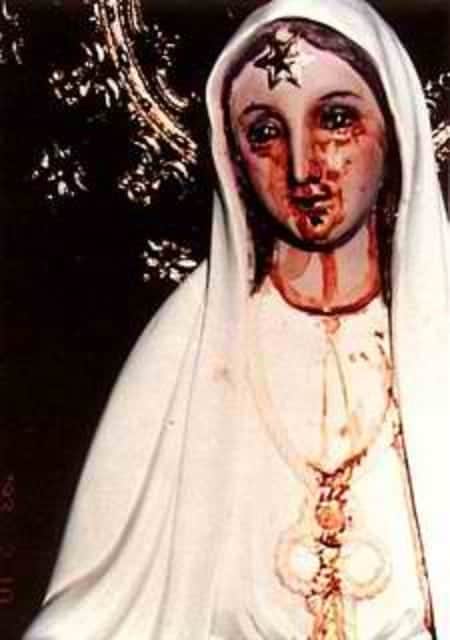
In the rich tapestry of Filipino religious folklore, stories of statues shedding tears of blood are woven into the fabric of faith. However, none have stirred as much controversy as the statue of the Virgin Mary in Agoo, La Union.


The phenomenon of tears of blood first began in February 1993, captivating countless devotees and curious visitors who gathered at the site in awe.

Loading...

The statue is owned by the family of the self-professed boy visionary, Judiel Nieva, who claims that the Virgin Mary has been sending him messages and will reveal herself to them in due time.

The Weeping Virgin Mary of Agoo, La Union
Weeping Virgin Mary


One day before her scheduled appearance in March, thousands reported witnessing the sun dance. During the mass the following day, the presiding priest swore to have seen an apparition of the Virgin Mary atop a guava tree.


In a similar occurrence, many claimed to have seen bright colored lights emanating from various directions. Nieva also relayed a new message from the Virgin Mary, urging prayers for war-torn Somalia during that time.


The events surrounding the Weeping Virgin Mary of La Union have sparked fervent debate and divided opinions among believers and skeptics alike. While some view it as a divine miracle, others attribute it to natural phenomena or even elaborate hoaxes.

Despite the controversies, the site continues to draw pilgrims and seekers of spiritual solace, drawn by the allure of the miraculous and the promise of divine intervention.


ATTRACTIONS TO SEE IN MANILA 

Klook.com

The Weeping Virgin Mary stands as a testament to the enduring power of faith and the mysterious ways in which the divine manifests in the hearts and minds of believers. In a world fraught with uncertainty, her presence offers hope and consolation to those who seek solace in the embrace of the sacred.


The Weeping Virgin Mary of La Union: A Tale of Faith and Controversy


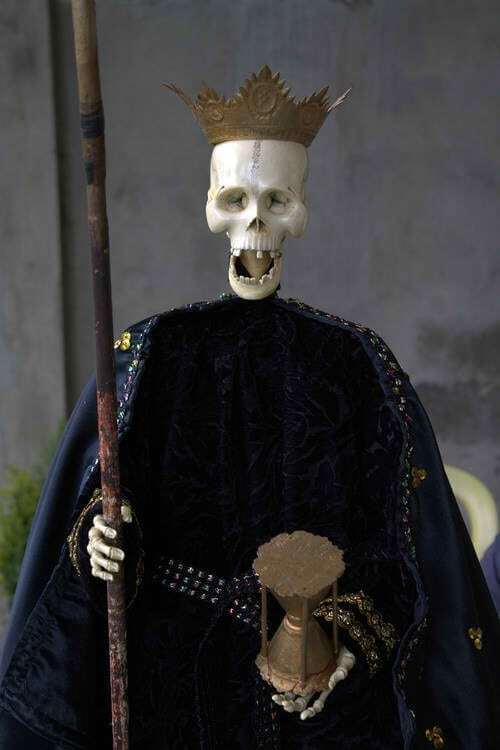
In the midst of Cebu's rich religious tapestry lies a unique statue that captures the imagination and prompts reflection on life's impermanence.


Despite bearing resemblance to the Grim Reaper, wielding a scythe and an hourglass, the statue serves as a poignant reminder for people to prepare for their inevitable mortality. In Mexico, devotees celebrate a distinct festival honoring their revered saint, La Santa Muerte, whose visage embodies the skeletal form of death itself.

Loading...

Here in the Philippines, a similar image, said to be a century-old, can be found in Argao, Cebu.

La Muerte statue in Argao, Cebu
signorcasaubon.tumblr.com
This statue, prominently displayed in Argao, particularly during the Semana Santa procession, stands as a solemn symbol of mortality and the fleeting nature of life.


However, local church officials emphasize that the statue is merely a representation of death and should be distinguished from the cult of Santa Muerte prevalent in Mexico and Latin America. While the imagery may share similarities, the cultural and religious contexts surrounding La Muerte in Cebu remain distinct.


During the Semana Santa, or Holy Week, the statue of La Muerte is paraded through the streets of Argao, accompanied by fervent prayers and solemn rituals. Its presence evokes a sense of introspection among the faithful, urging them to contemplate the transient nature of human existence and the importance of spiritual preparedness.


Despite its somber symbolism, La Muerte serves as a beacon of faith for many in Cebu, reminding them to live virtuously and embrace the mysteries of life and death with courage and acceptance.

As pilgrims and tourists flock to witness the religious festivities in Argao, they are greeted by the enduring presence of La Muerte, a silent witness to the passage of time and the enduring resilience of faith in the face of uncertainty.


ATTRACTIONS TO SEE IN MANILA 

Klook.com

In the heart of Cebu, amidst the bustling streets and vibrant culture, La Muerte stands as a timeless symbol of mortality and spiritual contemplation, inviting all who encounter it to ponder the mysteries of life and death with reverence and humility.


The Story of La Muerte in Cebu: A Symbol of Mortality and Faith


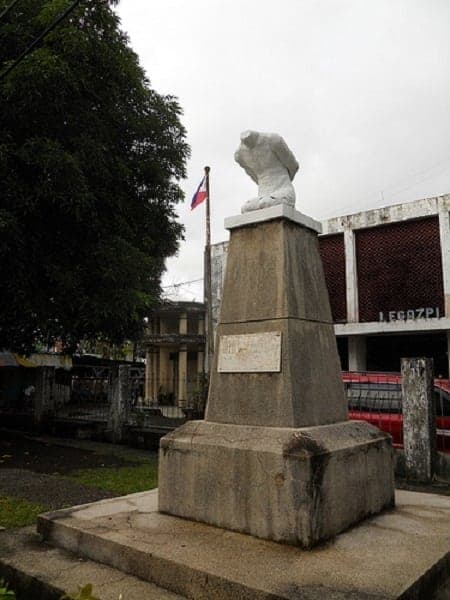
Standing in front of the Legazpi City post office building, the headless statue serves as a tribute to the Bicolanos who fought for the country during the Second World War.


The backstory of the statue traces back to the discovery by workers of a headless man dressed in a soldier's uniform at the city's port in Barangay Sabang shortly after the war. The site had served as a strategic enforcement area for the Japanese during that time.

Loading...

Through the efforts of the Spanish philanthropist Don Buenaventura de Erquiaga, a monument was erected at the site while the man's remains were given a proper burial.

The Headless Monument in Legazpi City

However, with the death of the Spaniard in 1959 and the return of his family to their homeland, all pertinent documents and photographs related to the unknown soldier were lost.


Only the statue remained, and eventually, it was transferred to its current location. Despite the loss of historical records, the headless monument stands as a solemn reminder of the sacrifices made by the brave Bicolanos during one of the darkest periods in history.


The monument serves as a symbol of resilience and valor, embodying the spirit of those who fought for freedom and justice. Its presence in Legazpi City is not just a marker of the past but also a testament to the enduring legacy of those who bravely stood against tyranny and oppression.


ATTRACTIONS TO SEE IN MANILA 

Klook.com

As visitors pass by the headless monument, they are reminded of the courage and sacrifice of the unknown soldier and countless others who gave their lives for the sake of future generations. In the heart of Albay, amidst the bustling streets and modern buildings, stands a silent sentinel honoring the heroes of the past and inspiring hope for the future.


Story of the Headless Monument in Albay


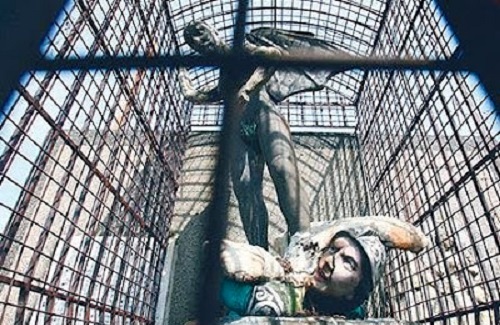
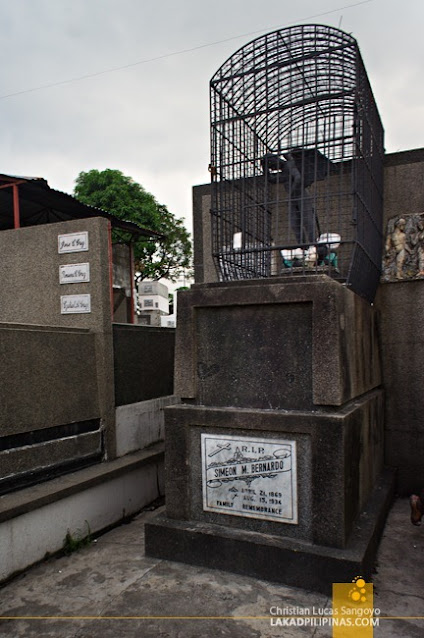
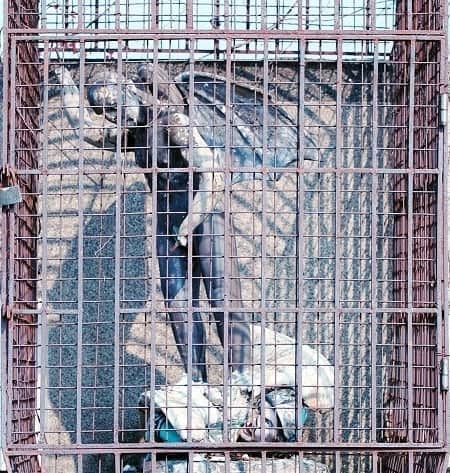
Erected in 1934, the tombstone in the municipal cemetery of Malabon depicts a chilling portrayal of Satan prevailing over the archangel Michael, marking the final resting place of a man named Don Simeon Bernardo.


Plagued by the uncertainties of being a revolutionary under Spanish rule, Bernardo succumbed to disillusionment, believing that goodness had vanished from the world.

Loading...

He wished for his descendants to place the sculpture atop his grave as a reminder that evil slowly seeps into society.

Courtesy of Lakad Pilipinas


According to his grandchildren, they would only restore the statues if they believed that goodness had been restored to the world. The statue still stands today, a haunting reminder of Bernardo's somber beliefs.


In the late 1970s, according to Lubis, Atty., Sumilang requested him to replace the statues because they were vandalized by addicts. Interestingly, the replacement statues turned out to be larger than the originals (by approximately five inches), sparking rumors among some unaware individuals that the devil had gotten bigger!


who is don simeon bernardo don simeon bernardo wikipedia simeon m bernardo story simeon bernardo age

ATTRACTIONS TO SEE IN MANILA 

Klook.com

Don Simeon Bernardo remains a mysterious figure, his story intertwined with the eerie presence of his tombstone in Malabon. While the statue may just be a statue, a haunting statue in a place like a graveyard can play tricks on your mind.


The Tale of Don Simeon Bernardo's Tombstone in Malabon: A Haunting Legacy

Sto. Kulago of Guiuan, Eastern Samar

The Story of Owl Saint of Eastern Samar: A Tale of Religious Syncretism

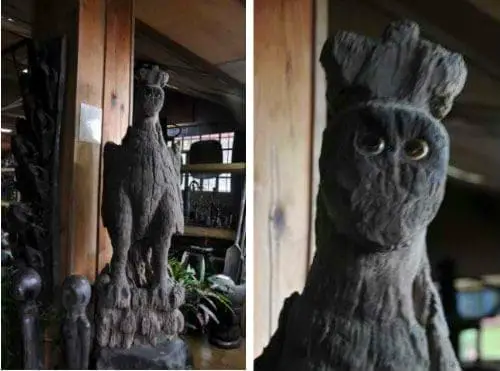
In the tranquil town of Guiuan, nestled in the heart of Eastern Samar, there exists a unique statue known as Sto. Kulago. This statue, representing an owl, holds deep significance in the religious and cultural landscape of the region, symbolizing the intricate interplay between Christianity and indigenous beliefs.


Long before the arrival of the Spanish colonizers, owls held a sacred place in the beliefs of the native peoples of the Philippines. They were either revered as divine beings or feared as omens of misfortune. The owl's presence in the region's folklore predates the introduction of Christianity, indicating its profound influence on the indigenous spirituality.

Loading...

It is believed that the creator of Sto. Kulago blended his animist beliefs with the Christian faith, creating a symbol that resonated with both traditions. The owl, with its enigmatic allure, became a vessel for spiritual expression, embodying the rich tapestry of cultural heritage that defines the Philippines.

most miraculous church in the philippines miraculous places in the philippines 10 marian apparitions in the philippines marian apparitions philippines our lady of cabra eucharistic miracles in the philippines modern day miracle story in the philippines eastern samar
An Inherited Veneration of Owls

The reverence for owls extended beyond Eastern Samar, reaching distant regions such as Ifugao in the northern part of the country. In Ifugao culture, owls were depicted in the intricate carvings of tribal deities, known as Bulol, symbolizing their significance in indigenous belief systems.


Throughout the Philippines, the nocturnal cries of owls were often interpreted as omens, foretelling illness or death in the family or community. This deep-rooted superstition added to the mystique surrounding these creatures, elevating them to the realm of spiritual guardians and harbingers of fate.

The emergence of Sto. Kulago in Guiuan marked a pivotal moment in the region's religious history. Carved from the resilient wood of the molave tree during the Spanish era, the statue fused elements of animism and Catholicism, reflecting the complex religious landscape of the time.


Despite attempts to impose Christian orthodoxy, the cult of Sto. Kulago persisted, quietly thriving beneath the veneer of colonial rule. The statue became a focal point for worship, its enigmatic presence drawing devotees from far and wide.

However, tragedy struck in the 1980s when two children from the cult's flock succumbed to an unknown illness. Some believed that the owl, angered by perceived transgressions, had unleashed its wrath upon the community, prompting caution and reverence among the faithful.


ATTRACTIONS TO SEE IN MANILA 

Klook.com

Today, Guiuan stands as a testament to the enduring spirit of religious syncretism, where ancient beliefs intertwine with modern faiths to create a tapestry of cultural diversity. As the owl continues to watch over the town, its presence serves as a reminder of the rich heritage that binds the Filipino people together.

Guiuan, situated at the southeastern tip of Samar Island, remains a symbol of resilience and tradition in the face of changing times. Its shores bear witness to the ebb and flow of history, reflecting the enduring legacy of the Owl Saint and the enduring spirit of its people.


The Story of Owl Saint of Eastern Samar: A Tale of Religious Syncretism


Tulad ng ibang bahagi ng mundo, gayunpaman, ang bansa ay mayroon ding makatarungang bahagi ng mga bihirang rebulto.


At habang ang mga ito ay kapansin-pansin pa rin sa kanilang sariling paraan, hindi namin maaaring makatulong ngunit maging isang bit hindi mapakali (o natatakot ulok) sa bawat oras na tinitingnan namin ang mga ito.
Loading...


The Owl Saint (Eastern Samar)

Sto. Kulago of Guiuan, Eastern Samar
The Owl Saint

Kilala bilang Sto. Ang Kulago ng Guiuan, Silangang Samar, ang kakaibang rebulto na ito ay kumakatawan sa relihiyosong pagkakasundo sa pagitan ng Kristiyanismo at ng katutubong paniniwala ng mga katutubo... READ MORE


Don Simeon Bernardo’s Tombstone (Malabon)

Don Simeon Bernardo’s Tombstone in Malabon
Don Simeon Bernardo’s Tombstone

Itinayo noong 1934, ang lapida na ito sa munisipal na sementeryo ng Malabon na naglalarawan sa nakakagambalang pinangyarihan ng satanas na nagtatagumpay sa arkanghel na si Michael ay dumating bilang namamatay na hangarin ng isang Don Simeon Bernardo... READ MORE


The Headless Monument (Legazpi City)

The Headless Monument in Legazpi City
The Headless Monument

Nakatayo sa harap ng gusali ng post office ng Legazpi City, ang walang ulo na estatuwa ay dapat na isang pagkilala sa mga Bicolanos na nakipaglaban para sa bansa sa panahon ng Ikalawang Digmaang Pandaigdig. READ MORE


La Muerte (Argao, Cebu)

La Muerte statue in Argao, Cebu
La Muerte

Kahit na ang paningin ng Grim Reaper na nagdadala ng scythe at isang orasan ay maaaring lumabas sa lugar sa isang mahusay na prosesyon ng Biyernes, ang estatwa ay tunay na naglilingkod upang ipaalala sa mga tao na maghanda ng mabuti para sa kanilang sariling nagbabantang dami ng namamatay... READ MORE


The Weeping Virgin Mary (Agoo, La Union)

The Weeping Virgin Mary of Agoo, La Union
The Weeping Virgin Mary

Kahit na ang mga kuwento ng mga statues na umiiyak ng mga luha ng dugo ay bahagi at parsela ng folkore ng relihiyon ng mga Pilipino, walang naging kontrobersiyal na estatwa ng Birheng Maria sa Agoo, La Union... READ MORE

ATTRACTIONS TO SEE IN MANILA 

Klook.com

Sta. Rita de Cascia (Siquijor)

Sta. Rita de Cascia

Ang hindi maliriping bungo-at-inverted-crucifix-carry na rebulto ng patron saint ng mga inabuso asawa ay maaaring matatagpuan sa Sta. Maria Church, Siquijor. Kilala rin bilang Black Magic Mary sa mga turista at lokal, maraming mga nakakatakot na lunsod na alamat ang pumupunta sa batas. Sinasabi na ang bungo ang nagdadala ng rebulto ay tunay na pag-aari ng isang tunay na tao, partikular na sa isang tao na pinugutan ng ulo ng kanyang asawa para sa mga dahilan na hindi alam. READ MORE


Mga Nakakatakot Na Rebulto Sa Pilipinas At Kung Saan Sila Makikita?


Simula sa Nobyembre 1, ang mga bisita ng Pinoy ay maaari na ngayong makapag-enjoy ng visa-free entry sa Taiwan, ang kinatawan ng Taipei office sa Manila na inihayag noong Lunes.

JUST IN: Taiwan Grants Visa-free To All Filipinos Starting November 1, 2017

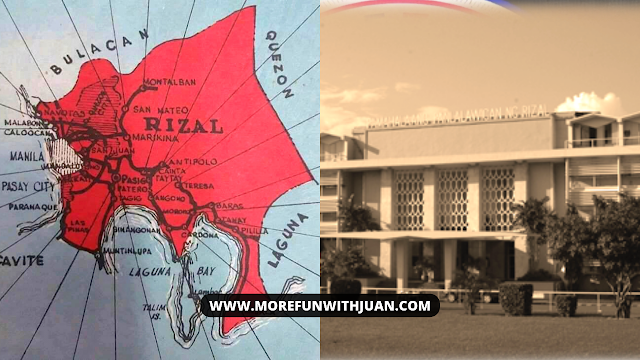
Image of Old Rizal province map Old Rizal province map Image of Municipalities of Rizal Province Map Municipalities of Rizal Province Map Feedback list of municipalities of rizal province history of rizal province rizal province is known for what is the former name of rizal province region of rizal rizal province tourist spot

Did you know that most of the cities in Metro Manila today was part of Rizal Province before?


Many people today are still puzzled as to why there is a place in Pasig called Capitolio (now spelled as Kapitolyo). The name itself implies that Pasig was once a capital city. But of what, Metro Manila or nearby Rizal Province? If Pasig was indeed the capital of Rizal Province, then why is it in Metro Manila?


Here's an explanation to what happened in the old Rizal Province and how it was dismembered and how Metro Manila was created.

Loading...

PROVINCE OF TONDO

Tagalog settlement arrived some time in the pre-Spaniard period. The provincial territory began with the organization of the Tondo province and Laguna province during the Spanish administration. Some of the towns like Pasig, Parañaque, Taytay and Cainta were already thriving.

Aerial shot of Laguna de Bay in 2020

From the reports of the Encomiendas in 1582-1583, the Encomiendas of Moron (Morong) was under the jurisdiction of La Laguna and, the Encomiendas of Passi (Pasig), Taitay (Taytay) and Tagui (Taguig) belonged to the Province of Tondo.

It was recorded that in 1591, the Encomiendas of Moron and Taitay were under the jurisdiction of the Franciscan Order in the Province of La Laguna; and the Encomiendas of Nabotas (Navotas), Tambobo (Malabon), Tondo, Parañaque (then La Huerta, Parañaque), Longalo (Don Galo, Parañaque), Tagui and Pasig were under the jurisdiction of the Augustinians in the Province of Tondo.

Map of the Province of Tondo 1820’s

CREATION OF DISTRITO POLITICO-MILITAR DE MORONG

In 1853, a new political subdivision was formed. This consisted of the towns of Antipolo (now a city), Bosoboso, Cainta and Taytay from the Province of Tondo; and the towns of Morong, Baras, Tanay, Pililla, Angono, Binangonan and Jalajala from the Province of La Laguna, with the capital at Morong.

This district was later changed to Distrito Politico-Militar de Morong after four years.

The map of the Provinces of Manila and Morong from Atlas de Filipinas 1899

THE BIRTH OF PROVINCE OF MANILA

In 1860, by virtue of Circular No. 83, dated September 2, 1859, the Province of Tondo became the Province of Manila. All its towns were placed under the administration, fiscal supervision and control of the Governor of the new province.

Map of Province of Manila in 1899

The town of Mariquina (Marikina) became the capital of the Province of Manila during the tenure of the revolutionary government of Gen. Emilio Aguinaldo. The Province of Morong had for its capital the town of Antipolo for the period 1898-1899, and the town of Tanay for 1899-1900.

Antipolo church 1898

On February 6, 1901, the First Philippine Commission sought to establish civil government in the country through a provincial organization act after the Filipino-Spanish and Filipino-American conflicts.


Therefore, on June 5, 1901, a historic meeting was held at the Pasig Catholic Church for the organization of a civil government in the Provinces of Manila and Morong, with 221 delegates in attendance. The first Philippine Commission, headed by William Howard Taft and composed of Commissioners Luke E. Wright, Henry C. Ide, Bernard Moses and Dean C. Worcester, discussed with the Assembly the issue of whether or not to write the Province of Manila with Morong Province, was not self-sufficient to operate as a separate province.

Although the delegates from Morong, Hilarion Raymundo and José Tupas, objected to the proposal, Juan Sumulong of Antipolo strongly advocated the move. After much acrimonious debate and upon the suggestion of Trinidad H. Pardo de Tavera the body agreed on the creation of a new province independent of the Province of Manila. The new province was aptly named after Jose Rizal, the country's national hero.

CREATION OF RIZAL PROVINCE

Map of Rizal Province in the 1950s

On June 11, 1901, the province of Rizal was officially and legally created by virtue of an Act No. 137 by the First Philippine Commission which during the time was acting as the unicameral legislative body in the island of Luzon.

The new province was composed of 29 municipalities, 17 from the old Province of Manila (CaloocanLas PiñasMariquina (Marikina), Montalban (Rodriguez), Muntinlupa, Navotas, Novaliches, ParañaquePasigPaterosPineda (Pasay)San Felipe Neri (Mandaluyong)San Juan del Monte (San Juan), San Mateo, San Pedro Macati (Makati)Taguig, Tambobong (Malabon); and 12 from the Politico-Militar District of Morong (Angono, Baras, Binangonan, CaintaAntipolo, Cardona, Jalajala, Morong, Pililla, Tanay, Taytay and Teresa).

The City of Manila from the old Province of Manila was treated as a separate entity. The seat of the provincial government was Pasig.

Ortigas Center at night in Pasig in 2000's

In year 1939, Quezon City was established, which included parts of Caloocan, and later on, Novaliches and parts of Marikina and San Juan towns.

Cheapest Flights and Airline Tickets Online Booking

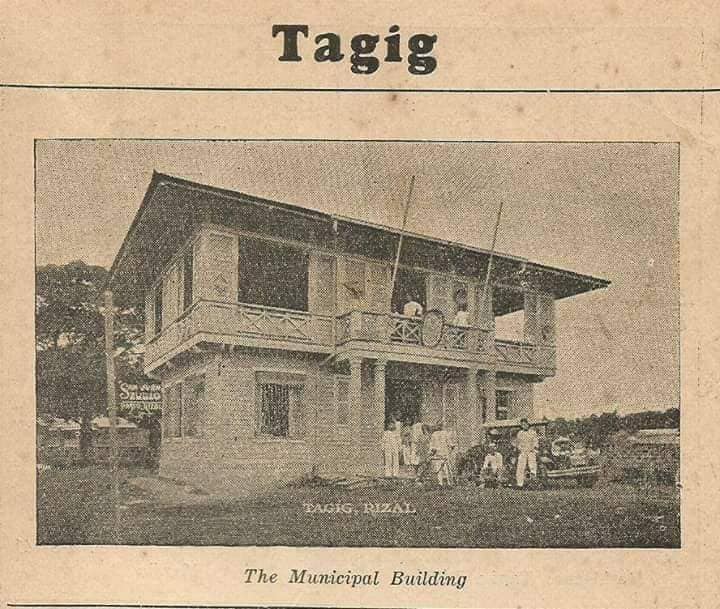
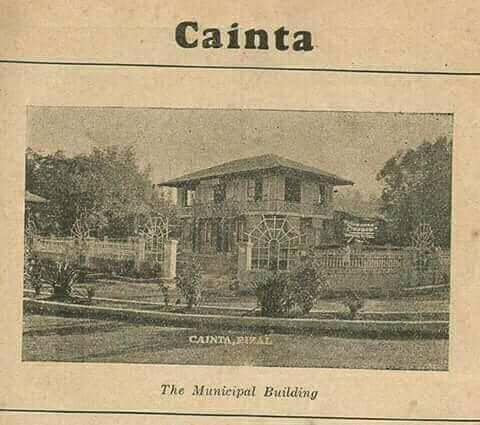
These are the old municipalities and their municipal halls under Rizal Province (Photos are taken sometime in 1936):


ATTRACTIONS TO SEE IN MANILA 

Klook.com

DISMEMBERMENT OF RIZAL PROVINCE AND THE BIRTH OF METRO MANILA

On 7 November 1975, by virtue of Presidential Decree No. 824, the 12 most progressive towns of Rizal were incorporated in the newly formed Metro Manila, eventually becoming the seat of government which is now officially known as the National Capital Region.

Busy hours in Ayala Ave. in Makati City in 2020's

Those 12 towns were: Las Piñas, Makati, Malabón, Mandaluyong, Marikina, Muntinlupà, Navotas, Parañaque, Pásig, Pateros, San Juan, and Taguig. It also included the town of Valenzuela (formerly the town of Polô in Bulacán Province) as well as the four cities of Manila, Quezon, Caloocan, and Pásay.

Bonifacio Global City, a bustling CBD in Taguig in 2010's

On June 19, 2020, President Rodrigo Duterte signed Republic Act No. 11475, which designated Antipolo as the official capital of Rizal.


ACTIVITIES AND TOURS IN MANILA


IMPORTANT NOTE: The rates, contact details and other information indicated in this post are accurate from the time of writing but may change without IMFWJ's notice. Should you know the updated information, please leave a comment below.

WHERE TO STAY IN RIZAL:

 Image of Old Rizal province map Old Rizal province map Image of Municipalities of Rizal Province Map Municipalities of Rizal Province Map Feedback list of municipalities of rizal province history of rizal province rizal province is known for what is the former name of rizal province region of rizal rizal province tourist spot

EXPLAINED: The Old Rizal Province And Its Towns (And The Creation Of Metro Manila)