

This festival is one of the biggest if not the grandest, in Quezon Province!
The Pahiyas Festival, originally known as the Feast of San Isidro, showcases houses decorated with colorful “kiping” accented with farm produce such as rice, fruits, plants and vegetables as a way of thanksgiving for the bountiful harvests in Lucban, Quezon.
Officially, it is now known as the Lucban San Isidro Pahiyas Festival and celebrated only for a day, every May 15 of each year.

In addition, as the farmers received additional favors and their crops multiplied, the wooden chapel became a gathering point for the yearly Pahiyas. To keep the custom alive, the townspeople decided to exhibit their harvest in front of their homes. Then, the parish priest would come to bless it.
In addition, over 100 homes along the festival road get decked with colorful kiping or rice wafers. They also use fruits, vegetables, and other objects depicting a plentiful harvest during Pahiyas. Due to this, the bright show became popular all over the Philippines.
While walking, vendors were scattered around the streets of Lucban to treat us with their delicacies and refresh us with cold drinks.

This noodle is Lucban's delicacy! “Habhab” is the term that Lucban inhabitants use to refer to the practice of placing their famed pancit (made of miki noodles sautéed with pork meat, liver, shrimp, and vegetables as well as a dash of cane vinegar) on a banana leaf, and then maneuvering the leaf to dump the pancit straight into one's mouth.
Although you see them as decor on Lucban's houses during Pahiyas Festival, these leaf-shaped snacks are actually wafers made of rice (similar to tacos of Spain) in brilliant colors. The making of kiping is time-consuming and involves many steps. It begins with the selection of fresh leaves as molds. The kinds of leaves include kabal, kape, talisay (umbrella tree), kakaw (cocoa), antipolo and banana (saba).
 IMPORTANT NOTE: The rates, contact details and other information indicated in this post are accurate from the time of writing but may change without IMFWJ's notice. Should you know the updated information, please message us on Facebook.
Loading...
WHAT TO BRING FOR LUCBAN, QUEZON
Here are some things you might consider bringing with you for your day tour / adventure:
- Stylish face mask
- Water container/tumbler to rehydrate
- Sunscreen for skin protection
- Goggles for swimming or snorkeling
- Travel backpack / luggage
- Reusable vacuum storage packs
- Selfie stick
- Acion cam
- Camping tent
- WiFi kit
- Power bank
Shopee is my go-to app for things I needed like the ones above. If you'd like discounts and vouchers, you may get the best offers here:
A BRIEF HISTORY OF PAHIYAS FESTIVAL
According to the oral and recorded history of Lucban, the Feast of Saint Isidore was first observed by the native Tagalogs who used to settle at the foot of Mt. Banahaw during the early Christianization of the natives of Lucban, Tayabas circa 1500. Then known as “MALUBAN” or “COLUMBAN”, the whole community of Lucban conducted a simple celebration as a form of thanksgiving to the ANITOs for the good harvest of farm products such as palay, vegetables, fruits, and fish.
The Pahiyas Festival began as a gift-giving rite by the people of Lucban to the Franciscan missionaries who brought Catholicism to Quezon in 1583. The town’s first church administrator, Juan de Placencia continued the practice of donating the crop to the Spanish friars. He did this as a sign of thanks for a fruitful harvest.
The next parish priest, Diego de Oropesa, continued the rite until it became a Lucban regular.
In 1595, the town’s first parish priest, Fr. Miguel de Talavera was instrumental in the construction of a wooden church in Barrio Kulapi. He then had the farmers bring all their harvests to the church for blessing. The farmers in Lucban believed that this ritual was crucial. They believed that failure to observe it might mean drought, famine, and bad luck.
 |
| One of decorated house for Pahiyas Festival |
In addition, as the farmers received additional favors and their crops multiplied, the wooden chapel became a gathering point for the yearly Pahiyas. To keep the custom alive, the townspeople decided to exhibit their harvest in front of their homes. Then, the parish priest would come to bless it.
Its pagan roots got modified in 1963 when the Pahiyas became the vast and colorful festival people know today.
The word pahiyas comes from “payas” which means to decorate or decorate. The Pahiyas Festival meaning can easily be noticed once you see the beautiful house decorations in Lucban, Quezon.
PAHIYAS FESTIVAL TODAY
Every year on the 15th of May, the Pahiyas Festival is held in the town of Lucban, Quezon. People organize the festival to thank the patron saint of farmers, Saint Isidor the Laborer, for a plentiful harvest or ani in Filipino.
During this holiday, Lucban residents decorate their homes with fruits, vegetables, handicrafts, and kiping, or rice wafers. Locals frequently exchange these ornamental fruits and veggies amongst themselves after the festivity.
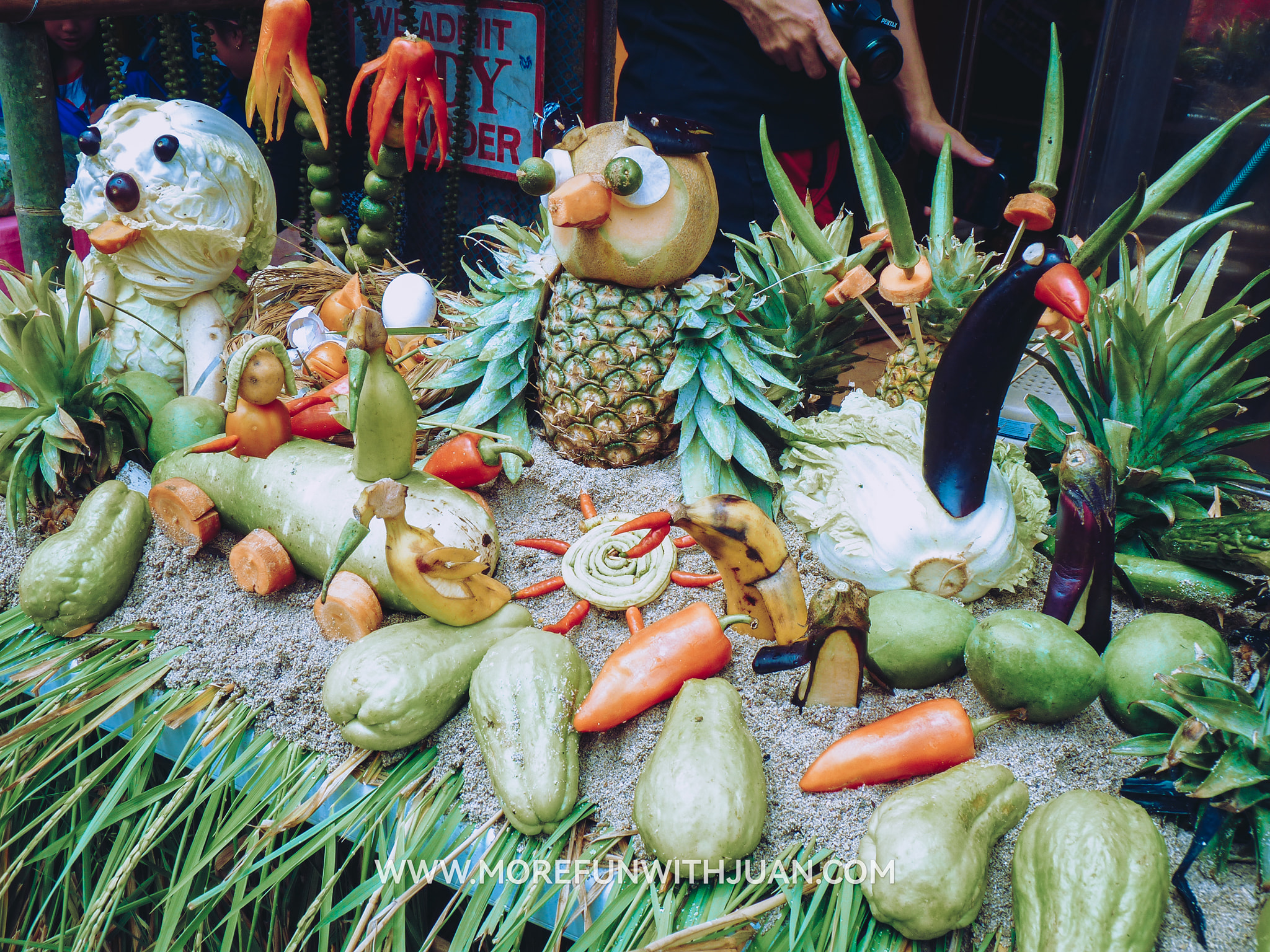 |
| Fruits and vegetables presentation for Pahiyas |
In addition, over 100 homes along the festival road get decked with colorful kiping or rice wafers. They also use fruits, vegetables, and other objects depicting a plentiful harvest during Pahiyas. Due to this, the bright show became popular all over the Philippines.
During Pahiyas, the Church of Lucban, with its patron saint, Saint Louis Bishop of Tolouse, has a stunning altar. This reflects the colorful panoramas beyond its walls. People must also arrive later than six in the morning to attend church with the locals
The figure of the patron saint, San Isidro Labrador, blesses the homes along the Pahiyas path immediately following the liturgy. It’s an unforgettable experience to venerate the patron saint and his wife Santa Maria Torribia de la Cabeza. People do this with priests and worshippers.
Locals frequently offer their houses to tourists. Hence, tourists can see their Pahiyas festival decorations up close. This also becomes an excellent opportunity to capture several photographs.
The Pahiyas great procession, which begins at 12 noon features humans, carabaos, and inanimate items. During the procession, expect to witness brass bands, and couples wearing organic clothes and accessories. You may expect colorful harvest carts carried by decorated local carabaos, loads of pancit habhab, and a big paper mache as well.
In addition, the Pahiyas festival has helped to make Lucban a tourist attraction with parades and artistic crafts.
MY PERSONAL EXPERIENCE OF PAHIYAS
In 2015, it was my first and last experience of Pahiyas Festival (as of writing). I attended the celebration coming from Metro Manila with my Team Basti friends. It was our first destination in during our 3 days and 2 nights weekend getaway in Quezon before we cross the Lamon Bay for Cagbalete Island in Mauban.
We arrived in the morning after our 4-hour bus ride from Cubao to Lucena to have our breakfast and another hour jeepney ride from Lucena to Lucban.
 |
| Pahiyas Festival 2015 Welcome Arch |
We started walk tour to Lucban from the bridge near Southern Luzon State University (SLSU) before 8 in the morning. The town main roads have limited access to motor vehicles and most of them are closed during the celebration.
Most of the commercial establishments, especially the stores are open while banks and government offices are not in operation for the festival.
Upon our entrance to the town, we were welcomed with banderitas and products made in Lucban such as longganisa and abaka products, along the streets.
Most of the houses, if not all, are colorfully decorated and joined the contest for Pahiyas Festival. The houses feature vegetables and leaves they usually have in Lucban. Some of the house-owners let people in to their homes to get better photos and experience of the festival.
 |
| Refreshments during our walk tour |
While walking, vendors were scattered around the streets of Lucban to treat us with their delicacies and refresh us with cold drinks.
 |
| Tiannge Sa Lucban |
The festival features "Tiyangge sa Lucban", a street full of local street vendors and flocks of tourists which felt like Divisoria in Manila. Some things you can shop here are souvenirs like shirts, keychains, bags and the like. There are also vendors sold fresh fruits and Filipino snacks. The street is adjacent to Lucban Church.
At noon, our tour in Lucban ended at San Luis Obispo de Tolosa Parish Church (Lucban Church) to take a rest.
WHAT TO EAT AND TRY DURING PAHIYAS FESTIVAL
These are the food you shouldn't miss to complete your Pahiyas Festival experience:
Pancit Habhab
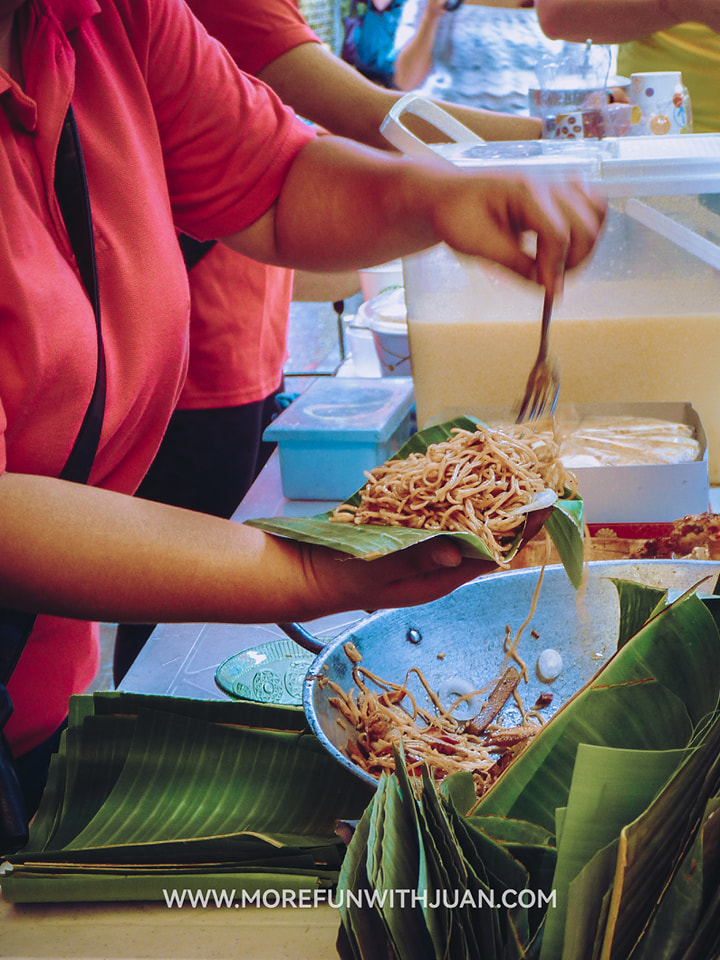 |
| Pancit Habhab |
This noodle is Lucban's delicacy! “Habhab” is the term that Lucban inhabitants use to refer to the practice of placing their famed pancit (made of miki noodles sautéed with pork meat, liver, shrimp, and vegetables as well as a dash of cane vinegar) on a banana leaf, and then maneuvering the leaf to dump the pancit straight into one's mouth.
Lucban Longganisa
 |
| Lucban Longganisa |
If you’re someone who absolutely loves a strong garlic taste and aroma, then you will love Lucban longganisa. You can try this together with fried rice and egg just like any longsilog meal, which is well-liked all over the country. You can also use vinegar as a condiment and counter the saltiness, and because longganisa is a preserved food, it has a longer shelf-life, so you can bring some with you when you go home.
Pilipit (Kalabasa)
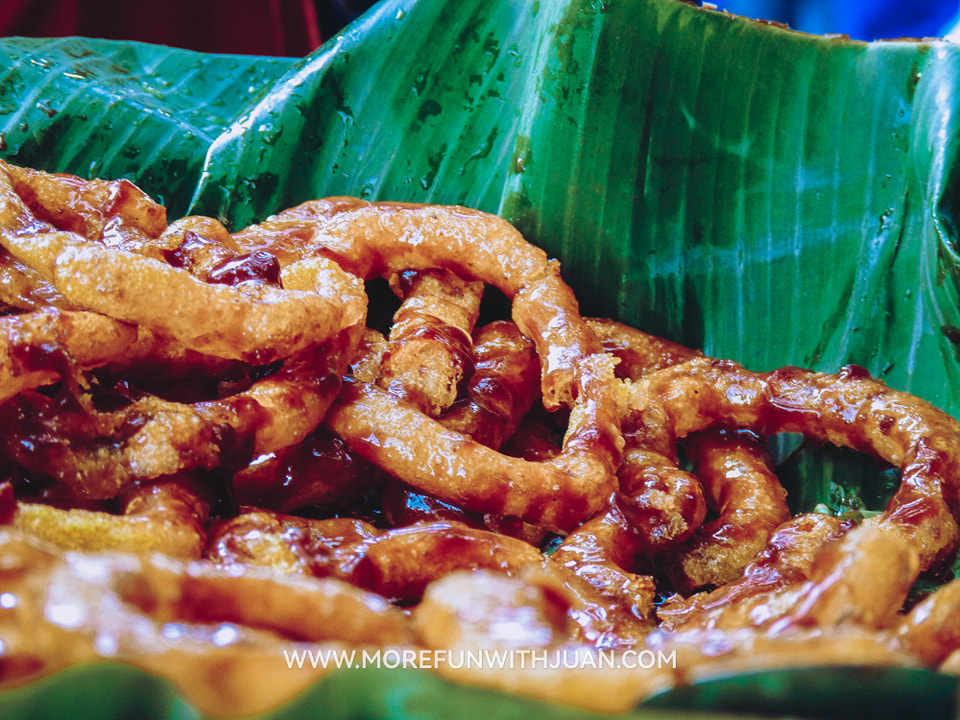 |
| Pilipit Kalabasa |
Pilipit is rice flour and mashed pumpkin makes this recipe different from the traditional Pilipit or Bitso Bitso. This kakanin is famous in Lucban and Tayabas, Quezon.
Puto Bao
Puto bao appears as if it’s made of ube at first appearance. However, it is actually a rice cake. People prepare this delicacy using sticky rice and macapuno filling. This gives the first taste a delightful, sweet surprise. In addition, a dash of purple food coloring provides a burst of color to the delectable local delicacy. This also accentuates the fragrant aroma it emits fresh from the steamer.
Hardinera
Hardinera, also known as Lucban hardinera, is a popular dish in Quezon. This star meal resembles a meatloaf. However, people cook it with a variety of ingredients that produce a gorgeous and tasty dish ideal for special occasions. People make hardinera using pig giniling stewed in menudo sauce. They then add flavor to it using liver spread, pepper, pineapple pieces, boiled eggs, raisins, and cheese.
Kiping
 |
| Kiping |
Although you see them as decor on Lucban's houses during Pahiyas Festival, these leaf-shaped snacks are actually wafers made of rice (similar to tacos of Spain) in brilliant colors. The making of kiping is time-consuming and involves many steps. It begins with the selection of fresh leaves as molds. The kinds of leaves include kabal, kape, talisay (umbrella tree), kakaw (cocoa), antipolo and banana (saba).
HOW TO GET TO LUCBAN, QUEZON
From Manila or Quezon City, ride a bus going to Lucena and alight at the Lucena Grand Terminal. Upon arrival, you can take a jeepney, van, or a bus bound for Lucban. The travel time is around 3 to 4 hours.
For those who are driving to Lucban, Quezon, you may opt to follow directions from Waze or Google Maps. Remember that there are only a few parking spaces (mainly near Lucban Church) so plan your trip ahead of time.
If you don’t have a private vehicle, you can rent a car or van here.
OTHER ATTRACTIONS TO VISIT IN LUCBAN
Here are tourist spots you may also visit while you are in Lucban:
Kamay ni Hesus Shrine & Grotto
Constructed in 2003 and completed in 2004, this imposing tourist spot features a 50-foot statue of Jesus Christ on top of a hill.
 |
| Kamay ni Hesus Shrine & Grotto |
Pahiyas Museum and Art Gallery
Housed in an old Spanish house, the Pahiyas Art Gallery regularly holds exhibitions of artworks, photographs and multimedia art by notable and upcoming Lucbanin artists as well as various artists from around the Philippines.
ALSO IN QUEZON
- WHAT IS QUEBEX: Everything you need to know about Quezon-Bicol Expressway
- PNR San Pablo-Lucena Commuter Line (Schedule & Fare Matrix)
- Alibijaban Island Guide (What To Do & How To Get There)
- Travel Guide to Pagbilao (Puting Buhangin at Kwebang Lampas)
- CAGBALETE ISLAND TRAVEL GUIDE: Your White Sand Beach Escape In Quezon Province (Things To Do + Itinerary)
- REAL, QUEZON: Travel Guide, Itinerary & Budget
ATTRACTIONS TO SEE IN MANILA
Klook.comWHERE TO STAY IN LUCBAN, QUEZON
Here's a list of hotel accommodation you can book ahead of your visit to Lucban, Quezon:
- Batis Aramin Resort And Hotel - See Room Rates and Availability!
- Casa Villaseñor Hotel - See Room Rates and Availability!
- Samkara Restaurant and Garden Resort - See Room Rates and Availability!
- Maria Cristesa Condotel - See Room Rates and Availability!
- A House Lucban - See Room Rates and Availability!
Frequently Asked Questions About Pahiyas Festival
What is being celebrated in the Pahiyas festival?
The Pahiyas Festival is celebrated to honor San Isidro Labrador, the patron saint of farmers, for a fruitful crop. Every May 15, houses get transformed into colorful places using harvests and the famed kipings as decor.
When is Pahiyas Festival celebrated?
The Pahiyas Festival date of celebration is May 15.
Where is the Pahiyas Festival place of origin?
The Pahiyas Festival place of origin is Lucban, Quezon.
What makes the Pahiyas festival unique?
This festival is unique because the whole town is participating in order for them to preserve the tradition that started in the 15th century. What’s more is that they use their harvests to decorate their houses.
What are the usual Pahiyas Festival decorations?
The Pahiyas Festival decorations usually consist of Lucban’s fresh produce such as vegetables, fruits, the popular Lucban longganisa, and of course, the kipings (a rice wafer) that make the houses so colorful.
Who is the patron saint of Pahiyas Festival?
The patron saint of Pahiyas Festival is San Isidro Labrador, the patron saint of the farmers and laborers.
ACTIVITIES AND TOURS IN MANILA
WHERE TO STAY IN QUEZON:
Image of Pahiyas Festival drawing Pahiyas Festival drawing Feedback pahiyas festival wikipedia pahiyas festival meaning pahiyas festival tagalog pahiyas festival history pahiyas festival food pahiyas festival place of origin pahiyas festival reason of celebration


.jpg)